Reusability And Booster Recovery
| Country of origin | United States |
|---|---|
| First created | 2010s |
| Original use | Reusable orbital launch vehicle development and demonstration |
| Reusability goal | Full and rapid reusability of both stages |
| Booster recovery method | Propulsive landing on a droneship or landing pad |
| Primary recovery zone | Atlantic Ocean (droneship) or Cape Canaveral (landing pad) |
| Vehicle type | Suborbital test vehicle and prototype orbital vehicle |
| Notable feature | First stage designed for multiple flights after refurbishment |
Origin and history
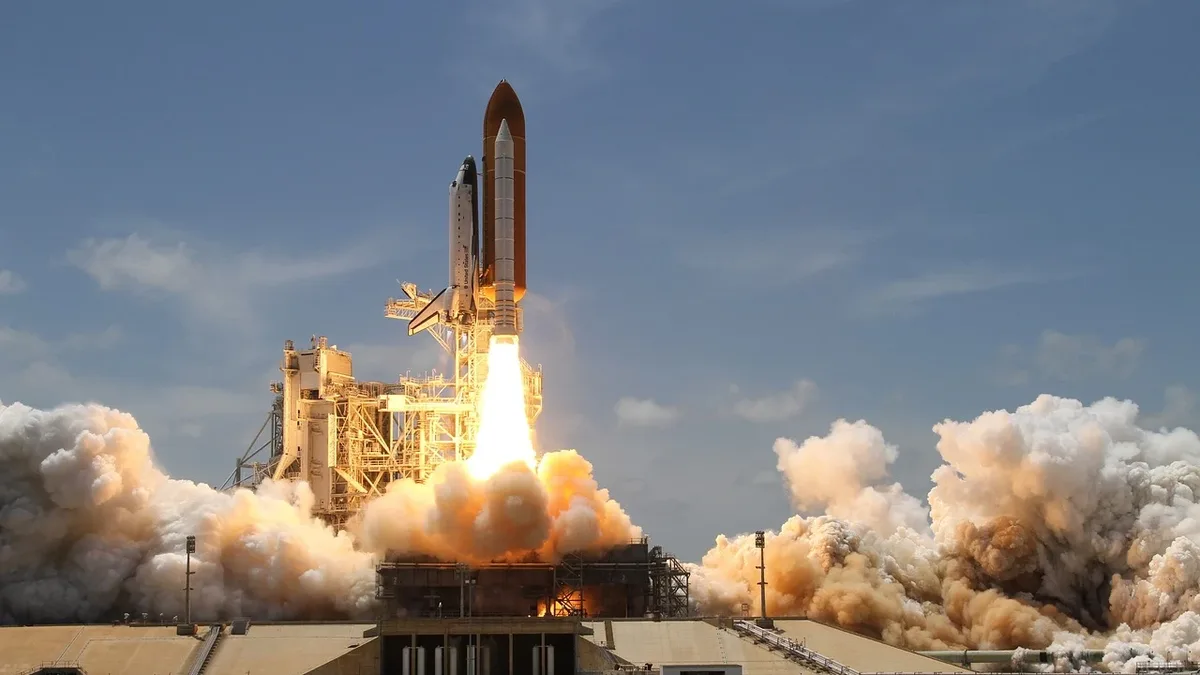
The concept of rocket reusability and booster recovery originated in the United States during the mid-to-late 20th century. Initial practical experiments and studies were conducted by government agencies like NASA, with the Space Shuttle program representing an early, partial form of reusability. The modern, dedicated pursuit of vertical landing and rapid booster reuse, however, was pioneered and commercially demonstrated by private aerospace companies in the United States in the early 21st century. This marked a significant shift from the industry's long-standing norm of expendable launch vehicles, where the entire rocket was discarded after a single use. The driving philosophy was to treat the booster stage, often the most expensive part of a launch vehicle, more like a reusable aircraft than a one-time component. Historical attempts at recovery, such as parachute systems, proved largely unsuccessful for operational reuse until new technologies were developed.
What it is designed for
Reusability and booster recovery is designed to drastically reduce the cost of access to space by preserving and re-flying the most expensive hardware. The primary design goal is to enable the first stage booster to return to Earth intact following stage separation, rather than being destroyed or discarded. This engineering discipline focuses on enabling controlled descent and a precise, gentle landing, either on a ground pad or a mobile offshore platform. It is fundamentally designed for high-frequency launch campaigns, where a recovered booster can be refurbished, re-integrated, and launched again in a relatively short timeframe. The system is engineered to withstand the extreme stresses of both ascent and re-entry, which requires significant design compromises and added subsystems not found on expendable rockets. Ultimately, it is designed to transform launch vehicles from single-use items into reusable assets, altering the economic model of spaceflight.
Development and versions
Development has progressed through several distinct generations and approaches since the early concepts. Initial versions involved experimental vehicles that tested vertical takeoff and landing (VTVL) technologies, often without reaching orbital velocities. The first operational versions to successfully recover orbital-class boosters utilized a combination of grid fins, cold gas thrusters, and restartable main engines for a powered descent and landing. Subsequent versions introduced landing legs, improved heat shielding for the booster's base, and more advanced flight control software. Development has also branched into different recovery methods, including partial reuse concepts where only engines are recovered and more ambitious full reusability plans for entire launch systems. Each new vehicle version typically incorporates lessons from prior recovery attempts, refining reliability and operational procedures. The development trajectory shows a clear evolution from high-risk demonstration flights to routine, operational recovery as a standard part of the launch profile.
Overview
Reusability and booster recovery is a launch operations methodology where the first stage of a rocket is guided back to Earth for a soft landing after completing its primary propulsion burn. The process involves a complex sequence of maneuvers: after stage separation, the booster performs an engine re-ignition to reverse its trajectory, often called a boost-back burn. It then re-enters the atmosphere, using grid fins or other aerodynamic surfaces for steering and stability during descent. A final landing burn, using a subset of the main engines or dedicated landing engines, slows the vehicle to near-zero velocity just before touchdown. Critical supporting infrastructure includes landing pads, drone ships for maritime landings, and specialized ground support equipment for securing and transporting the recovered stage. The overview encompasses not just the flight mechanics but also the post-flight inspection, refurbishment, and re-certification processes required to make the booster flightworthy again.
What to know
It is important to know that reusability introduces significant design trade-offs, including performance penalty due to reserved fuel for landing and the added mass of recovery hardware. Recovery operations require extensive real-time telemetry and tracking, as well as precise navigation to a specific, often moving, landing point. Weather conditions, particularly wind shear and wave height for drone ship landings, are a major constraint for recovery attempts, sometimes leading to mission rule violations where the booster is sacrificed. The number of times a booster can be reused is not infinite; each flight cycle induces wear on engines, structures, and thermal protection systems that must be meticulously inspected. Successful recovery does not guarantee immediate reuse; the turnaround time between flights involves detailed analysis, part replacements, and testing. Furthermore, the economic benefit is only realized after multiple re-flights of the same hardware, amortizing the high initial development and construction costs over several missions.
Common questions
A common question is whether the saved cost from reusing a booster is passed on to the customer, and the answer is that it typically results in lower launch prices compared to expendable vehicles, though not necessarily a direct one-to-one correlation. People often ask how many times a booster can be reused, which depends on the vehicle design but current operational hardware has demonstrated capability for over a dozen flights with ongoing inspection. Many wonder if the recovery process limits the rocket's payload capacity, which is correct; a reusable mission must reserve a portion of the booster's fuel and performance for the return journey, reducing maximum payload mass to orbit. A frequent inquiry concerns the reliability of landing on a drone ship at sea, a feat that has transitioned from a novel challenge to a routine operation with a high success rate for experienced providers. Customers and observers commonly ask about the time required to refurbish a booster between flights, which has been reduced from months to weeks through operational learning and design iteration. Another recurring question addresses the environmental impact, with proponents noting reduced manufacturing waste per launch compared to building new rockets for every mission.
Pros and cons
A significant pro is the substantial reduction in per-launch cost over the vehicle's lifetime, fundamentally changing the economics of satellite deployment and space access. It also promotes a faster launch cadence, as manufacturing new first stages is not the bottleneck for every mission. A major con is the inherent performance penalty, meaning reusable missions cannot deliver the maximum possible payload mass to orbit compared to an expendable configuration of the same rocket. The development complexity and cost are extremely high, posing a substantial barrier to entry and representing a risky investment that has bankrupted some companies pursuing it. Operators often regret choosing a reusable profile for missions that require every ounce of performance, such as pushing payloads to high-energy orbits, where an expendable launch would be more suitable. A common mistake is underestimating the operational burden and cost of refurbishment, where the inspection, part replacement, and testing between flights can erode the theoretical cost savings if not managed with extreme efficiency.
Who it suits
This approach best suits launch service providers with a high flight rate and a stable fleet of vehicles, allowing them to amortize development costs and achieve economies of scale. It suits commercial satellite constellations requiring frequent, low-cost launches to deploy and replenish large networks of satellites in low Earth orbit. Government agencies with less stringent performance requirements for certain cargo or crewed missions to the International Space Station also benefit from the cost savings and reliability of flight-proven hardware. It does not suit missions that are mass-critical or demand the absolute highest energy orbits, where the performance sacrifice of recovery fuel is unacceptable. New space companies without vast capital reserves are generally ill-suited to develop such systems from scratch due to the immense upfront engineering and testing investment required. Finally, it suits the long-term vision of making spaceflight more routine and sustainable by treating major rocket components as reusable assets rather than disposable waste.