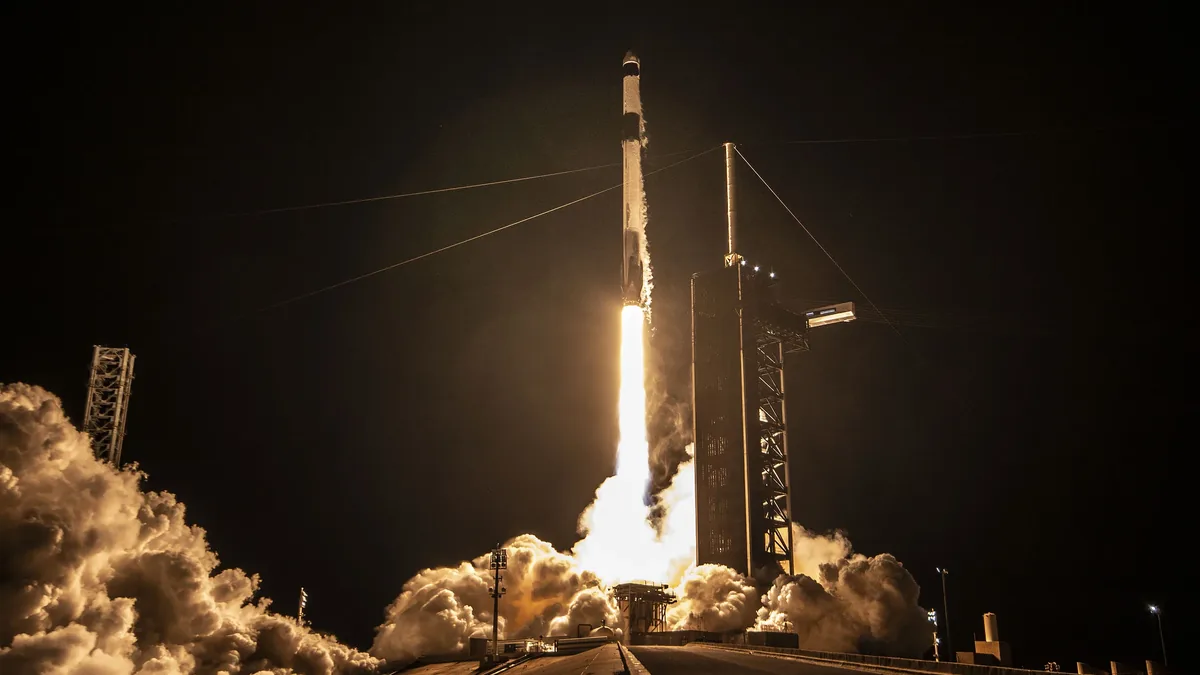
European Launch Startups
| Country of origin | Germany |
|---|---|
| First created | 2018 |
| Original use | Small satellite launch |
| Vehicle name | RFA One |
| Payload to LEO | Up to 1300 kg |
| Propellant | Kerosene and liquid oxygen |
Origin and history
European launch startups emerged as a distinct commercial sector in the early 21st century, primarily within the European Union and the United Kingdom. Their development was driven by the global commercialization of space access and a perceived gap in the European launch market for dedicated, responsive small-lift vehicles. This movement gained significant momentum in the 2010s, following the global trend set by American NewSpace companies. The historical context includes the long-standing dominance of institutional launch providers like Arianespace, which created a market opening for more agile, cost-focused entrants. Key early players were founded in the mid-to-late 2010s, with several aiming for first flights in the early 2020s. The sector's growth is also a strategic response to ensure European sovereign access to space across a broader range of mission profiles and price points.
What it is for
European launch startups exist to provide dedicated, flexible, and cost-competitive launch services primarily for small satellites. Their core purpose is to offer an alternative to rideshare launches on larger vehicles, granting satellite operators greater control over orbit, schedule, and mission parameters. These companies specifically target the rapidly growing market for smallsats, cubesats, and constellations requiring precise orbital insertion. A secondary purpose is to provide responsive launch capabilities, reducing the multi-year lead times traditionally associated with institutional launch campaigns. They also serve the strategic goal of bolstering European independent access to space across a wider variety of missions. Furthermore, they aim to stimulate the broader European space technology ecosystem by fostering innovation in propulsion, manufacturing, and launch operations.
Overview
The sector comprises several private companies developing a range of small-lift launch vehicles, often utilizing innovative approaches like hybrid or liquid propulsion. These vehicles are typically designed to be launched from European spaceports, such as Esrange in Sweden, SaxaVord in the UK, or the Guiana Space Centre, as well as potential offshore platforms. The business model is fundamentally commercial, seeking private investment alongside potential public funding from agencies like ESA or national governments to develop and operate the systems. The technical focus is on achieving reliability and cost reduction through methods like simplified design, additive manufacturing, and streamlined operations. The competitive landscape includes both intra-European rivalry and competition with established global small-lift providers from the US, India, and others. The overall operational tempo aims for higher launch frequency than traditional European providers, catering to the just-in-time needs of commercial satellite customers.
What to know
A key fact is that no European launch startup had achieved orbital flight as of the early 2020s, placing the sector in a developmental and testing phase while competitors globally were already operational. The vehicles are generally classified as small-lift, with payload capacities to low Earth orbit ranging from a few hundred kilograms to approximately one metric ton. Several prominent startups, such as Isar Aerospace (Germany), Rocket Factory Augsburg (Germany), and Skyrora (UK), are advancing through engine test campaigns and suborbital flight demonstrations. The regulatory environment involves complex approvals from both national and European authorities, including range safety and space traffic management, which can impact schedule. Access to suitable launch sites within Europe involves navigating political, environmental, and infrastructure challenges, leading some to consider offshore options. Potential customers should understand that these companies represent a higher-risk, higher-potential-reward option compared to booking a ride on an established, flight-proven vehicle.
Common questions
A frequently asked question is how these startups differ from Arianespace, to which the answer is their focus on smaller payloads, private funding, and a more agile development philosophy aimed at the commercial market. Many inquire about the choice of propulsion, with startups employing a diverse mix including liquid oxygen/kerosene, liquid oxygen/methane, and hybrid propellants, each with distinct performance and complexity trade-offs. People often ask about launch costs, which are projected to be competitive on a per-kilogram basis for dedicated smallsat launches, though firm public pricing is seldom available for vehicles not yet in service. A common question concerns launch sites, with specific inquiries about schedules for operational launches from locations like Andøya in Norway, SaxaVord in Scotland, or Kourou in French Guiana. Potential clients commonly ask about payload integration timelines and how they compare to the multi-year processes of larger rockets, with startups promising significantly shorter intervals. There is also recurring inquiry about the viability of the business case given the number of competitors and the size of the projected smallsat market.
Pros and cons
A significant pro is the potential for increased launch flexibility and schedule control for small satellite operators, who are often secondary payloads on larger missions. The focus on dedicated rides can lead to more optimal orbits and reduced constellation deployment times compared to waiting for a shared launch slot. These companies also drive technical innovation in Europe, particularly in cost-effective manufacturing and rapid launch turnaround processes. A major con is the inherent risk associated with unproven launch systems; schedule delays and technical setbacks are common in vehicle development, and initial flights carry a higher probability of failure. The business model is fragile, with many startups relying on successive funding rounds in a competitive investment landscape, leading to potential consolidation or failure before reaching operational status. A common mistake is underestimating the immense regulatory and logistical hurdles of establishing a new launch service in Europe, which can stall progress even with a technically sound vehicle.
Who it suits
This option suits venture capital-backed small satellite constellations seeking rapid, dedicated deployment into specific orbital planes without the compromise of rideshare missions. It is appropriate for European institutional payloads, such as those from national space agencies or research consortia, that have strategic mandates to support the continental industrial base and require sovereign access. The model suits risk-tolerant technology demonstrator missions where schedule flexibility and a lower-cost dedicated launch may outweigh the reliability premium of an established rocket. It is less suited for critical, high-value single satellites where mission assurance is paramount and the customer cannot absorb the risk of a launch failure or significant delay. The service also suits payloads with specific integration or last-minute access requirements that are incompatible with the rigid timelines of larger launch campaigns. It is not currently suited for customers with an immediate need for launch, as the operational date for most providers remains a future projection.
Latest European Launch Startups news
Latest reporting
The Exploration Company Raises $450 Million for Nyx Capsule
European startup The Exploration Company has raised $450 million in Series C funding to develop its Nyx reusable cargo capsule and Storm reusable...
HyImpulse Targets 5 October for Second SR75 Flight
German launch firm HyImpulse could launch its SR75 suborbital rocket from Scotland's SaxaVord Spaceport as early as 5 October, according to maritime...
ESA Hosts FLEX and Sentinel-3C Launch Re-Watch Event
The European Space Agency will host a media event on September 15, 2026, to re-watch the Vega-C launch of the FLEX and Sentinel-3C Earth observation
ESA Reviews Rocket Capacity as Amazon Orders Pressure Launch
The European Space Agency is assessing if its current rocket fleet can handle a satellite launch demand surge expected to peak around 2030, driven by...

Isar Aerospace's Spectrum Rocket Reaches Orbit on First
Isar Aerospace successfully launched its Spectrum rocket from Norway, deploying five CubeSats. This marks the first privately funded European orbital...

Isar Aerospace Launches First Payload Mission Tonight
Isar Aerospace will launch its Spectrum rocket's second flight tonight from Norway, carrying six payloads for the first time as part of its...