
In Orbit Services
| Service type | Refueling, repair, inspection, debris removal, relocation |
|---|---|
| Typical client | Governmental space agencies, commercial satellite operators |
| Vehicle type | Dedicated servicer spacecraft |
| Operational orbit | Geostationary orbit (GEO), Low Earth orbit (LEO) |
| Docking interface | Proprietary or standardized (e.g., NASA Docking System) |
| Primary propulsion | Electric or chemical |
| Original use | Extend operational life of existing satellites |
Origin and history
The concept of In Orbit Services emerged from the United States and Soviet space programs during the late 20th century, with its foundational principles established in the 1980s and 1990s. Early demonstrations involved crewed missions, such as space shuttle astronauts performing manual satellite repairs and retrievals, which proved the technical feasibility of working on assets in space. The development of robotic manipulator systems, like the Space Shuttle's Canadarm, provided critical technology for precise handling of objects in microgravity. These initial activities were largely government-funded and mission-specific, focusing on extending the life of high-value national satellites. The field evolved significantly in the 2010s with the maturation of commercial satellite constellations and the reduced cost of access to space, creating a broader market need. This period saw the formulation of dedicated commercial ventures aimed at providing servicing as a sustained business activity rather than a singular demonstration.
What it is for
In Orbit Services exist to maintain, alter, or enhance the functionality and longevity of spacecraft after they have been launched. A primary function is satellite life extension, where a servicing vehicle docks with a client satellite that is low on station-keeping propellant and takes over its attitude control and orbital positioning. Another critical service is the relocation of satellites, moving them between orbital slots or deploying them from a rideshare launch configuration into their precise operational orbits. Servicing missions also address anomaly resolution, where a vehicle can perform inspections, diagnose issues, or potentially repair malfunctioning components on a satellite. Active debris removal is a related service, where a vehicle captures and de-orbits defunct spacecraft or large pieces of debris to mitigate collision risks. Furthermore, these services enable in-orbit assembly of large structures, such as future space telescopes or habitats, which are too large to launch in a single piece.
Overview
In Orbit Services encompass a range of robotic and potentially crewed activities conducted on a client spacecraft using a dedicated servicing vehicle. The core sequence involves the launch of the servicing vehicle, its rendezvous and proximity operations with the target, and the execution of the service task through physical interaction. The servicing vehicle is typically equipped with a suite of tools, which may include robotic manipulators, refueling interfaces, grapple fixtures, and specialized inspection sensors. Critical enabling technologies include advanced guidance, navigation, and control systems for safe approach, and standardized docking or grappling interfaces to physically connect with a client. Mission success depends heavily on the design of the client satellite; modern spacecraft are increasingly being built with servicing in mind, featuring refueling ports and grapple fixtures. The operational environment is defined by the harsh conditions of space, including microgravity, vacuum, and extreme thermal cycles, which impose significant design constraints on servicing hardware.
What to know
The launch phase for an In Orbit Servicing mission is defined by the specific vehicle, its payload, and the launch window. The servicing vehicle itself is the primary payload, and its mass, volume, and destination orbit dictate the selection of an appropriate launch vehicle, from small-lift to heavy-lift rockets. Co-manifested payloads may include auxiliary satellites or test hardware, but the servicing vehicle's complex and often propellant-heavy design usually requires dedicated launch capacity. The launch window is not solely driven by orbital mechanics but also by the operational readiness of the client satellite and the need to rendezvous before the client's propellant is fully depleted. A critical pre-launch consideration is the legal and regulatory framework, which includes collision avoidance protocols, liability, and permissions for close-proximity operations with another nation's or company's asset. Furthermore, the business case is fragile, as the high cost of the servicing mission must be justified by the extended revenue or saved replacement cost of the client satellite, requiring precise economic modeling.
Common questions
A common question is whether a servicing vehicle can dock with any satellite, and the answer is typically no, as most existing satellites lack the standardized interfaces required for safe grappling, docking, or refueling. Many ask about the risk of the servicing vehicle accidentally damaging the client satellite during rendezvous, which is a paramount concern addressed through redundant systems, incremental approach corridors, and extensive pre-mission simulation. Operators often inquire about the types of fuel used for refueling, with hydrazine being common for older satellites but newer, safer propellants like xenon for electric propulsion or green monopropellants being developed for future compatibility. A frequent logistical question involves how a servicing mission is coordinated with the client's original operators, requiring deep collaboration, sharing of proprietary telemetry, and often temporary control handover. People question the sustainability impact, with servicing directly supporting space debris mitigation goals by enabling de-orbiting and preventing satellites from becoming derelict. Finally, there is significant interest in the leading companies and agencies providing these services, including established aerospace firms and newer specialized commercial entities.
Pros and cons
A significant advantage is the potential for major cost savings by extending the operational life of a multi-hundred-million-dollar satellite, thereby delaying or avoiding the enormous expense of a replacement build and launch. Servicing also enhances operational resilience by providing a potential rescue option for strategically vital satellites that suffer from deployment anomalies or premature subsystem failures. A clear pro is the contribution to space sustainability through active debris removal, directly addressing the growing threat of orbital collisions. A primary con is the exceptionally high upfront development and launch cost of the servicing vehicle itself, which creates a steep barrier to entry and requires a clear pipeline of client satellites to achieve profitability. A common mistake is underestimating the technical and programmatic complexity of rendezvous and proximity operations, leading to mission delays or failures if the client satellite's condition or dynamic behavior differs from models. Operators of older, non-cooperative satellites often regret that their assets were not designed with servicing in mind, making many desired interventions impossible or prohibitively risky.
Who it suits
In Orbit Services suit government space agencies and military operators who manage high-value, strategic national assets where mission assurance and longevity are paramount beyond pure economic calculation. They are particularly suited to operators of large geostationary telecommunications satellites, where the revenue stream is predictable and the cost of a replacement is exceptionally high, making life extension financially compelling. The model also suits constellation operators in low Earth orbit who may benefit from fleet management services, such as relocating satellites to optimal orbital planes or de-orbiting failing units to maintain constellation integrity. New satellite manufacturers and operators who adopt modular designs and standard servicing interfaces from the outset are the ideal future clients, as they can fully leverage the capabilities of servicing vehicles. It does not suit operators of very small, low-cost satellites with short design lives, as the servicing mission cost would far exceed the value of the satellite itself. The field also suits investors and companies with long-term horizons, willing to fund the development of foundational infrastructure for a future in-space economy.
Latest In Orbit Services news
Latest reporting
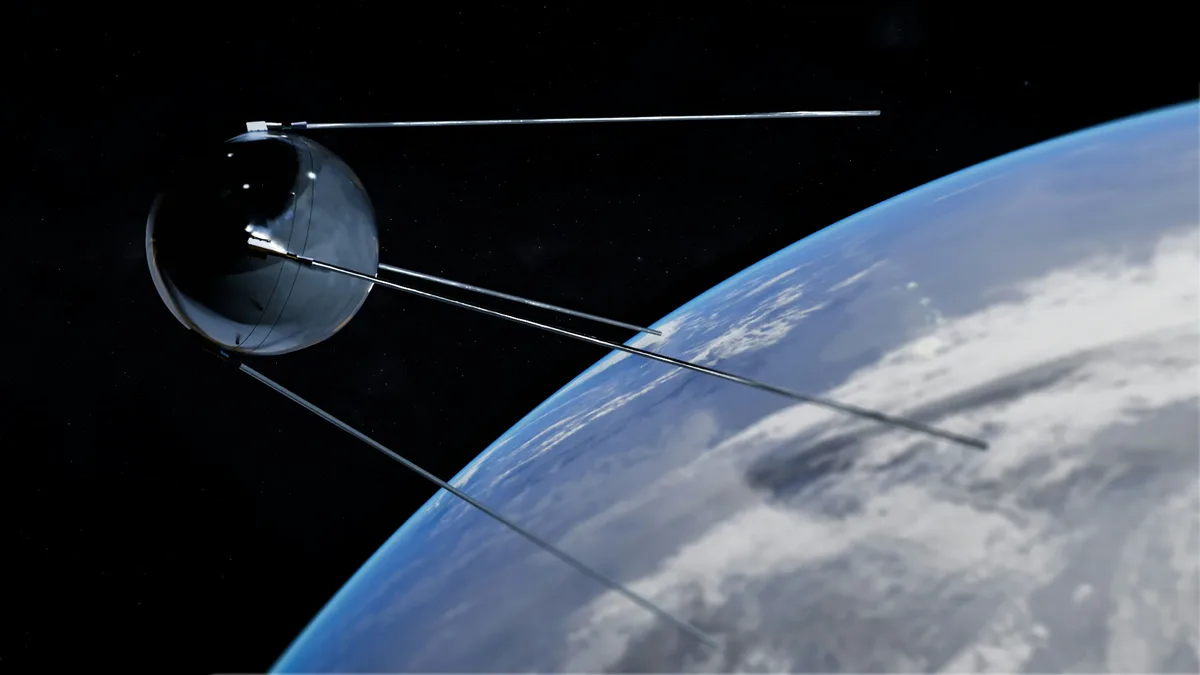
ISRO's EOS-05 Satellite Begins Geosynchronous Orbit Ascent
India's EOS-05 Earth observation satellite, launched on 4 September, has performed two orbit-raising manoeuvres en route to its final geosynchronous...
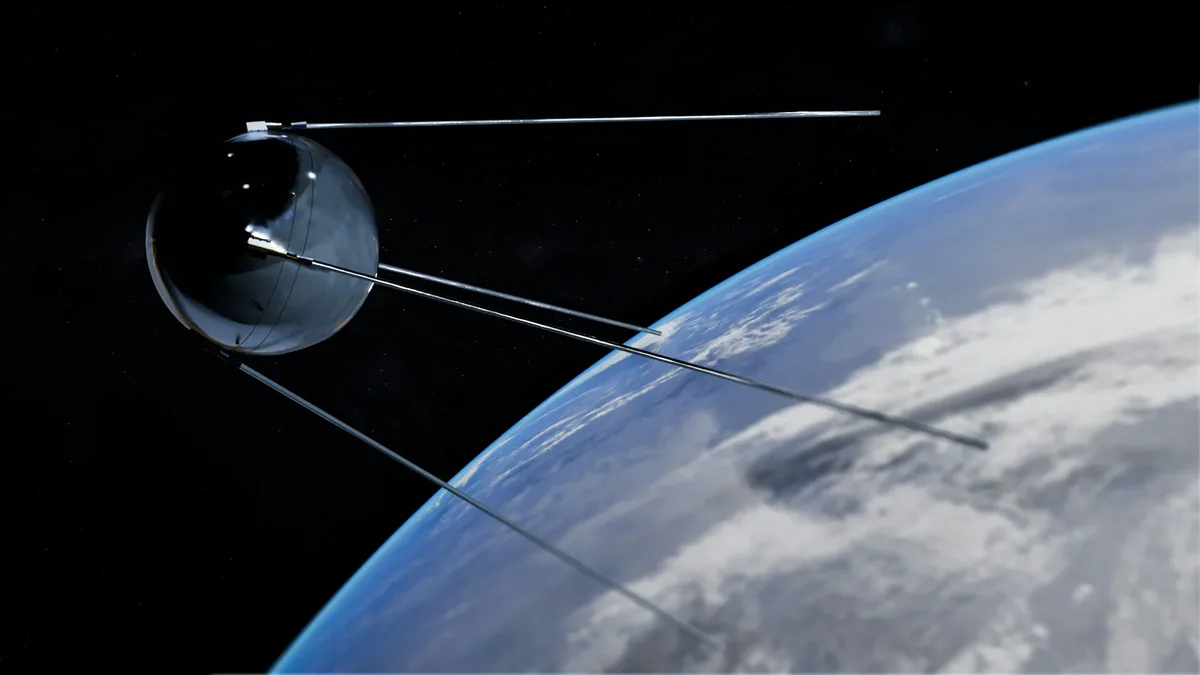
Rocket Lab Launches Synspective's Latest StriX Satellite
Rocket Lab has launched Synspective's newest StriX synthetic aperture radar satellite to a 575 km orbit on its Electron rocket, marking the 11th...

Isar Aerospace's Spectrum Rocket Reaches Orbit on First
Isar Aerospace successfully launched its Spectrum rocket from Norway, deploying five CubeSats. This marks the first privately funded European orbital...

Franco-German NewSpace urges EU to buy
German and French NewSpace groups call on the European Commission to act as a reliable customer for launch services ahead of the International Space

D-Orbit Orders GomSpace Power Systems for ION Missions
D-Orbit has ordered power systems from GomSpace for its ION orbital transfer vehicle missions in 2026-2027. The contract is worth 6.3 million Danish...
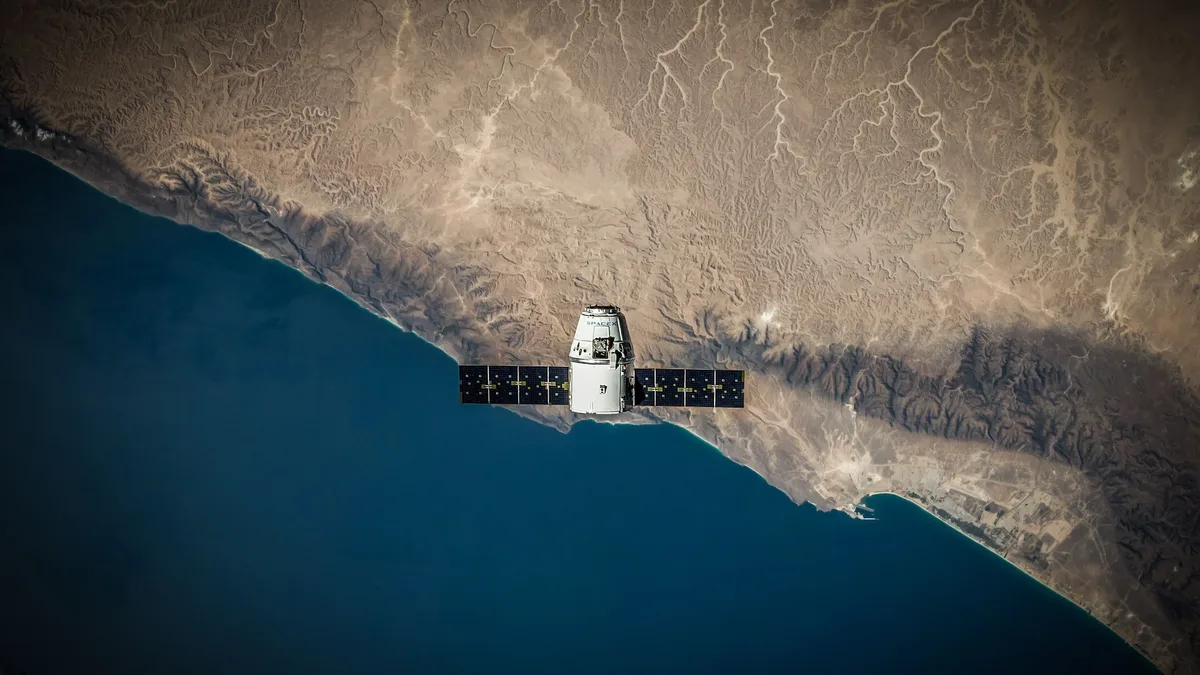
York Space Systems Unveils VLEO LX/V-Class Satellite
York Space Systems has introduced a new satellite platform, the LX/V-Class, designed for sustained Very Low Earth Orbit missions down to 200 km.