York Space Systems Unveils VLEO LX/V-Class Satellite
York Space Systems has introduced a new satellite platform, the LX/V-Class, designed for sustained Very Low Earth Orbit missions down to 200 km.
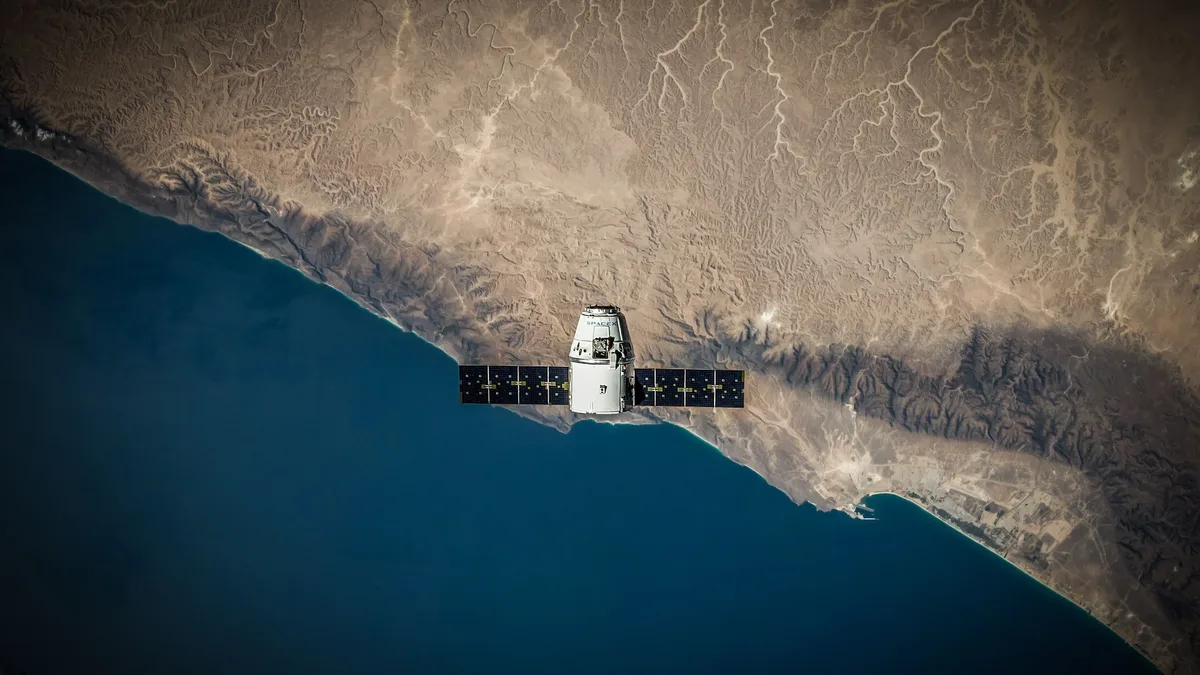
York Space Systems has announced a new satellite platform built for sustained operations at Very Low Earth Orbit altitudes. Dubbed the LX/V-Class, the spacecraft is designed for missions lasting three years or more at altitudes as low as 200 kilometers.
The new platform is based on the company's existing S- and LX-Class satellite designs but incorporates structural modifications to reduce atmospheric drag. It will be equipped with a new, higher-thrust electric propulsion system supplied by York's subsidiary, Orbion Space Technology.
Key Specifications
The LX/V-Class platform offers specific capabilities for VLEO operations.
| Capability | Specification |
|---|---|
| Target Altitude | As low as 200 km |
| Payload Mass Capacity | ~300 kg |
| Peak Power Generation | 2 kW |
| Mission Duration | 3+ years |
CEO Dirk Wallinger told Payload that the company expects to build and launch an LX/V-Class satellite within six to seven months of signing a contract. He stated that for the immediate needs of government buyers, an operational floor of 300 km is sufficiently low.
Strategic Market Position
While other manufacturers are pursuing designs for altitudes below 300 km, York is betting on speed to market over flying at the absolute lowest possible orbit. Wallinger explained the company's rationale, linking the platform's intended altitude range to specific mission types.
"Our platform is going to be more intended for things like moving target indicators, missile warning, missile tracking applications, where there's going to be different phenomenologies that you can do between 300 and 350 km," Wallinger said. He added that flying lower would require fundamental design changes the company deems unnecessary for its target market.
Building a Complete Ecosystem
To support its VLEO ambitions and win large government contracts, York has expanded its capabilities beyond manufacturing satellite buses. Through recent acquisitions, the company now offers a more complete turnkey solution.
In July, York completed its acquisition of ALL.SPACE. This move will integrate jam-resistant radio frequency communications capabilities into the LX/V-Class offering, ensuring the satellites can operate in electronically contested environments. The previous year, York purchased ATLAS Space Operations, providing access to a network of more than 50 ground antennas for downlinking data.
Wallinger emphasized this integrated approach, suggesting it provides a distinct advantage. He noted that other spacecraft platform manufacturers still have to assemble these supporting pieces, whereas York's solution plugs directly into its established ecosystem.
The company's strategy focuses on rapidly delivering a capable VLEO platform tailored for government sensing and tracking missions, backed by in-house propulsion and a recently acquired ground and communications network.