
National Agencies
| Country of origin | United States |
|---|---|
| First created | 1958 |
| Original use | Civilian space program and aeronautics research |
| Primary launch vehicle | Varies by mission and era |
| Primary payload type | Varies by mission (e.g., satellites, probes, crewed spacecraft) |
| Launch window determination | Based on orbital mechanics and mission objectives |
Origin and history
The concept of National Agencies as dedicated government entities for space activity emerged in the mid-20th century, following the dawn of the space age. The Soviet Union established the first such agency in a de facto form through its state design bureaus and the Academy of Sciences in the 1950s. The United States formally created the National Aeronautics and Space Administration (NASA) by an act of Congress in 1958, consolidating various existing research committees. In Europe, the European Space Research Organisation (ESRO), a precursor to the European Space Agency (ESA), was established by treaty in the early 1960s. Other nations, including Japan, India, and China, founded their national space agencies in subsequent decades, often during the 1960s and 1970s. This proliferation was driven by the strategic, scientific, and technological imperatives of the Cold War and a growing recognition of space's potential.
What it is for
A National Agency is a government-funded organization responsible for the civilian and often scientific exploration and use of space. Its primary purpose is to execute a national space policy, which typically includes the development of launch vehicles and spacecraft. These agencies conduct scientific research in fields such as astronomy, planetary science, and Earth observation. They are also tasked with developing and operating critical space infrastructure, including satellite constellations for communication, navigation, and environmental monitoring. A core function is managing the end-to-end process of a space mission, from initial concept through construction, launch, and operations. Furthermore, they often foster domestic aerospace industry and engage in international cooperation on major projects.
Overview
A National Agency functions as a large, complex system integrator and mission operator, managing thousands of contractors and academic partners. Its structure typically includes directorates for human spaceflight, science, aeronautics, and technology development, each with its own budget and project portfolio. The agency's work is characterized by long-term planning cycles, often spanning decades for major exploration goals like lunar landings or Mars sample return. Funding is derived from annual governmental appropriations, making its programs subject to political and budgetary shifts. Technically, the agency maintains or accesses specialized facilities for rocket engine testing, spacecraft assembly in clean rooms, and deep-space communication networks. International collaboration is a hallmark, with agencies regularly sharing costs, expertise, and hardware on large missions.
What to know
The launch phase represents the most publicly visible and high-risk element of an agency's work, involving the vehicle, payload, and launch window. The launch vehicle is a multi-stage rocket engineered to achieve specific orbital velocities, with its reliability statistics being a product of extensive historical testing. The payload refers to the spacecraft or cargo being launched, which could be a satellite, space probe, or crewed module, and is the culmination of years of design and construction. The launch window is a precisely calculated time period during which the rocket must lift off to achieve its intended orbital trajectory or planetary intercept; this can be instantaneous or last several hours. Mission Control assumes responsibility for the vehicle and payload immediately upon liftoff, monitoring all systems through telemetry. A successful launch is merely the beginning, as the payload must then undergo commissioning and begin its operational phase, which can last for years.
Common questions
What is the difference between a national agency and a commercial space company? National agencies are publicly funded and pursue government-defined goals in science and national interest, while commercial companies are privately funded and primarily driven by market demands and profitability. How does an agency decide its missions? Missions are typically selected through a competitive peer-review process for science missions, while flagship exploration goals are often set by political directive. Who can work for a national space agency? Agencies employ a wide range of professionals, including engineers, scientists, accountants, lawyers, and technicians, often requiring citizenship of the member state. How are international projects managed? Through formal intergovernmental agreements that delineate financial contributions, work shares, and data rights for each participating agency. What happens after a launch failure? A rigorous failure investigation board is convened, involving agency and independent experts, to determine the root cause and mandate corrective actions before flights resume. How does an agency track its spacecraft? Agencies operate global networks of large radio antennae, called Deep Space Networks, for communication and navigation with distant missions.
Pros and cons
A primary advantage is the ability to undertake projects of immense scale, cost, and risk that no commercial entity would pursue, such as interplanetary science or building an international space station. The stable, though fluctuating, public funding allows for long-term basic research and technology development that fuels broader innovation. A significant con is bureaucratic inertia and political vulnerability, where major programs can be cancelled or radically redirected with changes in administration, wasting years of investment. The cost-plus contracting model historically used for major developments can lead to substantial budget overruns and schedule delays without sufficient penalty. Agencies can sometimes become risk-averse to the point of stagnation, prioritizing the protection of existing infrastructure and programs over pioneering new approaches. A common mistake for new or ambitious agencies is attempting to develop a complex launch vehicle and a sophisticated payload simultaneously, often leading to failure in both due to stretched resources and expertise.
Who it suits
This model suits national governments seeking to achieve strategic geopolitical objectives, secure independent access to space, and drive high-tech industrial development. It is essential for the pursuit of pure scientific research in space, where there is no immediate commercial return but profound academic and observational value. Large-scale, multi-decade human exploration goals, such as establishing a sustained presence on the Moon, inherently require the coordinated resources and long-term mandate of a national agency. Nations with developing space capabilities often benefit from the focused pathway and knowledge accumulation that a centralized agency provides. The structure suits international consortia aiming to pool resources for projects too large for any single nation, like major orbital telescopes or planetary missions. It is less suited for routine, operational space activities like satellite telecommunications, where commercial entities can typically provide services more efficiently and innovatively.
Latest National Agencies news
Latest reporting
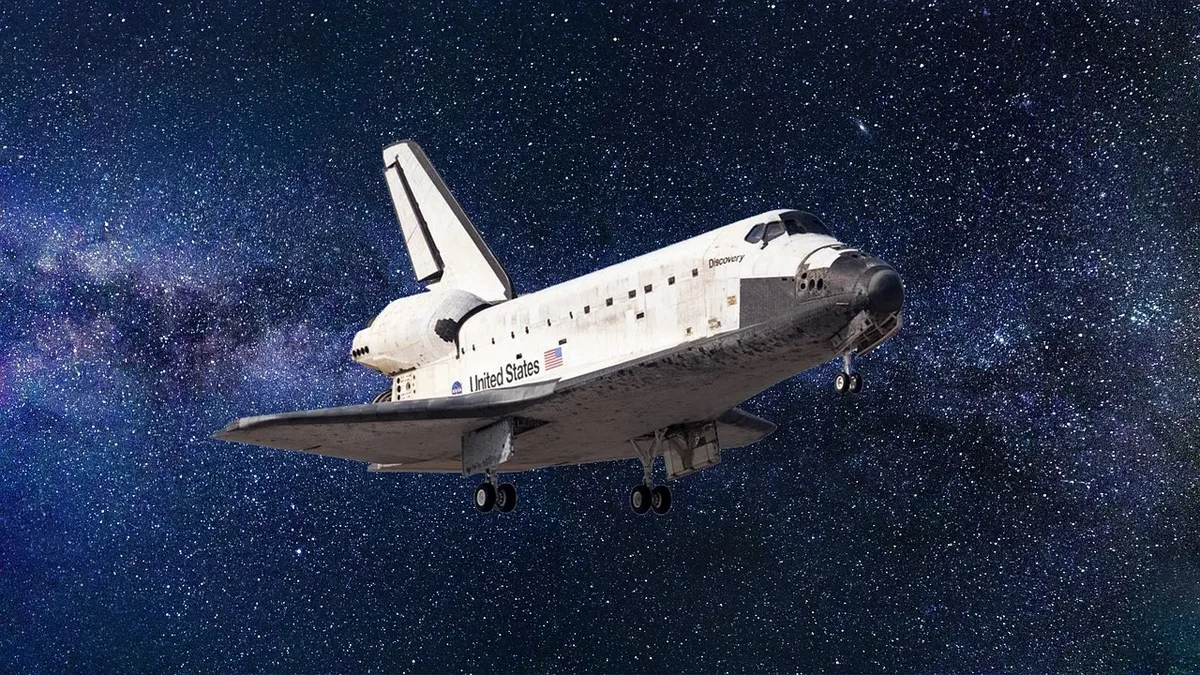
Sierra Space Books Dream Chaser First Flight Payloads
Sierra Space has secured undisclosed national security and commercial customers to fly payloads on the inaugural mission of its Dream Chaser...

Polish Institute Reports Continued GNSS Disruption Along Country’s North Coast
Poland’s National Institute of Telecommunications reports continued GNSS signal interference along the northern coast, with significant disruptions...
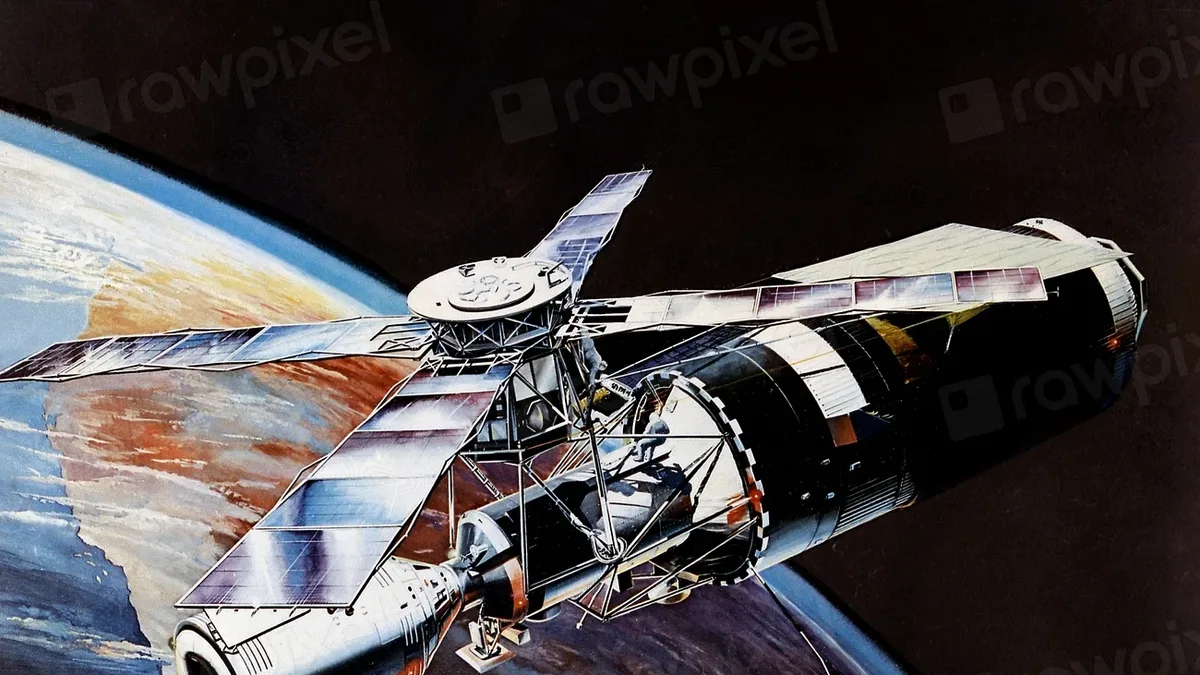
US National Security Strategy Highlights Space Technology
The White House has released its National Security Science & Technology Strategy, emphasizing the importance of space technology in national security...

Vantor Appoints New Leader for U.S. Government Business
Vantor has named Will Cocos as executive vice president and general manager of its U.S. government business, succeeding Susanne Hake. Cocos, a former...
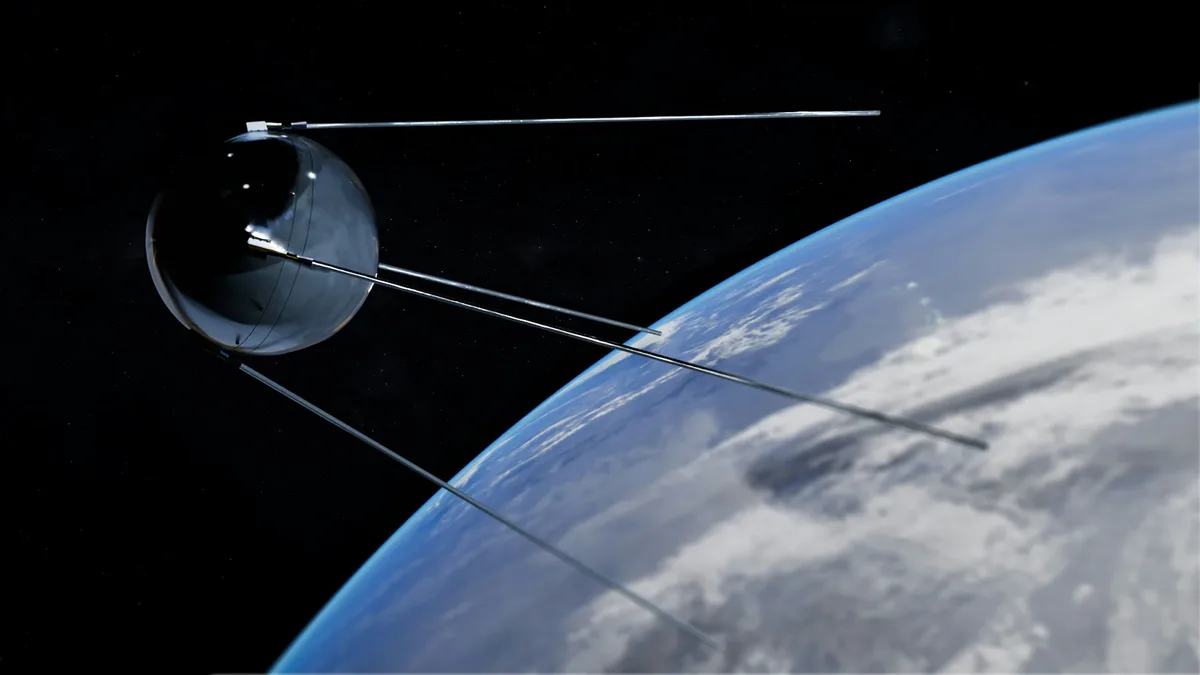
NRO Expands Use of Commercial Satellite Intelligence
The National Reconnaissance Office has awarded HawkEye 360 a new contract to provide commercial radio-frequency intelligence, marking the next stage...
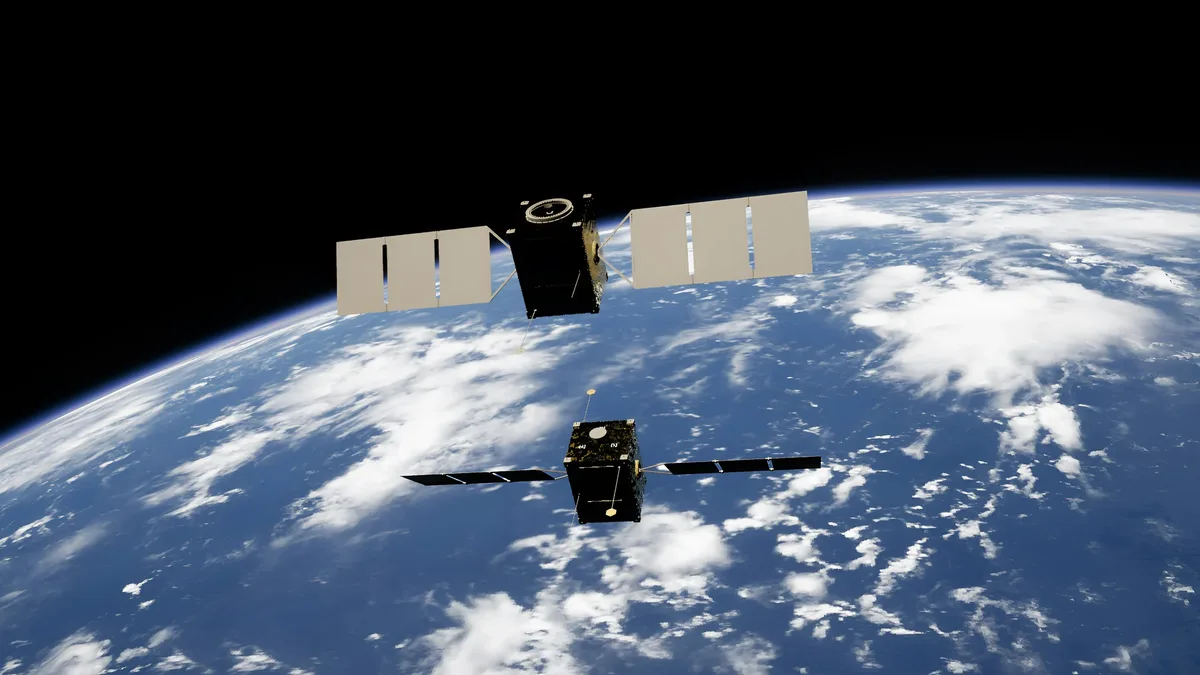
NOAA Awards Contracts to Spire and PlanetiQ for Radio-Occultation Data
The National Oceanic and Atmospheric Administration has awarded contracts to Spire Global and PlanetiQ to provide radio occultation data for...