Planetary Defence Beyond Hera
| Recall | Hera mission |
|---|---|
| Original use | Planetary defence demonstration |
| Launch vehicle | Ariane 6 |
| Payload | Two companion spacecraft |
| Launch window | October 2024 |
| Country of origin | European Space Agency (ESA) member states collaboration |
| First launched | Planned for 2024 |
Origin and history
Planetary Defence Beyond Hera is a conceptual framework and a proposed set of future missions originating from international space agencies and research consortia, primarily in Europe and the United States. Its development began in earnest in the 2020s, following the demonstration of kinetic impactor technology by NASA's DART mission. The "Beyond Hera" concept was formally articulated by the European Space Agency as a long-term roadmap for planetary defence, building upon the data returned by its Hera mission. This planning phase involves extensive collaboration between scientists, engineers, and policy makers across multiple nations. The history of this effort is directly tied to the growing recognition of the asteroid impact hazard as a global security issue. Its foundational principles were established through decades of prior research into near-Earth object detection and characterization.
What it is for
The primary purpose of Planetary Defence Beyond Hera is to advance humanity's capabilities for deflecting a potentially hazardous asteroid, should one ever be discovered on a collision course with Earth. It is designed to move beyond the initial technology demonstration phase into developing a reliable, tested, and scalable planetary defence system. This framework aims to mature deflection techniques, such as kinetic impactors and possibly gravity tractors, to a state of operational readiness. A key objective is to enable a rapid response capability, significantly reducing the lead time required from threat detection to mitigation action. It also serves to foster and institutionalize international cooperation on planetary defence, ensuring shared protocols and responsibilities. Furthermore, it drives the development of next-generation space-based survey telescopes for completing the catalog of hazardous objects.
Overview
Planetary Defence Beyond Hera encompasses a multi-decade vision involving a sequence of robotic spacecraft missions, ground-based observations, and technology development programs. The framework anticipates missions to a variety of asteroid types, including binary systems, rubble piles, and fast-rotating objects, to understand how different materials respond to deflection attempts. It integrates deep-space reconnaissance, detailed post-deflection assessment, and potentially the demonstration of multiple deflection methods on a single target. The overview includes not only the flight missions but also the creation of dedicated coordination offices within space agencies and the establishment of international decision-making pathways. Central to the overview is the concept of a "test campaign" approach, treating each mission as an experiment that informs and de-risks the next. This cumulative effort is intended to transform planetary defence from a theoretical concept into a practical, if hopefully never used, planetary insurance policy.
What to know
It is crucial to know that Planetary Defence Beyond Hera is not a single scheduled mission, but a strategic pathway whose specific missions and timelines are subject to funding and political commitment. The "Hera" mission it builds upon is a European Space Agency spacecraft designed to perform a detailed post-impact survey of the Didymos binary asteroid system, specifically the moonlet Dimorphos impacted by DART. Knowledge of the DART mission's results is fundamental, as the degree of momentum transfer and cratering it produced directly informs the requirements for future deflection spacecraft. One should understand that the greatest technical challenges involve accurately predicting an asteroid's internal structure and cohesion, which dramatically affects deflection outcomes. The legal and policy frameworks for authorizing a deflection mission, especially against an asteroid that may cross national boundaries in its risk corridor, are equally complex and unresolved. Finally, it is important to recognize that while the goal is preparedness, the probability of needing to deflect a large, civilization-threatening asteroid in the next century remains very low, though the consequence is extreme.
Common questions
A common question is whether this program is a response to a specific imminent threat, which it is not; it is a precautionary, long-term research and development effort. People often ask how an asteroid deflection would be paid for, leading to discussions about shared international funding models versus unilateral action by a capable space-faring nation. Many inquire about the possibility of using nuclear devices for deflection, a topic that remains under study but is often separated from the initial "Beyond Hera" kinetic impactor focus due to political and treaty complications. A frequent question concerns the minimum warning time needed, which depends entirely on the asteroid's size and orbit, but a core goal of the program is to reduce the required response time from years to potentially months. People also ask if a mission could accidentally redirect an asteroid toward Earth, a risk mitigated by choosing targets that are not Earth-threatening and by extremely precise navigation and modeling. Finally, there is often confusion about the difference between deflection, which changes an asteroid's path to make it miss Earth, and disruption, which is generally not considered a viable strategy for large objects.
Pros and cons
A significant pro of this incremental approach is that it builds vital expertise and institutional knowledge within space agencies, creating a standing capacity for planetary defence. The international collaborative nature spreads cost and risk while fostering global trust on a security issue. However, a major con is the program's vulnerability to shifting political priorities and budget cycles, as its benefits are preventative and may never be visibly utilized, making it difficult to sustain funding over decades. A common mistake in public perception is overestimating the current state of readiness, leading to potential complacency or, conversely, unwarranted alarm if a threat is discovered. Those who might regret involvement are policymakers facing near-term crises who see the long-term investment as a distraction from more immediate problems. The technical risk lies in extrapolating results from a few, possibly unrepresentative, asteroid experiments to the entire population of potential threats.
Who it suits
This strategic framework suits space agencies and governments with long-term strategic planning horizons and a commitment to international scientific cooperation. It is suited for aerospace engineers and scientists specializing in astrodynamics, planetary science, and spacecraft design who seek technically complex, multi-generational challenges. The program suits policy analysts and diplomats focused on building novel governance models for global security threats that transcend national borders. It is also suited for public outreach professionals who can communicate complex risk assessment and long-term preparedness to the general public. Ultimately, it suits a global community that values existential risk mitigation, even for low-probability, high-consequence events, and is willing to invest in capabilities it hopes never to use.
Latest Planetary Defence Beyond Hera news
Latest reporting
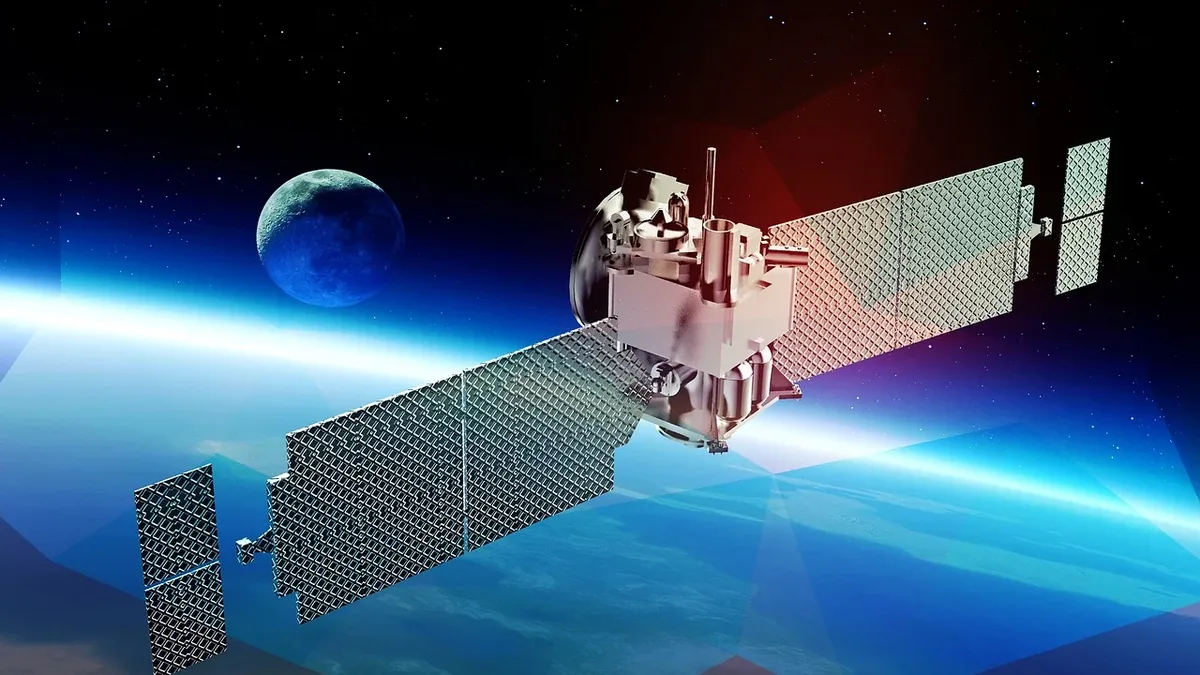
IRIS2 programme reshaped as market rescue wrapped in strategic autonomy language
Analysis of the European satellite constellation initiative reveals structural shifts from defence focus to commercial viability amid funding...

Vantor Appoints New Leader for U.S. Government Business
Vantor has named Will Cocos as executive vice president and general manager of its U.S. government business, succeeding Susanne Hake. Cocos, a former...
Lynk and Omnispace Merge to Advance Direct-to-Device Services
Elveo Mobile, the merged entity of Lynk Global and Omnispace, aims to expand direct-to-device (D2D) satellite services beyond basic messaging with...