Ariane 6 launches MTG-I2 weather satellite
An Ariane 6 rocket has launched the 3.8-tonne MTG-I2 weather satellite from Europe's Spaceport in Kourou. The mission, featuring a two-and-a-half-hour launch window, aims to provide rapid Earth monitoring to help prevent natural disasters.
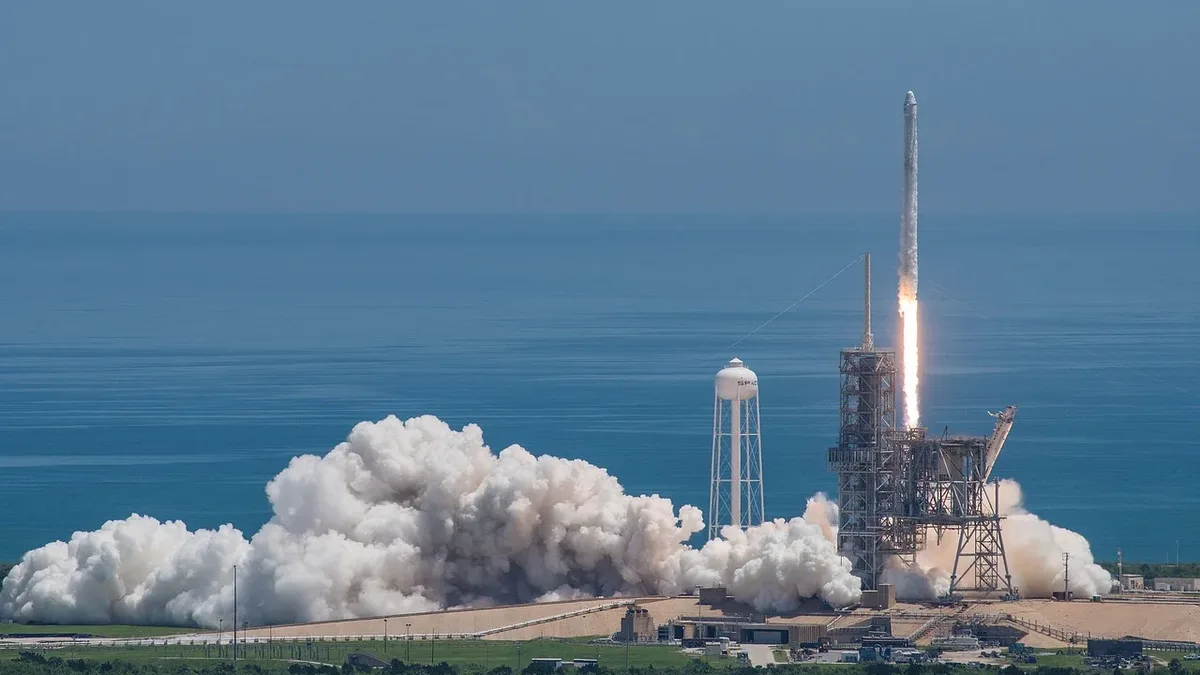
An Ariane 6 rocket has launched the 3.8-tonne MTG-I2 weather satellite from Europe's Spaceport in Kourou. The mission, which flew to a geostationary transfer orbit, featured a launch window of two hours and 30 minutes, according to engineers from ArianeGroup, Arianespace, CNES, Eumetsat, ESA and Thales Alenia Space who described the process to Euronews.
The rocket was built to be cheaper and more versatile than its predecessor, Ariane 5. Its core stage was manufactured and tested in France, while the upper stage was built in Germany. Both arrived in French Guiana ready to fly, transported by the dedicated cargo ship Canopée. The solid-fuel boosters were manufactured locally at the Regulus and Europropulsion plants.
Once all parts were on site, the ArianeGroup team needed only between seven and nine days to assemble the launcher's central core. Frédéric, the deputy launch director, explained the fueling process. "Filling the launcher takes two hours, and then another hour and a half of thermal stabilisation, because the liquid oxygen is at about -150°C and the liquid hydrogen at -250°C," he said.
The Build and Launch
The rocket is assembled horizontally. Guided vehicles move the stages into position, where they are joined with a tolerance of barely a millimetre. From arrival at the facility, it takes around ten days for the central core to be ready for the pad.
The facility has two parallel assembly lines, allowing work on the next rocket to begin immediately. The programme aims for a cadence of nine to ten launches a year from 2027.
The MTG-I2 flight had two rare technical characteristics. It was the first Ariane 6 flight to a geostationary transfer orbit in its A62 configuration with two boosters. The rocket's Vinci-powered upper stage can also be re-ignited in mid-flight using a helium pressurisation system, a capability Ariane 5 did not have.
Preparing the Satellite
In the encapsulation building, air is filtered and humidity regulated. This is the last room where technicians have direct physical access to the satellite before it is sealed inside the rocket's fairing. For the sensitive MTG-I2 optical instrument, cleanliness is critical. The process includes light traps for insects and birds to prevent contamination.
A facility manager explained the coordination, stating they had spent almost a year on this final campaign stretch. "We cannot just open the container and let it out with a bird inside, obviously," they said.
Countdown and Weather
Eleven hours before lift-off, control shifts to the Júpiter control room at CNES. Launch Operations Director Maxime André coordinates safety across the entire range. The mission team remains in contact with the satellite's control centre, located four kilometres away, right up to the last minute.
Weather analyst François Laforge monitors lightning and wind. The criteria are strict: no storm within a ten-kilometre radius, and no cloud above 6,500 metres in that radius. Weather balloons with radiosondes measure wind profiles.
Flight Safety Engineer Leonard Bouchaillot uses this data to ensure the pre-calculated "launch corridor" remains valid, a requirement of French space law. A final weather check occurs ten minutes before lift-off.
Programme Scope and Benefits
James Champion, head of the MTG project at ESA, outlined 16 years of work on the Meteosat programme. The cost is around 6 billion euros in today's economic conditions, while its benefits exceed 61 billion once infrastructure is considered. Cristian Bank of Eumetsat noted the context of increasing extreme weather in Europe.
The satellite is designed to provide a new image of Europe every 2.5 minutes, aiming to forecast and prevent adverse weather events and help save lives.
Source: news.google.com