Ariane 6 Launches Weather Satellite
Europe's Ariane 6 rocket successfully delivered the MTG-I2 weather satellite to geostationary transfer orbit on August 27.
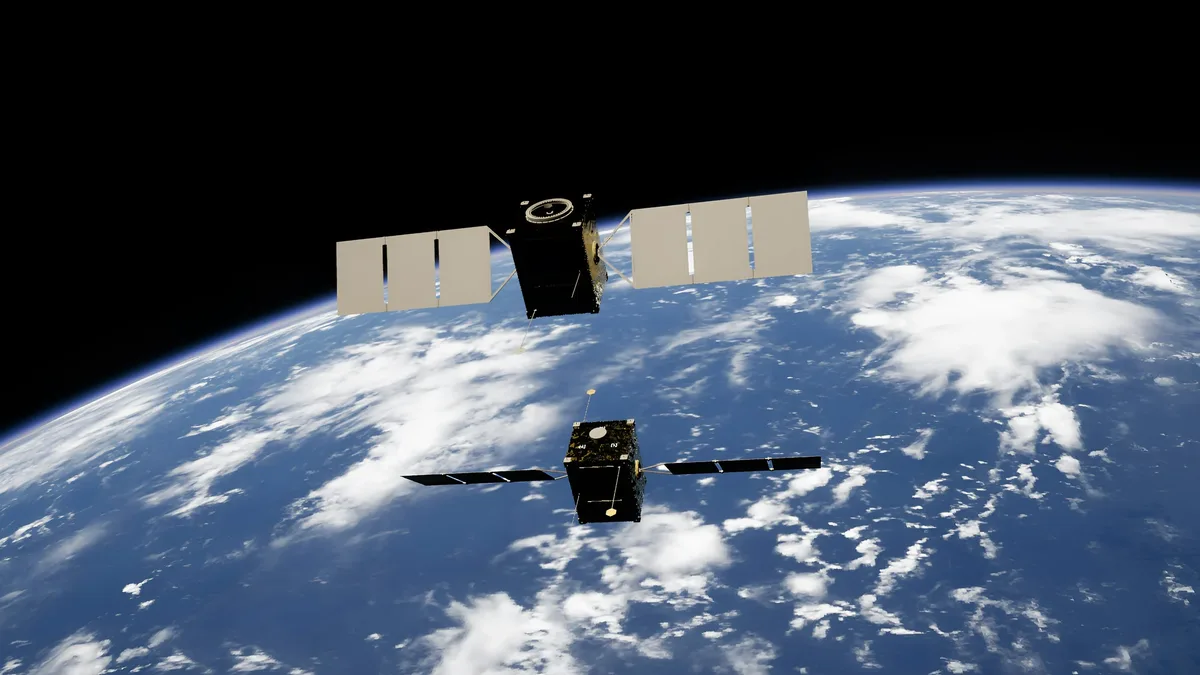
Europe's Ariane 6 rocket completed its first mission to geostationary transfer orbit on August 27, delivering the MTG-I2 weather satellite. The launch confirms the vehicle's full operational capability for the continent's most strategically critical space programs, according to Arianespace CEO David Cavaillolès.
The Geostationary Milestone
Reaching geostationary transfer orbit is a more demanding target than the low-Earth and polar orbits Ariane 6 had previously served. It requires the rocket's upper stage to sustain multiple precision burns, placing the satellite into an elliptical orbit whose highest point sits at roughly 36,000 km above the equator. The satellite then uses its own propulsion to circularize into its final geostationary post.
Flight VA270's execution culminated in MTG-I2 separating from the upper stage 36 minutes after liftoff at an altitude of 2,778 km. This profile is what Ariane 5 spent its career doing for over 20 years, and it is the profile Ariane 6 was built to inherit.
David Cavaillolès called the success a major milestone, describing it as confirming the availability of a reliable, sovereign launch service aligned with Europe's ambitions.
The Vinci Engine's Role
The technical achievement at the center of VA270 is Ariane 6's upper-stage Vinci engine. This cryogenic expander-cycle engine can restart up to five times in flight and delivers 180 kN of thrust. The expander-cycle design gives the Vinci high reliability and the ability to reignite in microgravity.
On VA270, the Vinci performed its burns without issue. This result carries additional significance because the rocket's July 2024 debut flight ended prematurely when an auxiliary propulsion unit failed to reignite. That issue was an auxiliary system failure, not a Vinci failure. VA270 is the definitive confirmation that the engineering correction held even under the added demands of a GTO profile.
Christophe Bruneau, CEO of ArianeGroup, called the result another milestone in the ramp-up of Ariane 6.
The MTG-I2 Satellite's Capabilities
MTG-I2, formally designated Meteosat-14, is the second imaging satellite in the Meteosat Third Generation constellation operated by EUMETSAT. Weighing approximately 3,800 kg, the spacecraft was built by a European industrial consortium led by prime contractor Thales Alenia Space.
Two instruments define its scientific mission. The Flexible Combined Imager scans the full visible Earth disk every 10 minutes and delivers a rapid-scan service over Europe and North Africa every 2.5 minutes. That 2.5-minute interval is key to tracking fast-moving convective systems.
The second instrument, the Lightning Imager, is the first of its kind on a European geostationary weather satellite. Operating continuously from 36,000 km above the equator, it detects all forms of lightning across more than 80% of Earth's surface visible from its orbital slot. The Imager was built by Leonardo.
Closing the Storm Warning Gap
For decades, European geostationary weather satellites could not detect lightning from orbit. The MTG Lightning Imager closes that gap. Severe thunderstorms are reliably preceded by sharp increases in lightning activity, sometimes by 20 minutes or more before the storm reaches its most dangerous phase.
Geostationary detection of those changes gives meteorologists a proxy for storm intensity that has no equivalent in prior European satellite capability. Forecasters using MTG data will, for the first time, be able to track the full storm lifecycle from initial atmospheric instability through its lightning phase.
This substantially improves nowcasting, the very short-range forecasting discipline on which aviation safety, emergency services, and public warning systems most directly depend.
Completing the Constellation
MTG-I2 joins two satellites already in orbit: MTG-I1, launched on Ariane 5 in December 2022, and MTG-S1, a sounder satellite launched in July 2025. Together, the three-satellite first family represents what EUMETSAT describes as the most powerful weather constellation in the world for geostationary meteorological coverage.
The two MTG-I imaging satellites divide responsibilities. One scans the full Earth disk every 10 minutes while the other concentrates on European rapid-scan service at the 2.5-minute cadence. MTG-I2 will now enter a commissioning phase before entering operational service.
Ariane 6's Competitive Positioning
The GTO milestone also resets the competitive positioning of Ariane 6 within the commercial launch market. The rocket's payload capacity to GTO varies by configuration.
| Configuration | Payload to GTO |
|---|---|
| Ariane 62 (two boosters) | Up to 4,500 kg |
| Ariane 64 (four boosters) | Up to 11,500 kg |
For comparison, SpaceX's Falcon 9 in its expendable configuration delivers approximately 8,300 kg to GTO. Ariane 6 is expendable in design, which means each mission requires a new rocket. ESA member states have agreed to subsidize the program by up to €340 million per year.
Source: news.google.com