In Orbit Demonstration And Technology Missions
Origin and history
The concept of In Orbit Demonstration and Technology Missions originates from the space programs of the United States and the Soviet Union during the mid-20th century. These missions evolved from the early experimental satellite launches of the 1950s and 1960s, which themselves served as technology demonstrators. The formalization of such missions as a distinct programmatic category gained significant traction within NASA and other space agencies in the 1980s and 1990s. This period saw an increased need to validate new spacecraft systems and instruments in the actual space environment before operational deployment. The European Space Agency also adopted this methodology for its technology development pipeline, contributing to its establishment as a standard practice. The approach has since been embraced globally by national space agencies and commercial aerospace entities as a critical risk-reduction step.
What it is for
In Orbit Demonstration and Technology Missions primarily serve to de-risk novel space technologies by testing them in the harsh and unforgiving environment of space. Their purpose is to provide flight heritage for components, subsystems, or entire satellite platforms that have only been validated in ground laboratories. These missions verify the performance, reliability, and longevity of new technologies under real conditions of radiation, vacuum, and thermal extremes. They are essential for bridging the "technology readiness level" gap between laboratory prototypes and operational flight systems. This process allows engineers to identify and rectify unforeseen failure modes before committing expensive operational assets. Furthermore, they can demonstrate entirely new mission concepts or unconventional spacecraft architectures that are considered too novel for immediate operational use.
Overview
An In Orbit Demonstration and Technology Mission is a dedicated spaceflight whose principal objective is the testing and validation of new hardware or software. The mission's design, from the spacecraft bus to its orbit, is typically subordinate to the needs of the technology payload being flown. These missions often utilize smaller, more cost-effective satellite platforms like CubeSats or microsatellites, though they can also be hosted as secondary payloads on larger spacecraft. The operational phase focuses on intensive check-out, calibration, and a structured campaign of experiments rather than on continuous service provision. Data downlink is crucial, as telemetry and performance data are the primary deliverables of the mission. Mission conclusion often occurs once the technology objectives are met, even if the spacecraft itself remains partially functional.
What to know
The launch vehicle for such a mission is frequently a rideshare option, placing the demonstrator into orbit as a secondary payload to reduce costs significantly. The primary payload is the technology or system under test, which may range from a new propulsion thruster to an advanced imaging sensor or communication antenna. The launch window for these missions is often constrained by the needs of the primary payload on the rideshare launch or by the target orbit required for the specific technology test. Integration complexity is a key consideration, as new technologies may have unique power, thermal, or data interface requirements that challenge standard satellite buses. Mission teams must plan for a higher tolerance of anomaly and failure compared to operational missions, as discovering flaws is part of the mission's purpose. Post-mission analysis and publication of results are considered a vital contribution to the aerospace community, even if the test reveals shortcomings.
Common questions
What is the difference between a technology demonstrator and a science mission? A technology demonstrator's goal is to prove the spacecraft system itself, while a science mission uses proven systems to collect data about space or Earth. How long do these missions typically last? Their designed operational lifetime is often short, from several months to a couple of years, focused on achieving specific test milestones. Who funds In Orbit Demonstration missions? Funding sources include government space agency technology programs, military research departments, and increasingly, private venture capital for commercial space technology. Can a failed demonstrator still be valuable? Yes, a failure in orbit provides invaluable data on failure modes that ground testing cannot replicate, informing future designs. Why not just test more thoroughly on the ground? The space environment combines multiple extreme stresses simultaneously in ways that are prohibitively expensive and complex to fully simulate on Earth. Are these missions considered high-risk? They are inherently higher risk than flights using heritage technology, but this risk is managed and accepted within the program's objectives.
Pros and cons
These missions also foster innovation by providing a pathway to flight for small companies and research institutions without requiring a full-scale satellite program. However, a significant con is the high cost per kilogram of data returned, as the mission exists solely for test purposes and does not provide an ongoing operational service. Teams often regret the complexity of integrating immature technology with a spacecraft bus, leading to schedule delays and integration conflicts that consume budget. A common mistake is underestimating the resources required for the extensive data analysis and reporting phase after launch, which is critical for the mission's value. Furthermore, a demonstrator that suffers an early catastrophic failure may provide limited useful data, leading to stakeholder disappointment despite the inherent risk.
Who it suits
This mission type suits government technology offices and research agencies with mandated goals of advancing space system capabilities and lowering future mission risk. It is appropriate for aerospace startups seeking to prove a key component's performance in orbit to attract further investment or secure customers. University research groups with specialized engineering or instrument development projects also find this model suitable, often utilizing standardized CubeSat platforms. Established satellite manufacturers may use dedicated demonstrators to validate a new product line or bus architecture before offering it commercially. The approach suits programs where tolerance for technical failure is understood and where the primary success metric is knowledge gain rather than continuous operational service. It does not suit organizations requiring immediate, guaranteed operational utility from their space asset or those with extremely rigid budget and schedule constraints.
Latest In Orbit Demonstration And Technology Missions news
Latest reporting
ISRO's EOS-05 Satellite Begins Geosynchronous Orbit Ascent
India's EOS-05 Earth observation satellite, launched on 4 September, has performed two orbit-raising manoeuvres en route to its final geosynchronous...
Rocket Lab Launches Synspective's Latest StriX Satellite
Rocket Lab has launched Synspective's newest StriX synthetic aperture radar satellite to a 575 km orbit on its Electron rocket, marking the 11th...
China Tests Earth-Moon Laser Link for Lunar Missions
China has successfully demonstrated a two-way laser communications link across 400,000 km between Earth and the Moon, a key technology for its planned
Isar Aerospace's Spectrum Rocket Reaches Orbit on First
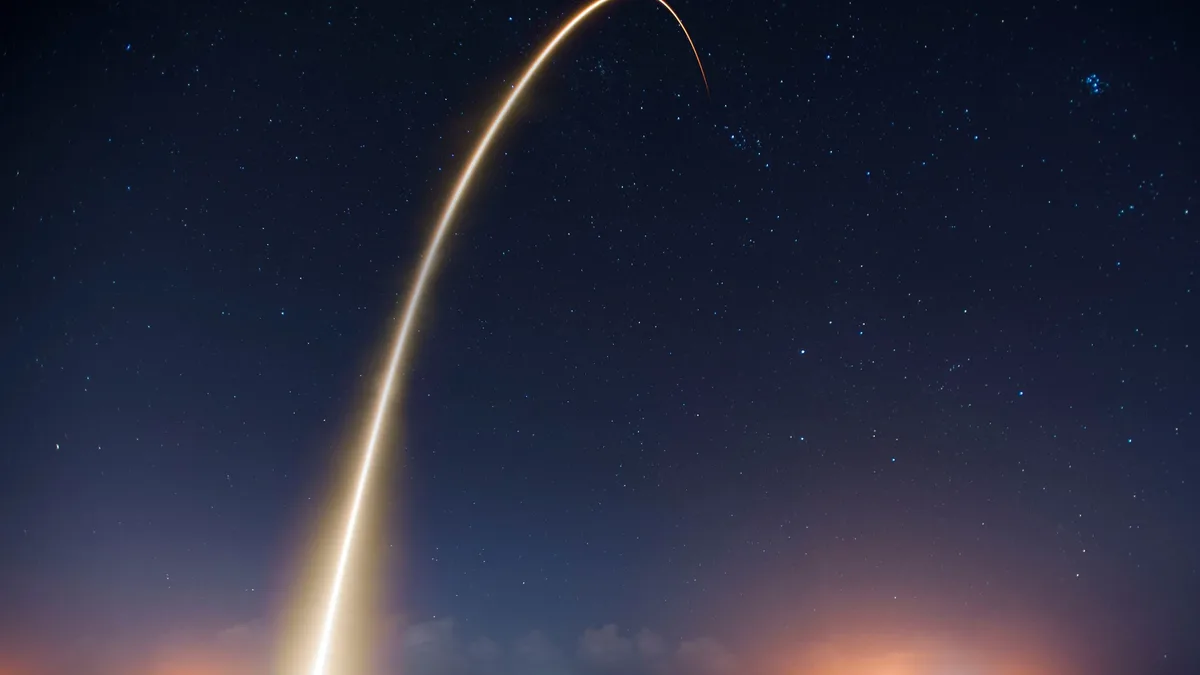
Isar Aerospace successfully launched its Spectrum rocket from Norway, deploying five CubeSats. This marks the first privately funded European orbital...
Blue Origin Wins $700 Million NASA Mars Telecom Contract
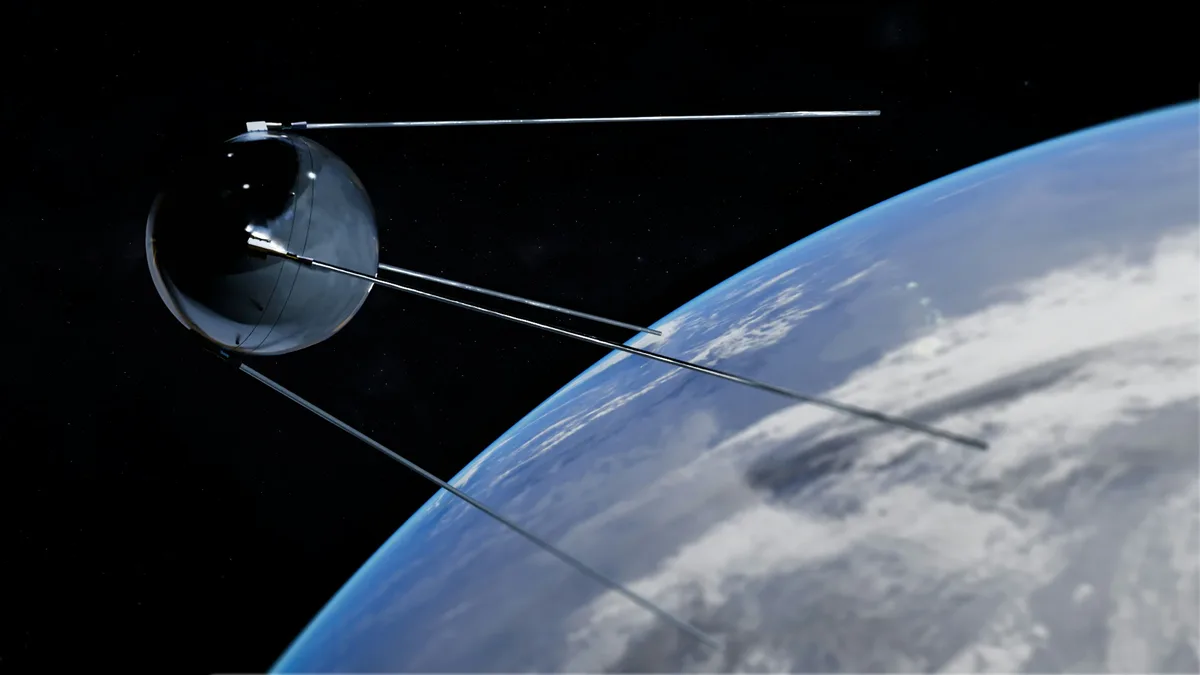
NASA awarded Blue Origin up to $700 million to build a Mars telecom orbiter by 2028 to support future missions.

D-Orbit Orders GomSpace Power Systems for ION Missions
D-Orbit has ordered power systems from GomSpace for its ION orbital transfer vehicle missions in 2026-2027. The contract is worth 6.3 million Danish...