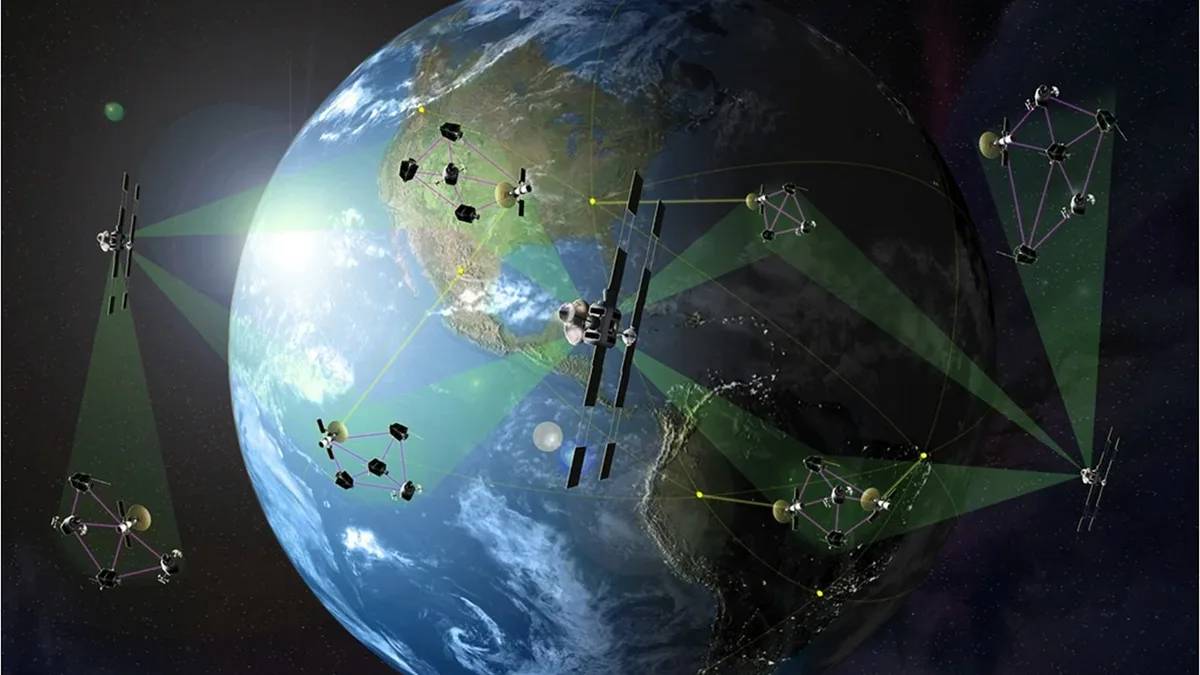
China Tests Earth-Moon Laser Link for Lunar Missions
China has successfully demonstrated a two-way laser communications link across 400,000 km between Earth and the Moon, a key technology for its planned lunar missions.
China has verified a two-way high-speed laser communications link spanning more than 400,000 kilometers between Earth and the Moon. The successful demonstration is reported by SpaceWatch.Global as a fundamental building block for the country's expanding crewed lunar ambitions.
This optical link test represents a significant step in developing the communications infrastructure needed for sustained lunar exploration. Laser, or optical, communications offer the potential for much higher data rates compared to traditional radio frequency systems. High-speed data transfer is important for future missions, which may involve high-definition video streams, large scientific datasets, and complex telemetry for crewed habitats and rovers.
Technical Scope of the Demonstration
The test established a functional link across the vast Earth-Moon distance, proving the viability of the technology at an interplanetary scale. While specific data rates or the exact terminals used were not detailed in the source report, the confirmation of a two-way link is the core achievement. Such a system must overcome immense technical challenges, including precise pointing and tracking of the narrow laser beams over astronomical distances and mitigating signal loss through Earth's atmosphere.
Role in China's Lunar Strategy
This demonstration is directly tied to China's roadmap for human exploration of the Moon. Reliable, high-bandwidth communication is a non-negotiable requirement for astronaut safety and mission operations. This test suggests China is methodically developing the necessary support technologies alongside its launch vehicles and spacecraft. The development aligns with the country's stated goals of establishing a lunar research station, potentially in collaboration with international partners like Russia.
The Competitive Landscape in Space Comms
The advancement places China among a small group of entities advancing optical communications for deep space. NASA has its own Laser Communications Relay Demonstration (LCRD) in geosynchronous orbit and has tested optical links with the Psyche spacecraft. The European Space Agency also has active programs in this domain. China's successful test across lunar distance demonstrates a competitive level of capability in a critical, high-tech arena of space infrastructure.
Future Implications and Next Steps
A proven Earth-Moon laser link paves the way for its integration into upcoming Chinese lunar missions, both robotic and crewed. The technology could be deployed on relay satellites in lunar orbit or on surface assets. Its success also validates the underlying optics, detectors, and control systems for potential use in even more ambitious deep-space communications networks in the future. The report frames this achievement not as an endpoint, but as a verified component in a larger, ongoing architectural build-up for sustained lunar presence.