Insurance And Launch Liability
| Subject of liability | Vehicle, Payload, Window |
|---|---|
| Primary insured parties | Launch provider, Payload owner, Government agencies |
| Coverage trigger | Failure during launch phase, On-orbit failure, Third-party damage |
| Typical exclusions | War, Willful misconduct, Nuclear risks |
| Governing framework | International treaties, National space law |
| Liability period | From ignition to payload separation/deployment |
| Financial limits | Varies by launch contract and national law |
| Recourse structure | Waivers of liability between parties, Government indemnification |
Origin and history
Insurance and launch liability as a distinct field of commercial space insurance emerged in the 1960s alongside the dawn of the space age. Its development is intrinsically linked to the United States and the early activities of NASA and private aerospace contractors. The need for formalized liability frameworks became pressing with the launch of commercial communication satellites in the 1970s and 1980s. International treaties, particularly the 1972 Liability Convention established under the United Nations, provided a foundational state-level liability regime. The evolution of the market was further shaped by landmark events like the Space Shuttle Challenger disaster in 1986, which highlighted catastrophic loss potentials. The field has matured significantly since the turn of the 21st century with the rise of new private launch service providers and increased launch frequency.
What it is for
This insurance is designed to cover the substantial financial risks associated with launching a vehicle and its payload into space. Its primary purpose is to protect the launch service provider, the satellite owner, and potentially third parties from losses occurring during the launch phase. It specifically addresses liability for damage to the payload, the launch vehicle, and third-party property or persons. Coverage typically applies from the ignition of the launch vehicle engines through orbital insertion or mission failure. A core function is to provide a financial backstop for the immense capital investment represented by the launch vehicle and the satellite payload. It also serves to make launch contracts bankable by transferring catastrophic risks to the specialized insurance market.
Overview
Launch insurance is a specialized form of technical insurance that bundles several key coverage types into a single policy or program. It fundamentally covers two main areas: third-party liability and first-party physical damage. Third-party liability protects against claims for damage caused to other satellites, space assets, or, theoretically, persons or property on Earth. First-party coverage includes launch vehicle insurance and payload (or satellite) insurance, covering loss or damage to the insured's own assets. Policies are highly customized, with premiums and terms negotiated based on the vehicle's reliability, the payload's value, and the specific mission profile. The coverage window is strictly defined, often terminating once the payload is successfully deployed and checked out in its intended orbit.
What to know
Launch insurance is not a standardized product; every policy is individually negotiated and priced based on complex risk assessment. Premium rates are volatile and can represent a significant percentage of the total insured value, heavily influenced by recent industry loss history. The concept of "launch plus one year" or similar extensions is common, providing initial in-orbit coverage for the satellite after deployment. Exclusions are critical and often include losses due to war, nuclear risks, or inherent design defects known prior to launch. Underwriters rely heavily on detailed technical dossiers, including the launch vehicle's flight history and the satellite's manufacturing pedigree. A total loss typically results in a "constructive total loss" payment, where the insurer pays the full insured value and may take ownership of any salvageable debris.
Common questions
What is typically covered under a launch liability policy? Coverage generally includes loss of or damage to the launch vehicle and payload, and liability for damage to third-party property. How long does the launch insurance coverage last? The active coverage period is strictly from ignition through orbital insertion and initial satellite checkout, often lasting mere minutes to a few hours. Who usually purchases launch insurance? It is typically purchased by the satellite operator or owner, though the launch service provider may also carry its own separate liability coverage. What happens if a launch is delayed or scrubbed? Policies usually include provisions for launch delay coverage, protecting against financial losses caused by technical or weather-related postponements. Are pre-launch activities covered? Risks prior to ignition, such as transport to the launch pad or integration, often require separate pre-launch insurance. Is insurance mandatory for a launch? While not universally mandated by law, most launch ranges, financiers, and satellite customers require it as a contractual condition.
Pros and cons
A primary advantage is the essential risk transfer it provides, enabling companies to undertake extremely high-value projects that would otherwise be financially untenable following a failure. It also brings discipline to mission planning through rigorous third-party technical reviews required by underwriters. A significant con is the high and unpredictable cost, where premiums can consume a substantial portion of a mission's budget, especially for new or less-proven launch vehicles. Policy wordings are complex and contain numerous exclusions, which can lead to disputes over claims, particularly in partial failure scenarios where the payload is degraded but not destroyed. A common mistake is underinsuring or misunderstanding the coverage timeline, leaving gaps between pre-launch, launch, and in-orbit policies. Operators of mature, reliable launch vehicles often regret the high premium costs, viewing them as a necessary but burdensome expense, while new entrants can find insurance difficult or prohibitively expensive to obtain.
Who it suits
This insurance is essential for any commercial entity launching a satellite, regardless of its size, from large geostationary communications platforms to constellations of smallsats. It is particularly critical for startup satellite operators and launch providers who rely on external financing, as lenders universally require it. Government space agencies also utilize launch insurance for their commercial-like missions to manage taxpayer-funded asset risk. Companies using new or experimental launch vehicles with limited flight heritage are almost compelled to purchase it, despite the high cost, to secure customer contracts. Conversely, entities with extremely high-risk tolerance, such as some technology demonstrators or educational cubesat projects with very low budgets, may forgo it entirely. It is a non-negotiable component for any mission where the financial loss from a launch failure would be catastrophic to the organization.
Latest Insurance And Launch Liability news
Latest reporting
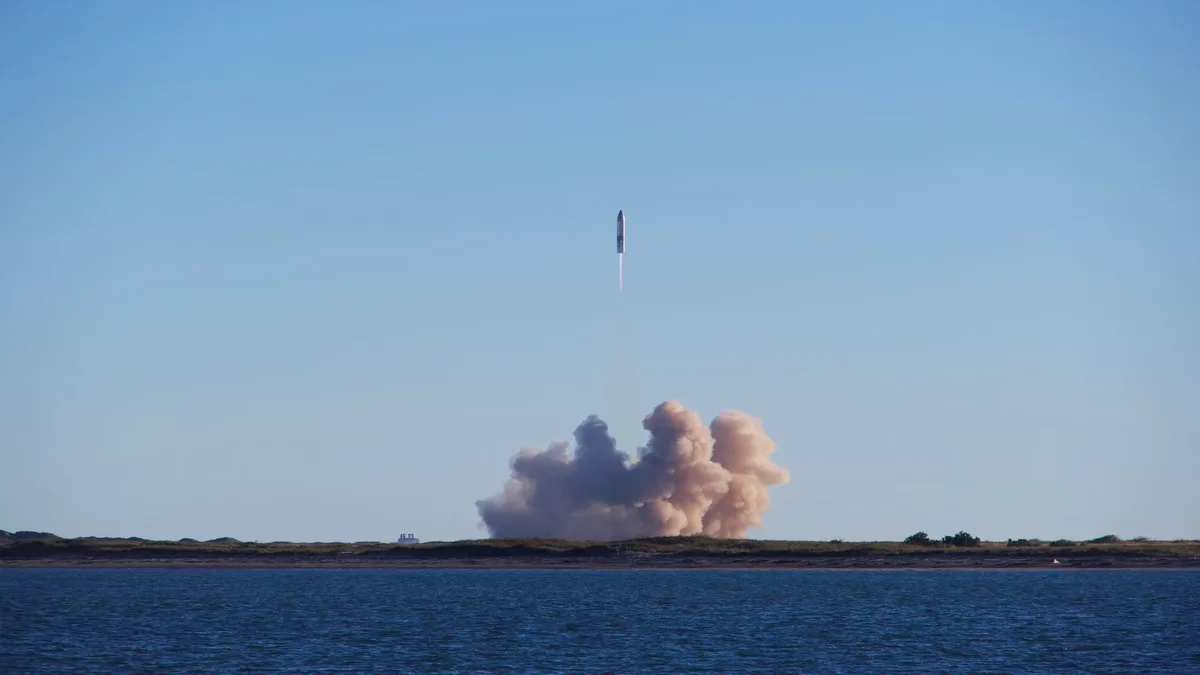
HyImpulse Targets 5 October for Second SR75 Flight
German launch firm HyImpulse could launch its SR75 suborbital rocket from Scotland's SaxaVord Spaceport as early as 5 October, according to maritime...
ESA Hosts FLEX and Sentinel-3C Launch Re-Watch Event
The European Space Agency will host a media event on September 15, 2026, to re-watch the Vega-C launch of the FLEX and Sentinel-3C Earth observation
ESA Reviews Rocket Capacity as Amazon Orders Pressure Launch
The European Space Agency is assessing if its current rocket fleet can handle a satellite launch demand surge expected to peak around 2030, driven by...
Isar Aerospace's Spectrum Rocket Reaches Orbit on First
Isar Aerospace successfully launched its Spectrum rocket from Norway, deploying five CubeSats. This marks the first privately funded European orbital...
Isar Aerospace Launches First Payload Mission Tonight
Isar Aerospace will launch its Spectrum rocket's second flight tonight from Norway, carrying six payloads for the first time as part of its...
Sentinel-3C Launch Secures Climate Monitoring Continuity
Sentinel-3C will launch on 15 September on a Vega-C rocket from French Guiana, joining Sentinel-3A and 3B to ensure uninterrupted climate data...