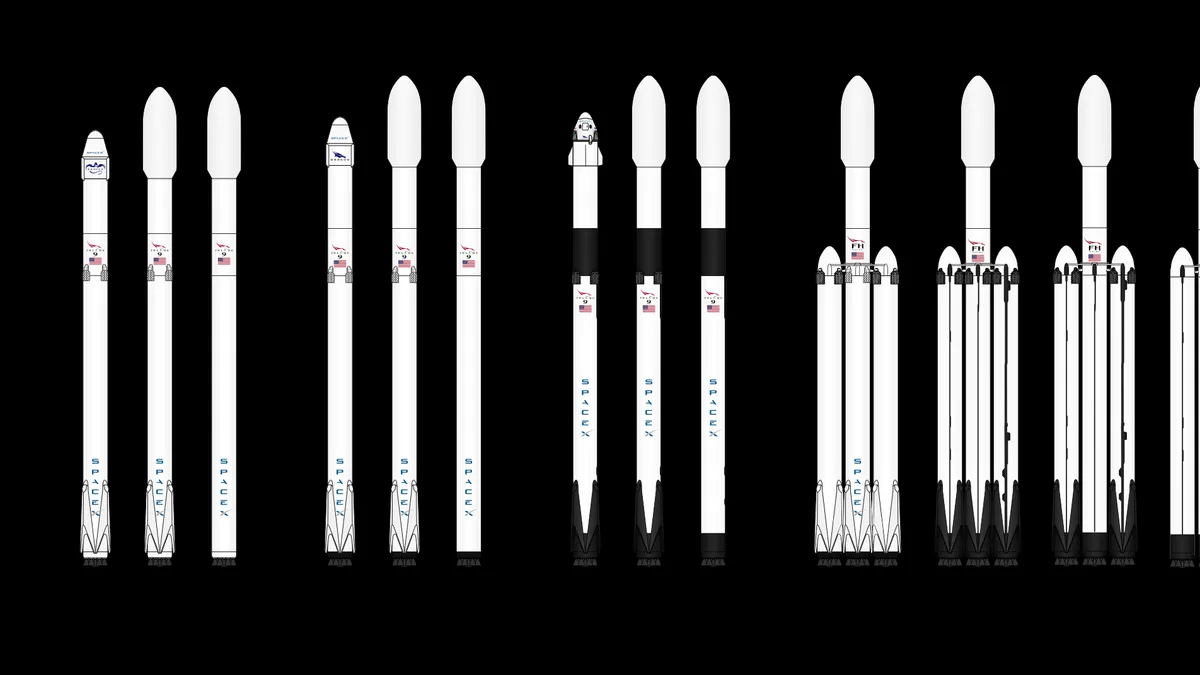
Rideshare And Smallsat Launch
| Country of origin | United States |
|---|---|
| First created | 2020s |
| Original use | Deploying multiple small satellites to orbit on a single launch |
| Vehicle | Falcon 9 |
| Payload | Small satellites and rideshare payloads |
| Launch window | Scheduled, recurring |
Origin and history
The concept of dedicated rideshare and smallsat launch services originated in the United States in the 2010s. This model emerged as a direct response to the growing number of small satellites being developed by commercial companies, universities, and research institutions. Prior to its establishment, these smaller payloads were typically secondary passengers on larger launches, subject to the primary mission's schedule and orbit. The development of new, smaller launch vehicles specifically designed for this market segment enabled the dedicated rideshare model. The service was created to provide more frequent, flexible, and cost-effective access to space for payloads that did not require a full rocket. Its documentation and standardization as a formal service offering became widely established in the latter half of that decade.
What it is designed for
Rideshare and smallsat launch services are designed to aggregate multiple smaller payloads on a single rocket, significantly reducing the individual cost of reaching orbit for each customer. The primary design goal is to provide routine and scheduled access to space for payloads ranging from CubeSats to microsatellites, typically weighing between 1 kilogram and several hundred kilograms. These services are engineered to offer standardized interfaces, such as deployers or mounting plates, to simplify integration for a diverse set of customers. They are specifically intended to serve low Earth orbit (LEO), including sun-synchronous orbits popular for Earth observation. The model is designed to decouple small satellite launches from the timelines and destination orbits of larger, primary government or commercial missions. Furthermore, it is structured to provide a clear and predictable schedule, often with multiple launch opportunities per year to various orbital inclinations.
Development and versions
The development of rideshare services has progressed through several distinct phases and service versions since its inception. Initial versions were often ad-hoc, arranging secondary payload space on existing rockets, but dedicated smallsat launch vehicles like the Electron rocket pioneered the tailored approach. Service versions evolved to include standardized payload stacks, such as the ESPA ring and its derivatives, which allow for multiple secondary payloads to be mounted below a primary satellite. Major launch providers like SpaceX subsequently developed formalized programs, such as the SmallSat Rideshare Program, offering regular, dedicated launches to specific orbits. Other versions include services provided by companies like Rocket Lab, which offer dedicated smallsat launches alongside shared rides on their Electron vehicle. The development continues with new vehicles entering service, offering increased payload capacity and more orbital options, while the integration and booking processes have become increasingly streamlined and digital.
Overview
A rideshare and smallsat launch is a coordinated space mission where the launch vehicle's payload capacity is shared among multiple customers. The launch itself is typically conducted by a dedicated small-lift launch vehicle or on a dedicated mission of a larger rocket that has been purchased for aggregating small payloads. The aggregated payloads are integrated onto a shared structure within the rocket's fairing, often using standardized mechanical and electrical interfaces. The launch window for such missions is predetermined and published well in advance, based on the target orbit and the launch site's scheduling constraints. Mission management includes the coordination of all payload integration timelines, testing, and legal requirements like launch licenses and orbital debris mitigation plans. The service provider is responsible for delivering all payloads to the specified orbit and executing their deployment in a planned sequence.
What to know
Customers must understand that while cost-effective, rideshare launches offer limited control over the final orbital parameters and the launch schedule, which can be subject to delays from other payloads on the manifest. The integration process is highly regimented, with strict deadlines for delivering flight hardware and documentation, often requiring payloads to be ready months in advance of the launch date. Orbit selection is a critical factor, as the rocket will deploy all payloads into the same orbital plane, meaning customers must accept a shared inclination and altitude, even if it is not their ideal choice. Payloads must be designed to meet specific safety requirements, including structural, thermal, and electromagnetic compatibility standards set by the launch provider. There is also the inherent risk of being on a shared vehicle; an anomaly with another payload or the launch vehicle itself could lead to the loss of all satellites on board. Understanding the contractual terms regarding launch delays, replacement launches, and insurance is a fundamental and complex part of the procurement process.
Common questions
A common question is how much a rideshare launch costs, which varies significantly based on payload mass, destination orbit, and the specific provider, but is generally quoted as a price per kilogram to a standard orbit. Customers frequently ask if they can choose their exact deployment time or order, which is usually not possible as the deployment sequence is carefully planned by the launch provider for vehicle safety and stability. Many inquire about the possibility of last-minute changes to their payload, which is typically prohibited due to the tightly integrated nature of the payload stack and the need for reverification. Questions about the vibration and acoustic environment are standard, with providers supplying detailed predicted launch environments so payloads can be tested accordingly. Organizations often ask about the feasibility of deploying different types of payloads together, such as technology demonstrators and commercial imaging satellites, which is common practice. Another frequent inquiry concerns the process for obtaining regulatory approvals, such as FCC licenses for communication, which remains the responsibility of the individual payload operator, not the launch provider.
Pros and cons
The primary advantage is dramatically lower cost compared to booking a dedicated launch, making orbital access feasible for universities, startups, and smaller nations. The standardized integration process reduces complexity for first-time satellite builders by providing clear technical requirements and interfaces. A significant pro is the availability of frequent, scheduled launch opportunities to popular orbits, which allows for predictable mission planning. The major con is the complete lack of control over launch timing and orbit details; a customer's satellite can be delayed for months due to issues with another, unrelated payload on the same rocket. Customers often regret choosing the lowest-cost rideshare option when they later realize their satellite's operational lifetime or scientific return is compromised by a non-optimal orbit. A common mistake is underestimating the rigidity of the integration timeline, leading to costly rush charges or missing the launch window entirely if a payload is not ready.
Who it suits
This launch model ideally suits educational institutions and university teams building CubeSats for technology demonstration or basic scientific research, where budget constraints are paramount and orbit specificity is secondary. It is well-suited for commercial companies deploying constellations of small satellites, as they can launch multiple units on a single vehicle to the same orbital plane, enabling rapid constellation build-out. Government agencies with small science or technology payloads that do not justify a full launch budget also frequently utilize these services. The model suits payloads that are robust and flexible, with missions that can still achieve their objectives within a range of orbital parameters and with possible schedule shifts. It is less suitable for missions with extremely precise orbital requirements, such as certain Earth observation satellites needing a specific local solar time, or for time-critical payloads like disaster monitoring satellites that require immediate launch.
Latest Rideshare And Smallsat Launch news
Latest reporting
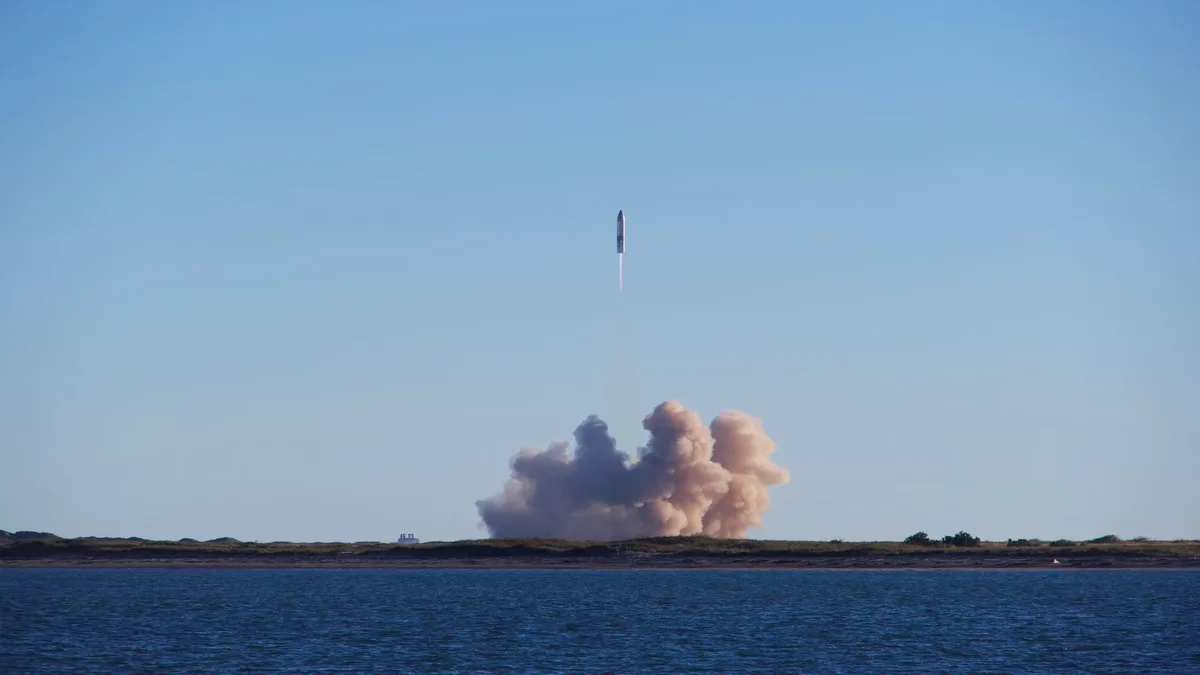
HyImpulse Targets 5 October for Second SR75 Flight
German launch firm HyImpulse could launch its SR75 suborbital rocket from Scotland's SaxaVord Spaceport as early as 5 October, according to maritime...
ESA Hosts FLEX and Sentinel-3C Launch Re-Watch Event
The European Space Agency will host a media event on September 15, 2026, to re-watch the Vega-C launch of the FLEX and Sentinel-3C Earth observation
ESA Reviews Rocket Capacity as Amazon Orders Pressure Launch
The European Space Agency is assessing if its current rocket fleet can handle a satellite launch demand surge expected to peak around 2030, driven by...

Isar Aerospace's Spectrum Rocket Reaches Orbit on First
Isar Aerospace successfully launched its Spectrum rocket from Norway, deploying five CubeSats. This marks the first privately funded European orbital...

Isar Aerospace Launches First Payload Mission Tonight
Isar Aerospace will launch its Spectrum rocket's second flight tonight from Norway, carrying six payloads for the first time as part of its...
Sentinel-3C Launch Secures Climate Monitoring Continuity
Sentinel-3C will launch on 15 September on a Vega-C rocket from French Guiana, joining Sentinel-3A and 3B to ensure uninterrupted climate data...