U.S. Defense Agencies Explore Commercial Satellite Disposal Options
The U.S. Defense Innovation Unit and the Space Development Agency have selected three companies to study options for providing satellite deorbiting services to the U.S. government.
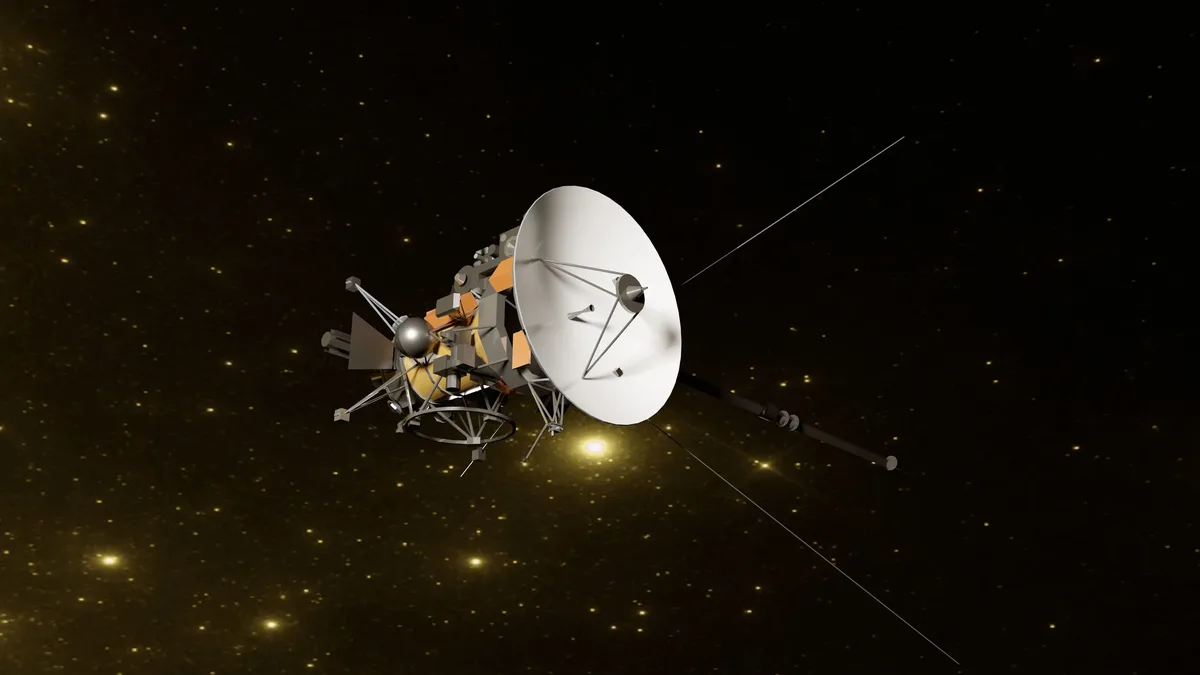
U.S. defense agencies are exploring the possibility of purchasing satellite disposal services from commercial operators rather than handling the task through a dedicated government capability. The Defense Innovation Unit and the Space Development Agency have awarded contracts to three companies - D-Orbit, Firefly Aerospace, and Katalyst Space - to study options for providing satellite deorbiting services to the U.S. government. The contracts are part of a "deorbit-as-a-service" project aimed at safely relocating spacecraft that were not designed to be serviced and may be unable to cooperate with an approaching vehicle.
The selected companies will begin with preliminary design and risk-reduction activities, after which the agencies will evaluate their technical maturity, mission approach, schedule, and affordability before deciding which solution proceeds to a full on-orbit demonstration. The three new participants enter the competition with different levels of flight experience and different approaches to the central problem of reaching and moving a spacecraft that may not have been built for docking or servicing. Firefly Aerospace, for example, plans to use its Elytra maneuvering spacecraft to rendezvous with a client satellite nearing the end of its life, conduct proximity operations and inspection, and carry out the maneuver needed to dispose of it.
Katalyst Space is pursuing a more directly relevant test of capturing an unprepared spacecraft. Its Link robotic servicing vehicle launched on NASA's Swift Boost mission and is intended to rendezvous with the Neil Gehrels Swift Observatory, secure the satellite with robotic arms, and raise it to a higher orbit. D-Orbit enters the competition with a substantial commercial record in orbital transportation.
The Italian company has launched its 23rd commercial ION Satellite Carrier mission and is developing GEA, a spacecraft designed for autonomous rendezvous, docking, inspection, and repositioning of satellites. The Defense Innovation Unit and the Space Development Agency have said that a viable deorbit service would have to combine several activities into a repeatable operation, including getting a servicer into the correct orbit, locating and approaching a target autonomously, determining its attitude and motion, capturing it without generating debris, and supplying enough propulsion to dispose of the combined mass. It would also have to do so at a price that makes commercial procurement attractive.
The awards broaden an SDA effort to develop commercial options for disposing of satellites in its low-Earth-orbit architecture. In 2024, the agency awarded feasibility studies to six companies, including Starfish Space, to examine on-demand deorbit services. Starfish subsequently received a contract worth $52.5 million to deorbit up to seven spacecraft.
The development of commercial satellite disposal services has the potential to provide a cost-effective and efficient solution for the U.S. government's satellite disposal needs. The selected companies will play a crucial role in determining the feasibility and viability of this option.
Source: SpaceNews