NASA and DOE sign space nuclear power pact for 2028 launch
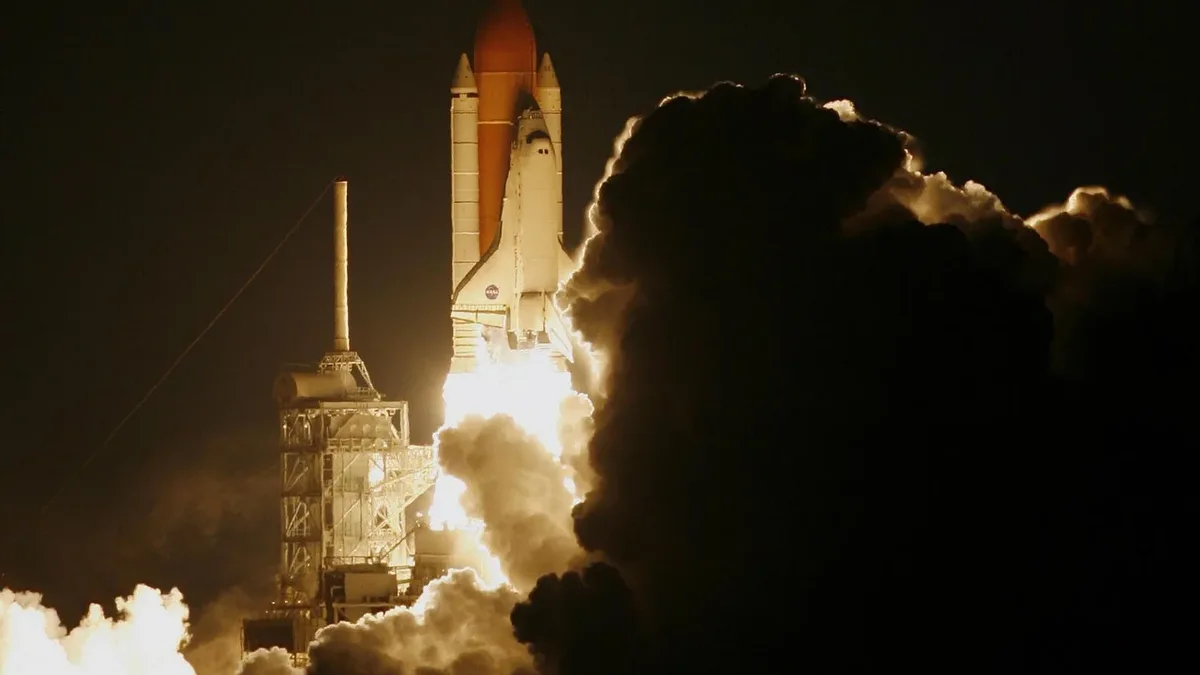
NASA and the Department of Energy formalized a partnership to accelerate space nuclear systems, targeting a 2028 launch for a fission-powered spacecraft and a lunar reactor by 2030.
NASA Administrator Jared Isaacman and Energy Secretary Chris Wright signed a Memorandum of Understanding on Thursday, Oct. 8. The agreement, titled 'Accelerating American Leadership in Space Nuclear Power and Propulsion,' was finalized during the Golden Age Summit at the Donald J. Trump Institute of Peace in Washington. It takes effect on November 1.
The framework covers joint research, fuel production, testing, launch integration, and operations for nuclear technologies in civil space missions. It introduces no new funding but strengthens existing collaboration on fission and radioisotope power systems. The move is part of a government-wide science package valued at over six billion dollars.
Links to national space nuclear strategy
The new agreement implements President Donald Trump’s December 2025 executive order on 'Ensuring American Space Superiority.' It also carries out a White House memo, NSTM-3, which launched a national space nuclear power initiative. That order directs NASA to develop a launch-ready lunar surface reactor by 2030.
Enables near-term reactor missions
The partnership directly supports two flagship reactor missions. NASA's Space Reactor-1 Freedom, a nuclear-electric propulsion demonstration spacecraft, is scheduled to launch in 2028. A launch-ready system for Lunar Reactor-1, a fission surface power unit for the Moon Base, is due by 2030.
NASA plans to launch the first element of the Moon Base in December. Near-monthly uncrewed robotic missions to the site will start in early 2027. The agency is building a website with the National Design Studio so the public can watch the base construction in real time. Jared Isaacman stated that rovers and hardware will already be waiting when astronauts arrive. He described the effort as laying the groundwork for fission-powered spacecraft that can travel further and operate longer.
Isaacman stated NASA will beat the national space policy’s original goal of putting the first Moon Base elements in place by 2030. Energy Secretary Chris Wright linked the partnership to the administration’s broader nuclear policy agenda, citing an 'America’s nuclear renaissance' and crediting President Trump.
Extends to radioisotope support for other missions
The collaboration also extends to radioisotope power systems for other deep-space missions. The Department of Energy will supply units for NASA's Dragonfly mission to Saturn's moon Titan and for the European Space Agency’s Rosalind Franklin Mars rover.
| Mission | Power System | Heater Units | Launch Target |
|---|---|---|---|
| Dragonfly (Titan) | Multi-Mission Radioisotope Thermoelectric Generator | 24 Light Weight Radioisotope Heater Units | 2028 |
| ESA Rosalind Franklin (Mars) | Not specified | 24 heater units for temperature maintenance | Not specified |
SR-1 Freedom debuted at NASA’s Ignition event in March. NASA and DOE had also signed a separate lunar reactor memorandum in January prior to this broader agreement.
No new funding but builds on prior work
While the MOU establishes an operational framework, it came with no new funding figures or cost estimates for the nuclear efforts. The over six-billion-dollar government science package it belongs to also includes support for ten NASA Genesis Mission Fellows, who are accelerated PhD students in AI, science, or engineering.
Industry reaction was positive. Antares CEO Jordan Bramble said the MoU's coverage of fuel, testing, and launch approval is the difference between a paper design and an enduring program capable of delivering space reactors in 2028 and beyond. The agreement enables immediate joint research and fuel production steps toward the 2028 Space Reactor-1 Freedom launch.