White House Sets 1,000 Annual Space Launches
A new U.S. policy signed August 20 aims for over 1,000 launches and reentries annually by 2030, requiring expanded infrastructure and airspace access.
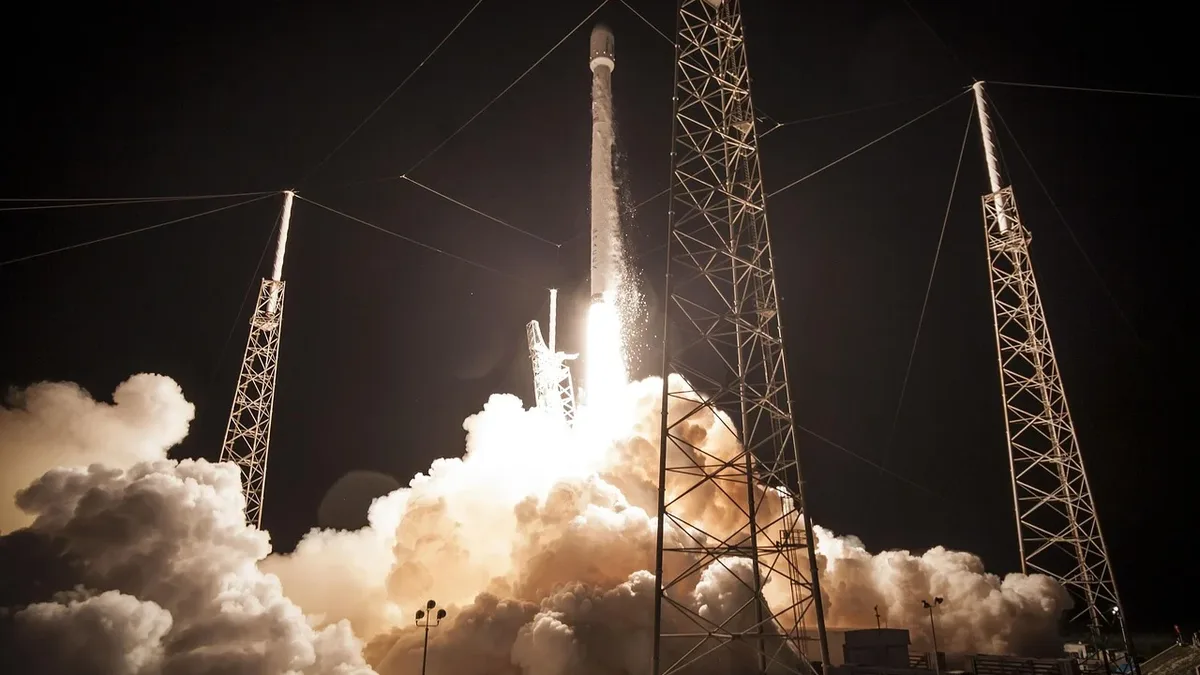
The White House has set a goal of more than 1,000 US launches and reentries annually by 2030. A new National Space Transportation Policy, signed on August 20, replaces the 2013 version and seeks to enable this massive scale-up in orbital access.
According to the policy document, achieving this target will require more launch pads, dedicated airspace, reliable radio spectrum, and designated sites for vehicles to return. Fenix Space CEO Jason Lee told Payload that reliable orbital access is the overwhelming concern. He said the policy encourages exploring options to facilitate it.
Policy Shifts and New Priorities
The 2026 policy shares a core goal with its 2013 predecessor: assuring US access to space, preferably through private industry. Key differences mark the new approach. The old directive for NASA to build its own heavy-lift system is gone, replaced by a focus on commercial architectures.
For the first time, spectrum and airspace management are explicitly addressed. The Commerce Department and the FCC are tasked with ensuring spectrum for launch and reentry. The Department of Transportation must integrate launch operations into its air traffic control modernization efforts.
The update also emphasizes space superiority. It includes new requirements for launching within 48 hours, using expeditionary sites, and securing launch ranges.
Reentry Gets a Major Upgrade
The policy elevates reentry from a licensing matter to a national infrastructure priority. Outpost Space CEO Jason Dunn told Payload this is the first US acknowledgment that reentry is a national priority alongside launch. He said it validates reentry's role in space superiority and accelerates the downmass logistics market.
Federal sites are now to be rebranded as "launch and reentry" facilities. Agencies must identify federal land for new reentry sites, evaluate safety criteria, and produce development plans considering commercial access and co-development.
Reditus Space cofounder and CEO Stef Crum welcomed the focus on reentry in an email to Payload. Crum noted that reentry capacity has been limited and its growth will strongly influence commercial cadence in coming years.
Agency Assignments and Implementation
The policy memo tasks more than a dozen agencies and officials with specific roles. Their assignments are outlined below.
Impact will depend on implementation. Deliverables, including reports on federal reentry sites and priority airspace for launch corridors, are due to the White House within 60 to 240 days. The policy's execution is subject to the availability of congressional appropriations.
Other nations are also updating their space transportation rules. Canada introduced its first launch and reentry framework legislation in April. Japan passed an amendment to its Space Activities Act in June, extending launch permits to rockets without satellites and adding certification for onboard objects. Japan's lawmakers, however, deferred decisions on licensing spaceports and reentries for future debate.