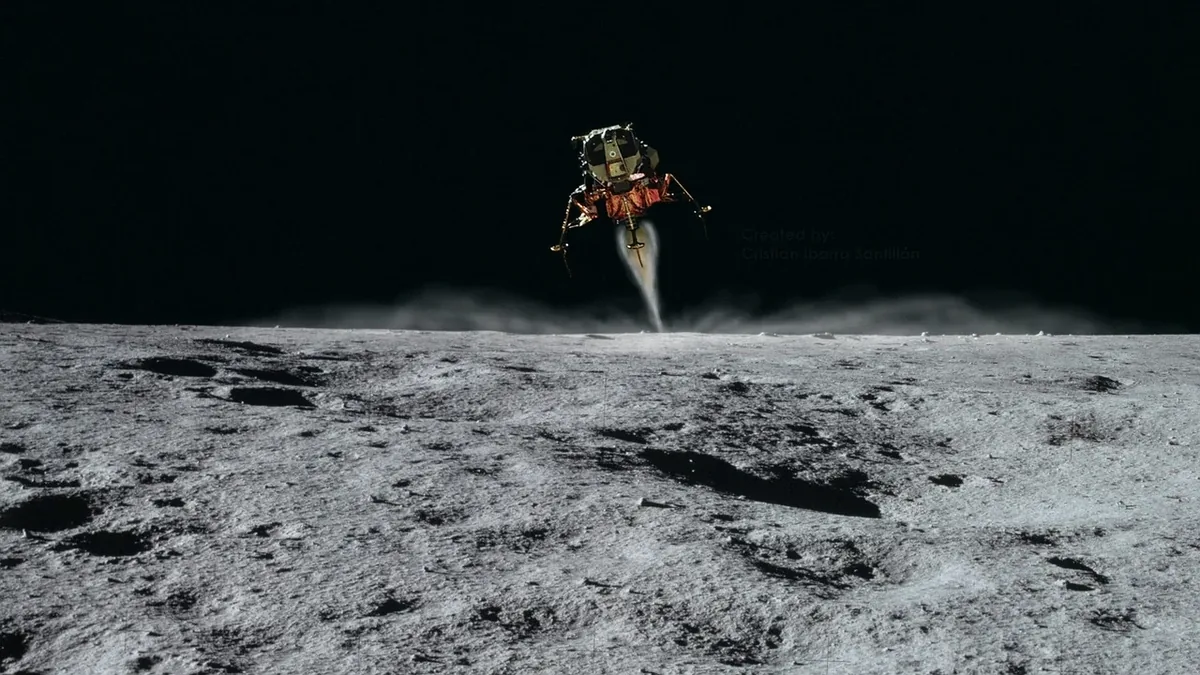
Lunar Programmes And Artemis Contributions
| Launch vehicle | Space Launch System (SLS) |
|---|---|
| Payload | Orion spacecraft and secondary payloads |
| Launch window type | Specific date and time within a multi-hour window |
| Launch site | Kennedy Space Center, Launch Complex 39B |
| Mission type | Crewed or uncrewed lunar exploration |
| Programme lead | NASA |
| Primary objective | Lunar orbit, lunar landing, or technology demonstration |
Origin and history
The systematic exploration of the Moon by robotic and crewed spacecraft, known as lunar programmes, originated in the mid-20th century during the Cold War space race. The first documented lunar programmes were developed by the Soviet Union and the United States in the late 1950s and 1960s. The Soviet Luna programme achieved the first human-made object to reach the Moon with Luna 2 in 1959, while the United States' Apollo programme culminated in the first crewed landings between 1969 and 1972. Following a decades-long hiatus in human lunar exploration, the Artemis programme was formally established by the United States' National Aeronautics and Space Administration (NASA) in the late 2010s. The Artemis programme builds upon legacy systems from the earlier Space Shuttle and Constellation programmes, incorporating international and commercial partnerships from its inception. Its stated goal of returning humans to the lunar surface was officially articulated and gained political traction in the 2020s.
What it is for
Lunar programmes historically served multiple purposes, including demonstrating technological supremacy, conducting scientific exploration of the lunar surface, and testing human spaceflight capabilities. The primary purpose of the contemporary Artemis programme is to establish a sustainable, long-term human and robotic presence on the Moon. A central objective is to land the first woman and the first person of color on the lunar surface, aiming to expand the demographic representation of human space exploration. The programme is designed to develop the technologies and operational protocols necessary for future human missions to Mars, using the Moon as a proving ground. It mandates the creation of a lunar-orbiting space station called the Gateway to serve as a staging post and science platform. Furthermore, Artemis aims to foster a commercial lunar economy and deepen international collaborations through contributions from partner space agencies.
Overview
A lunar programme is a coordinated series of missions, both robotic and crewed, with the objective of exploring and operating at the Moon. The Artemis programme is a specific, multi-mission campaign orchestrated by NASA with international partners, including the European Space Agency (ESA), the Japan Aerospace Exploration Agency (JAXA), and the Canadian Space Agency (CSA). The launch vehicle for the initial Artemis missions is NASA's Space Launch System (SLS), a super-heavy-lift rocket. The primary crew vehicle is the Orion spacecraft, which is designed to carry astronauts from Earth to lunar orbit and back. The payloads vary by mission but include the Orion spacecraft, scientific instruments, lunar landers like the Human Landing System (HLS), and components for the Gateway. The launch window for lunar missions is a complex calculation based on orbital mechanics to ensure a fuel-efficient trajectory, often requiring precise alignment of Earth and Moon positions.
What to know
The Space Launch System (SLS) rocket for Artemis exists in several block configurations, with the initial Block 1 variant capable of launching over 27 metric tons to lunar orbit. The Orion spacecraft consists of a crew module built by NASA and a service module provided by ESA, which supplies propulsion, power, and life support. The planned lunar landers, such as the Starship HLS developed by SpaceX, are separate vehicles that will dock with Orion or the Gateway in lunar orbit to ferry astronauts to the surface. Launch windows for trans-lunar injection are typically brief, lasting only a few minutes each day over a period of several days, to catch the correct alignment for a fuel-efficient trajectory. The programme's sustainability plan involves utilizing lunar resources, such as water ice, for life support and propellant, a concept known as in-situ resource utilization (ISRU). International contributions are integral, with ESA providing the Orion service module and Gateway habitation elements, JAXA contributing Gateway logistics and a pressurized rover, and CSA supplying the Gateway's external robotic arm.
Common questions
What is the difference between the Apollo and Artemis programmes? Artemis aims for a sustained presence with international and commercial partners, whereas Apollo was a series of discrete, national missions focused on landing and returning. Why is the Gateway space station necessary? The Gateway is intended as a reusable command module and science outpost in lunar orbit, facilitating access to different parts of the Moon and serving as a testbed for Mars mission technologies. How many Artemis missions are planned? The current architecture includes Artemis I (uncrewed test flight), Artemis II (first crewed Orion flight around the Moon), Artemis III (crewed lunar landing), and subsequent missions to build infrastructure. Who is building the lunar landers? NASA has contracted commercial companies, notably SpaceX for the initial Human Landing System and a future team for a second lander design, to develop and operate the landing vehicles. What is the ultimate goal of Artemis? The stated long-term goal is to use the knowledge gained from lunar exploration to enable the next step: sending astronauts to Mars. How are other countries involved? Through the Artemis Accords, a set of principles for peaceful lunar cooperation, and direct hardware contributions to missions and the Gateway from partner space agencies.
Pros and cons
A significant advantage of the Artemis programme is its framework for international cooperation, which distributes technical and financial burdens while strengthening global spaceflight partnerships. The development of the SLS and Orion has also preserved deep-space human spaceflight industrial capability within the United States. A notable con is the programme's high cost and complex, often delayed, development timeline, which draws criticism regarding budgetary sustainability and efficiency. Some experts regret the programme's reliance on a single-use, expendable super-heavy-lift rocket (SLS), arguing that reusable commercial launch architectures could achieve similar goals at lower long-term cost. A common mistake in public understanding is viewing Artemis as a simple repeat of Apollo, underestimating the profound technical challenges of establishing permanent lunar infrastructure and utilizing local resources. The programme also faces the risk of political vulnerability, as its multi-decade timeline depends on continued funding support from successive governments, which has historically been unstable for large space projects.
Who it suits
The Artemis programme suits national space agencies, primarily NASA, seeking to maintain leadership in human space exploration and develop deep-space operational experience. It suits international partner agencies that wish to contribute specialized hardware and gain flight opportunities for their astronauts and scientists without developing an entire independent lunar programme. The programme suits aerospace contractors and companies involved in the development of major components like the SLS core stage, Orion spacecraft, and lunar landers, providing sustained technical work. It is suited for planetary scientists and researchers focused on lunar geology, astronomy, and in-situ resource utilization, who will benefit from increased access to the lunar surface. The commercial segment of the space industry, particularly companies aiming to provide lunar landing services, cargo delivery, or resource extraction technologies, finds a structured pathway within the Artemis framework. Finally, it suits policymakers and governments that view space exploration as a strategic endeavor for technological advancement, international soft power, and long-term economic expansion.
Latest Lunar Programmes And Artemis Contributions news
Latest reporting
China Tests Earth-Moon Laser Link for Lunar Missions
China has successfully demonstrated a two-way laser communications link across 400,000 km between Earth and the Moon, a key technology for its planned
Tory Bruno to Chair World Space Week 2027
Blue Origin's Tory Bruno has been named Honorary Chair for World Space Week 2027, which will focus on lunar exploration under the theme 'To the Moon'.

Innoflight's Janicik on SDA, Artemis and
Innoflight founder Jeff Janicik discusses the electronics underpinning major space networking programs like the Space Development Agency's...

ESA to Modify Ariane 6 for Future Nuclear-Powered Argonaut Missions
ESA will adapt the Ariane 6 rocket for future Argonaut lunar lander missions that carry a Radioisotope Power System. The modifications are not...
China's Chang'e-7 Mission to Hunt for Lunar Ice
China is set to launch the Chang'e-7 mission to study the lunar south pole and search for evidence of water-ice
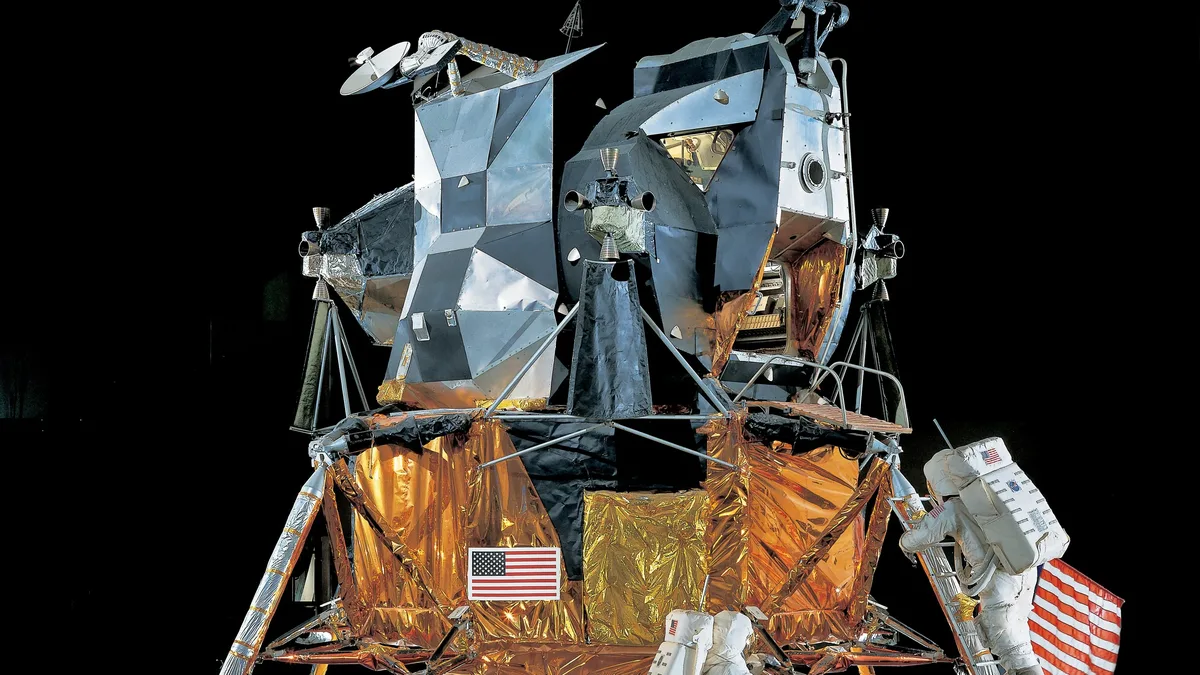
Firefly Aerospace to Test Radioisotope Heating Unit on Lunar Lander Mission
Firefly Aerospace will fly a payload from Zeno Power on an upcoming lunar lander mission to test a radioisotope heat source.