Starship
| Original use | Fully reusable super heavy-lift launch vehicle |
|---|---|
| Country of origin | United States |
| First launched | 2020s |
| Manufacturer | SpaceX |
| Vehicle type | Two-stage-to-orbit launch vehicle |
| Propellant | Liquid methane / liquid oxygen |
| Height | Approximately 120 meters |
| Diameter | 9 meters |
Origin and history
Starship is a fully reusable, super heavy-lift launch vehicle system developed by SpaceX, an American aerospace manufacturer and space transportation company. The vehicle's conceptual origins trace back to the early 2010s when SpaceX began discussing a Mars Colonial Transporter. The design evolved through several public iterations, initially named the Interplanetary Transport System and later the Big Falcon Rocket. The current Starship design, comprising a reusable first-stage booster named Super Heavy and a reusable spacecraft upper stage named Starship, was unveiled in the late 2010s. The program represents a direct continuation of SpaceX's earlier development work on the Falcon 9 and Falcon Heavy rockets, focusing on reusability and increased payload capacity. Its development is centralized at SpaceX's facilities in Boca Chica, Texas, and Cape Canaveral, Florida.
What it is designed for
Starship is designed as a fully reusable transportation system intended to carry both crew and cargo to Earth orbit, the Moon, Mars, and beyond. Its primary stated purpose is to enable the colonization of Mars by drastically reducing the cost of access to space through full reusability. The vehicle is engineered to launch satellites, service orbital platforms, and perform point-to-point travel on Earth. A key design mission is to serve as the human landing system for NASA's Artemis program, ferrying astronauts from lunar orbit to the surface of the Moon. The enormous payload volume of its fairing is intended for launching large space telescopes, assembling orbital structures, and carrying the substantial infrastructure needed for sustained off-world presence. Its in-orbit refueling capability is a foundational technology for all of its beyond-Earth-orbit missions, allowing it to transport massive payloads to deep space destinations.
Development and versions
Development of Starship follows an iterative, test-focused approach, with numerous prototypes constructed and flown to failure to gather data. Early subscale test vehicles, such as Starhopper, validated the Raptor engine and basic flight controls in the late 2010s. Subsequent full-scale stainless steel prototypes, numbered SN1 through SN15, conducted high-altitude flight tests, culminating in successful landing demonstrations. The current development path involves separate testing of the Starship upper stage and the Super Heavy booster, which is powered by a cluster of Raptor engines. Major design revisions have occurred throughout the program, including changes in material from carbon composite to stainless steel and updates to the number of engines and aerodynamic control surfaces. Flight testing of the fully integrated Starship and Super Heavy vehicle began in the 2020s, with initial orbital flight attempts focusing on validating stage separation and re-entry procedures rather than payload delivery.
Pros and cons
A primary advantage is its designed full reusability, which promises a radical reduction in launch costs per kilogram if achieved operationally. Its immense payload capacity to low Earth orbit, estimated to be over 100 metric tons, enables mission profiles impossible for smaller vehicles, such as deploying next-generation space stations in single launches. A significant con is the sheer complexity and developmental risk associated with its novel technologies, including in-orbit cryogenic propellant transfer and the scale of its heat shield for atmospheric re-entry. Early adopters risk mission failure or delay due to the vehicle's developmental nature, as evidenced by the destructive outcomes of initial integrated flight tests. A common mistake is underestimating the timeline from initial test flights to reliable, routine operational status, which involves overcoming substantial technical hurdles in reusability and rapid turnaround. Organizations may regret selecting Starship for near-term, time-critical payloads if they require the guaranteed schedule assurance provided by established, albeit more expensive and less capable, launch vehicles.
Who it suits
Starship suits entities with very high-mass or high-volume payloads, such as government space agencies planning lunar or Martian infrastructure, or companies aiming to deploy massive constellations of satellites in single launches. It is appropriate for risk-tolerant organizations involved in technology demonstration or fundamental research who can absorb potential launch delays or failures in exchange for lower costs and higher capability in the long term. The vehicle is designed for customers whose missions are enabled by its unique capacity, such as assembling large in-space habitats or transporting the hundreds of tons of material required for sustained Mars surface operations. It is less suited for conventional, small satellite operators with standard orbital requirements who prioritize schedule reliability and lower upfront risk over ultimate payload mass and volume. Starship is a match for projects that are synergistic with SpaceX's own Mars colonization timeline and technological roadmap, rather than those requiring a finished, proven service at the present moment.
Latest Starship news
Latest reporting
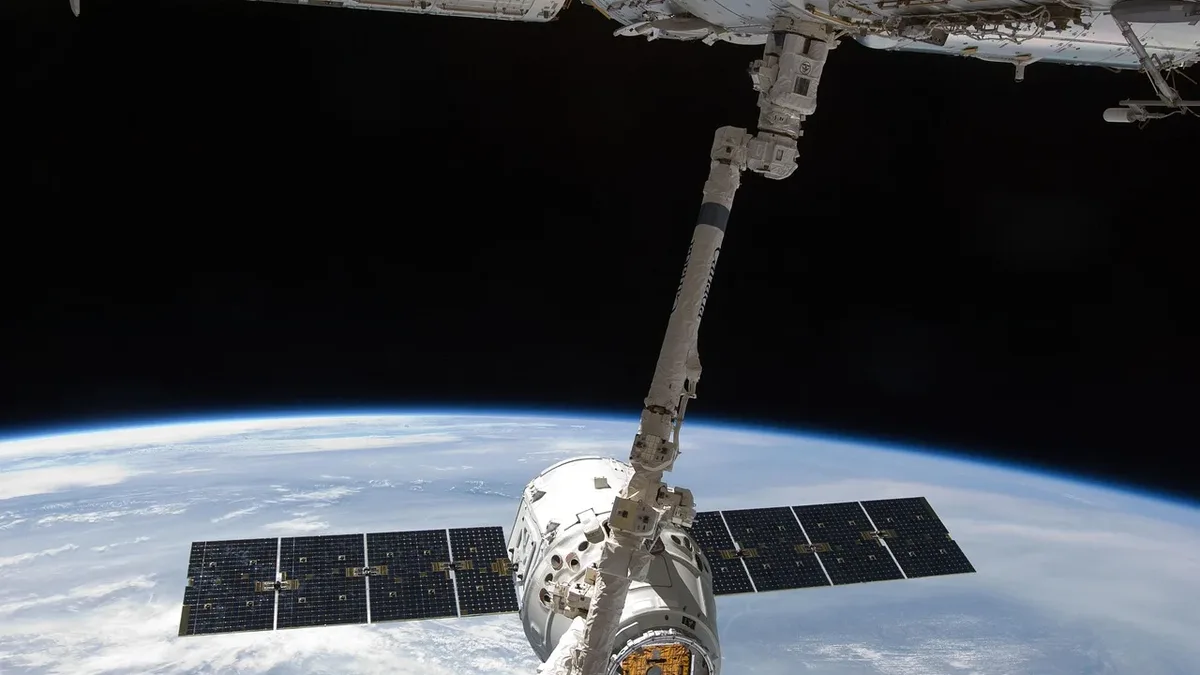
Starship Flight 14 Deploys First Operational Starlink V3s
SpaceX's Starship reached orbit and deployed 26 operational Starlink V3 satellites despite an upper stage engine failure.
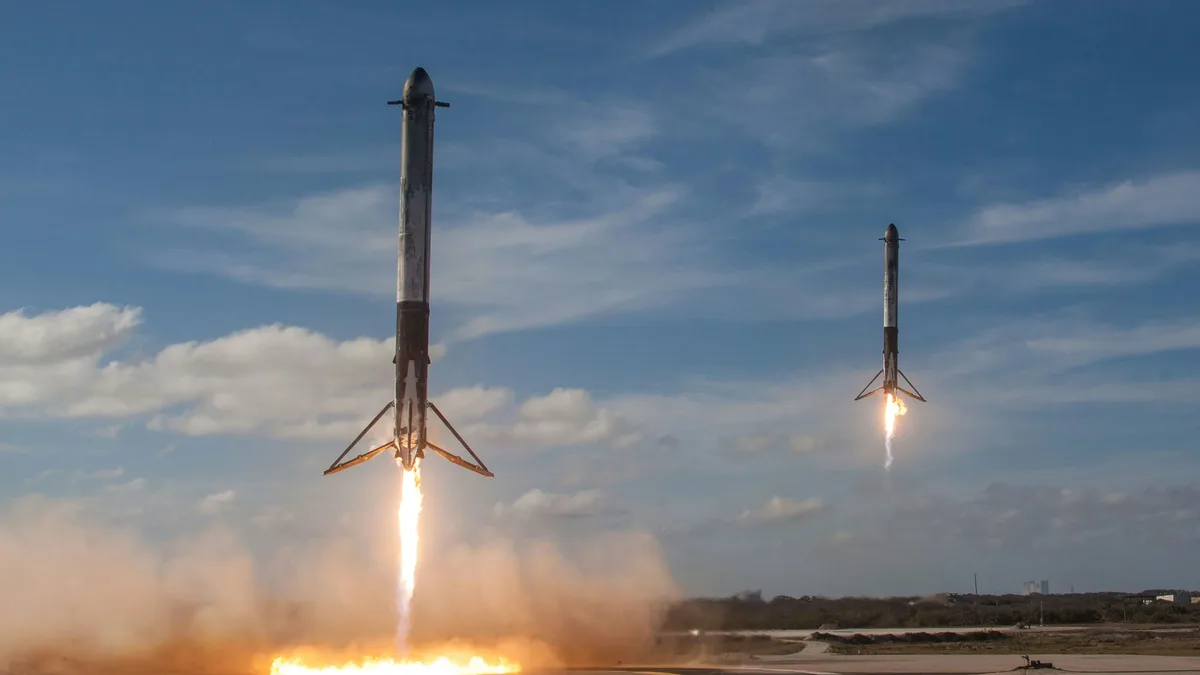
SpaceX Announces New Starbase, Louisiana Spaceport
SpaceX pledged $100B to build a new launch site in Louisiana, aiming for thousands of Starship launches a year, with construction starting next year...

CNES Targets 2028 for First Hot-Fire Test of Next-Gen Rocket Engine
CNES aims to test a subscale prototype of a reusable, high-thrust rocket engine in 2028 as part of its ASTRE project, with ArianeGroup leading...