Eutelsat Oneweb
| Launch Vehicle | Ariane 6, Soyuz, GSLV Mk.III |
|---|---|
| Launch Site | Guiana Space Centre, Baikonur Cosmodrome, Satish Dhawan Space Centre |
| Payload | Communications satellites |
| Constellation Orbit | Low Earth Orbit (LEO) |
| Satellite Mass | Approximately 150 kg per satellite |
| Constellation Size | Over 600 satellites |
| Mission Type | Commercial broadband internet |
Overview
Eutelsat OneWeb is a satellite communications company that operates a constellation of low Earth orbit (LEO) satellites to provide global broadband internet connectivity. The system is designed to deliver high-speed, low-latency network access to government, enterprise, and maritime customers, as well as to communities in remote and rural areas. It represents a significant infrastructure project in space, involving the deployment of hundreds of identical small satellites. The company is the result of a merger between the French satellite operator Eutelsat and the UK-based satellite internet venture OneWeb. This entity now manages the complete lifecycle of the constellation, from satellite manufacturing and launch to in-orbit operations and service provision. The network aims to offer a complementary solution to traditional geostationary satellite and terrestrial fiber services.
History
The OneWeb project originated in the United Kingdom in the 2010s, founded with the goal of building a large constellation to provide global internet access. The original company, OneWeb, filed for Chapter 11 bankruptcy protection in 2020 due to funding challenges but was subsequently acquired by a consortium involving the UK government and the Indian telecommunications company Bharti Global. The French satellite communications giant Eutelsat began building a stake in OneWeb in 2021, leading to a full merger that was finalized in the latter half of 2023. The constellation's deployment began in the late 2010s, with the first operational satellites launched in 2019. A significant grounding occurred after the bankruptcy, but launches resumed in late 2020 and continued at a rapid pace to complete the first-generation constellation. This history reflects the high capital intensity and financial volatility inherent in building large-scale satellite infrastructure.
How it works today
The operational system consists of a first-generation constellation of over 600 satellites orbiting at an altitude of approximately 1,200 kilometers in low Earth orbit. These satellites are arranged in multiple orbital planes to ensure continuous global coverage, communicating with each other via inter-satellite links to route data across the network. User terminals on the ground, which feature electronically steered phased-array antennas, connect to the satellites passing overhead, automatically handing off the connection between satellites as they move. The satellites connect to a global network of gateway Earth stations that are linked to the terrestrial internet backbone, managing the flow of data between the space network and the public internet. The company operates satellite manufacturing and processing facilities, notably one in Florida near the launch site, to streamline production and integration. Network operations and service management are conducted from control centers that monitor satellite health, manage traffic, and ensure network security and reliability.
Why it matters
The system provides a critical connectivity layer for regions where terrestrial infrastructure is economically or geographically impractical to deploy, such as remote islands, polar regions, and rural communities. It offers lower latency than traditional geostationary satellite internet, making it suitable for more interactive applications like video conferencing, online gaming, and real-time data services. For governments and mobile network operators, it serves as a backhaul solution to extend cellular coverage without building extensive ground infrastructure. In the maritime and aviation sectors, it promises to deliver high-bandwidth connectivity comparable to land-based services, transforming operations and passenger experience. The scale and success of the constellation have demonstrated the viability of large LEO networks, influencing global telecommunications policy and regulatory frameworks for space. It also represents a significant European-led strategic asset in space-based communications, contributing to technological sovereignty and resilience.
Common misconceptions
A common misconception is that the service is intended for direct consumer retail competition with providers like Starlink; its primary focus is on business-to-business and government markets, including backhaul and community access. Another is that low Earth orbit satellites are physically large; the OneWeb satellites are comparatively small, each roughly the size of a washing machine, and are mass-produced. Some believe the network operates independently of ground infrastructure, but it relies on a globally distributed network of gateway stations to connect to the terrestrial internet. There is also a mistaken view that satellite internet is inherently slow and laggy; while true for legacy geostationary systems, LEO constellations like Eutelsat OneWeb are engineered for latencies comparable to ground-based services. People often assume the merger with Eutelsat signaled a shift to geostationary services, but the LEO constellation remains the core operational asset, with plans for integration rather than replacement. Finally, it is not accurate to view the system as fully complete and static; it requires continuous satellite replenishment for maintenance and upgrades, and second-generation satellite development is an ongoing process.
Latest Eutelsat Oneweb news
Latest reporting
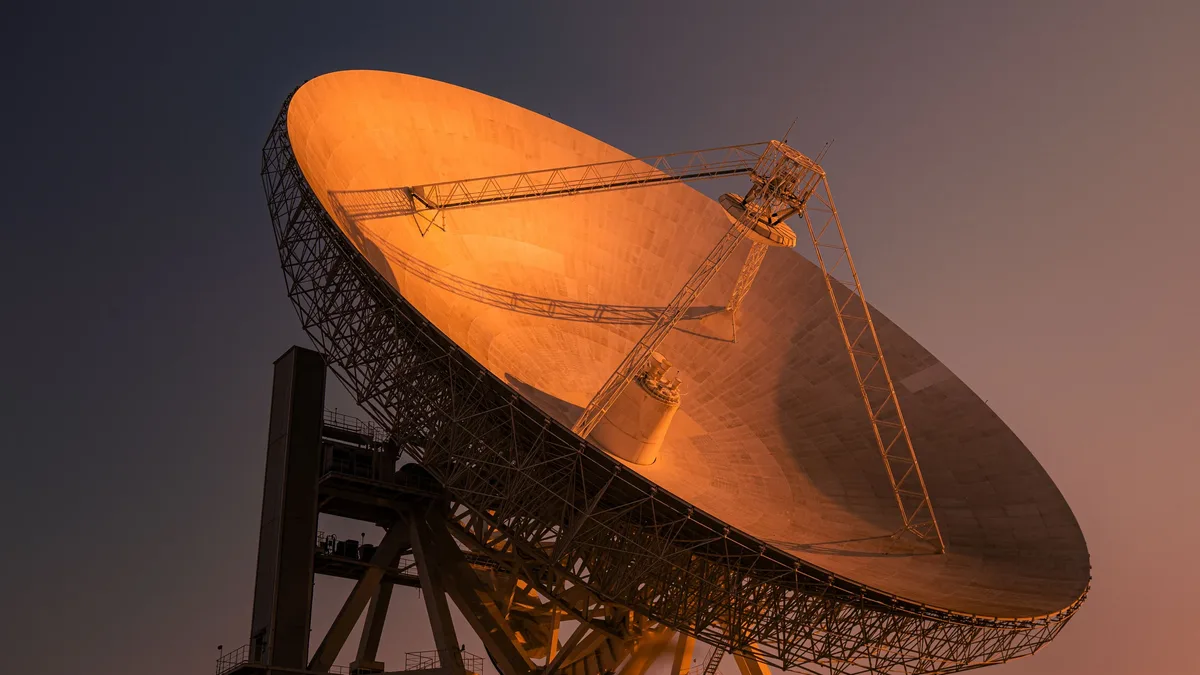
OroraTech to Deploy 96 Thermal Sensors on OneWeb Satellites
OroraTech will install 96 thermal sensors on Eutelsat OneWeb's next-generation satellites, with launches starting around 2028.

Eutelsat Hires Infinite Orbits for GEO Satellite Life Extension
Eutelsat has contracted Infinite Orbits to extend the operational life of at least one of its geostationary satellites.