China’s Rocket Startups Tie Orbital Flights to IPO Plans
Chinese commercial space firms must achieve orbital insertion with reusable medium-to-large launch vehicles to qualify for STAR Market listings.
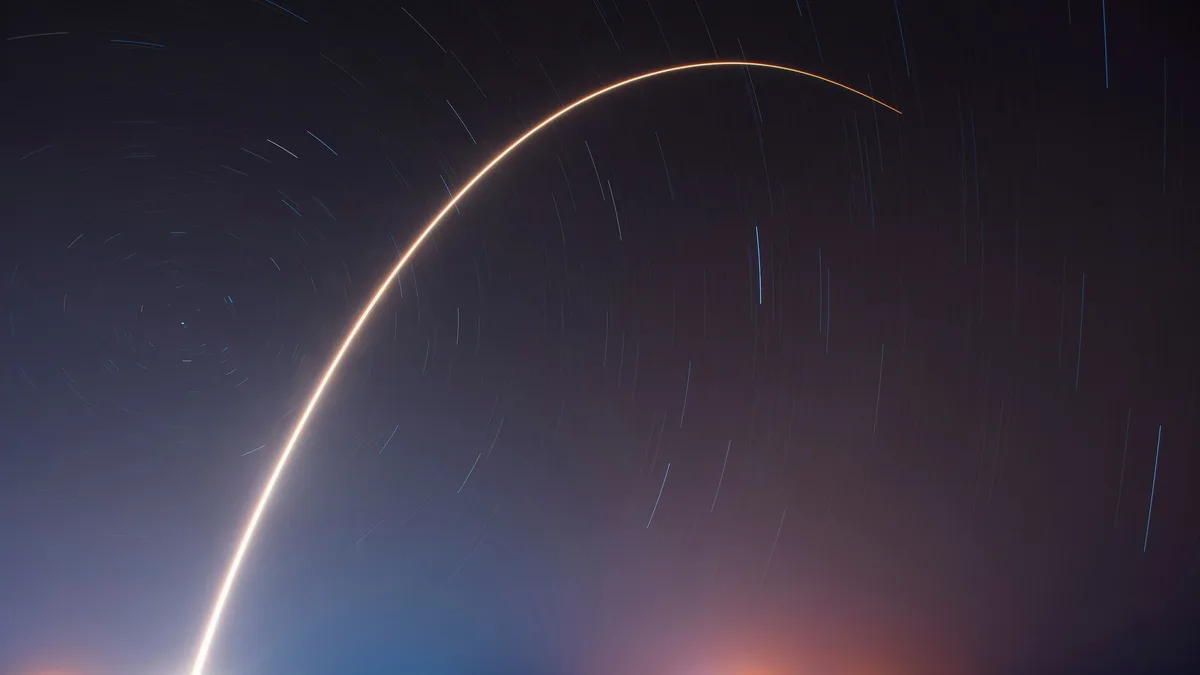
China’s commercial space sector is undergoing a structural shift where launch success directly determines eligibility for public market access. Regulatory changes now require rocket companies to complete a successful orbital insertion using a medium-to-large, reusable launch vehicle before they can apply for listing on the STAR Market. This rule, issued by the Shanghai Stock Exchange in December, transforms pad performance into a securities compliance milestone. The policy is part of broader reforms under the “1+6” STAR Market initiative introduced in June 2025, which lowered traditional profitability requirements for high-risk, innovative industries like commercial space. Instead of revenue or profit thresholds, the new standards emphasize national authorization, market potential, and staged technical progress. As a result, each company’s advancement in launch vehicle development now mirrors its journey toward a prospectus. LandSpace leads the queue, having achieved the first successful landing of its Zhuque-3 rocket’s first stage last month-a feat previously accomplished only by SpaceX and Blue Origin. This milestone positions the firm as the closest to meeting the exchange’s criteria. CAS Space followed closely, reaching orbit with its Kinetica-2 vehicle in March; the Shanghai Stock Exchange accepted its IPO application the very next day. Galactic Energy also reached orbit with its Pallas-1 rocket on Monday, though it has not yet filed an IPO application despite beginning counselling in October 2025 and planning a recovery attempt for late 2026. Not all startups have succeeded: Space Pioneer’s Tianlong-3 rocket failed during its first launch in April, leaving the company still in the IPO counselling phase it entered in 2025. Financial disclosures reveal the pre-revenue or early-revenue nature of these ventures. LandSpace is seeking ¥7.5B (~$1.1B) in its IPO, citing 2025 revenue of ¥52M ($7.7M) and a net loss of ¥1.71B ($253M), with profitability projected for NET 2029. CAS Space is targeting ¥4.18B ($607M), having reported ¥243M ($34M) in revenue and a ¥748M ($105M) net loss in 2024. Beyond the IPO queue, funding activity remains strong across the sector. SpaceSail raised ~¥7B (~$1B) in a Series B to advance its Qianfan satellite constellation, a Starlink alternative. ISpace secured ¥1B (~$148M) in the first tranche of a Series E round, building on a prior ¥5B D++ round from February, and is reportedly targeting a STAR Market listing in the second half of 2027 after completing IPO counselling. LandSpace’s affiliate, Hongqing Technology, raised ¥1.3B (~$191M) and filed its Honghu-3 constellation plan with the ITU in 2024. Orienspace announced a pre-C round worth several hundred million yuan on August 5 to support its Gravity-2 reusable rocket development and upcoming IPO efforts. State-backed investors played a notable role in several of these rounds, with asset management arms of state-owned banks anchoring two of the investments.