The Exploration Company
| Launch vehicle | Falcon 9 |
|---|---|
| Payload | Nyx mission module |
| Launch window | 2024 (planned) |
| Mission type | In-orbit demonstration |
| Operator | The Exploration Company |
| Destination | Low Earth Orbit |
Overview
The Exploration Company is a private European aerospace manufacturer focused on the development and operation of reusable space capsules. Its primary objective is to provide cargo and crew transportation services to space stations and other orbital destinations. The company's flagship vehicle is the Nyx capsule, a modular spacecraft designed for multiple missions. The company positions itself as a service provider aiming to increase accessibility to space for a variety of clients, including national space agencies and commercial entities. Its operational model centers on cost reduction through spacecraft reusability and standardized interfaces. The company is part of a broader wave of commercial entities entering the orbital transportation sector alongside established government-led programs.
History
The Exploration Company is a European venture, founded in the early 2020s. It emerged during a period of growing commercial activity in the space sector, particularly in Europe, where both institutional and private funding for space logistics increased. The company was established by individuals with backgrounds in established aerospace corporations and new space enterprises, aiming to address a perceived gap in affordable European-controlled orbital access. Its development timeline has been concurrent with the maturation of commercial launch providers offering rideshare opportunities to low Earth orbit. The company secured early funding from a mix of venture capital and strategic partnerships with European aerospace entities. Its development philosophy has emphasized agile engineering and the utilization of existing supply chains to accelerate the path to flight.
How it works today
The company's operational focus is the Nyx capsule, which is designed to be launched on various medium-lift rockets available on the commercial market. The spacecraft itself is not a launch vehicle but a payload that rides atop these rockets. The capsule's structure is built for reusability, with key components like the pressurized cargo module intended to survive multiple re-entries and be refurbished for subsequent flights. Mission profiles involve autonomous orbital rendezvous and docking with space stations using standardized international docking systems. For cargo missions, the capsule can transport pressurized supplies and experiments to orbit and return payloads to Earth. The company manages the complete mission lifecycle, including launch procurement, mission control, and recovery operations.
Why it matters
The company represents a shift toward commercial and collaborative models for space logistics, particularly within the European context. It provides an alternative to sole reliance on government-owned spacecraft for resupply missions, potentially increasing flight frequency and flexibility for space station partners. By developing a reusable capsule, it aims to lower the long-term cost of transporting cargo to and from orbit, a critical factor for sustainable space operations. Its existence fosters competition in the cargo transportation sector, which can drive innovation in spacecraft design and operational efficiency. The company's modular approach also serves as a potential technological stepping stone toward more complex commercial crewed missions in the future. Its success could influence how future orbital infrastructure projects are funded and operated, blending public agency requirements with commercial service contracts.
Common misconceptions
A common misconception is that The Exploration Company builds its own launch rockets; it is a spacecraft manufacturer that relies on third-party launch providers. Another is that its capsule is designed exclusively for the International Space Station; while a primary target, its docking system allows it to interface with other existing and planned commercial stations. Some assume the vehicle is capable of crewed flight in its initial configuration, but its early versions are strictly for cargo, with crewed variants being a longer-term development goal. There is also a tendency to overstate its current operational readiness, conflating development milestones and test campaigns with an established, regular flight cadence. Finally, it is sometimes incorrectly viewed as a direct competitor solely to large US-based providers, whereas its strategy also involves collaboration and filling specific niche demands within the European and global ecosystem.
Latest The Exploration Company news
Latest reporting
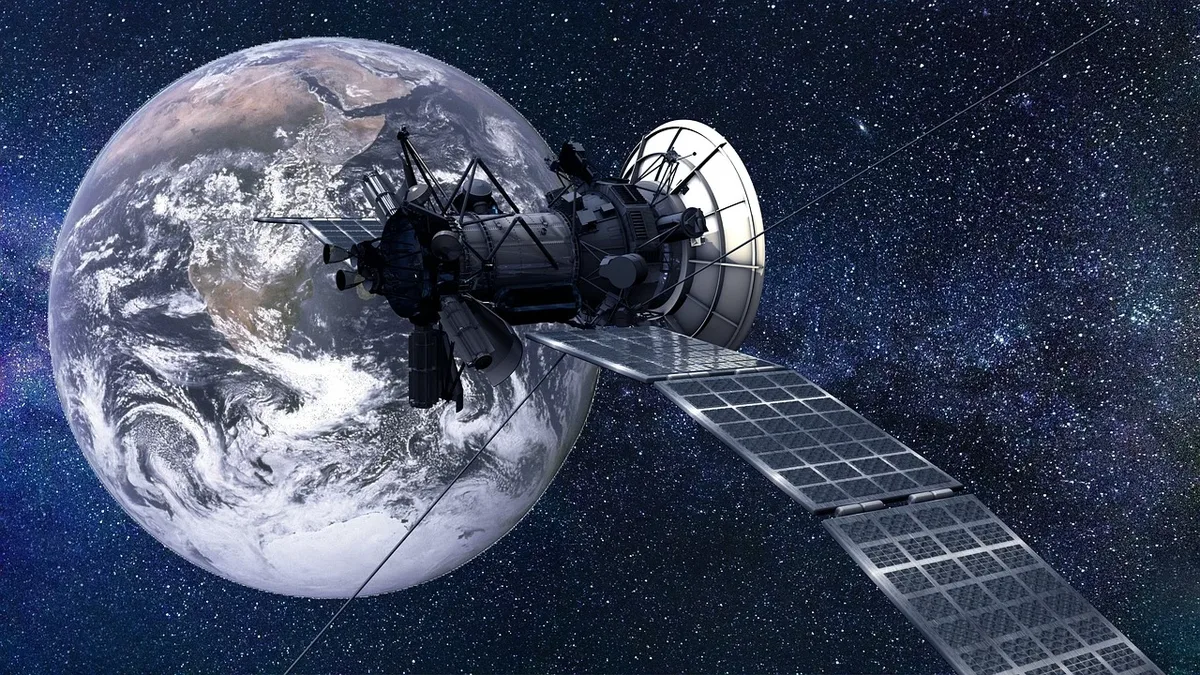
Xona secures $250M Series D to accelerate Pulsar GPS constellation
Xona Space Systems raised $250 million in a Series D funding round, valuing the company at $2.45 billion. The capital will accelerate production of...
Meridian Space Spins Out From SpinLaunch
Meridian Space is separating from SpinLaunch to operate as an independent company, taking the satcom infrastructure business.
Vast Launches Lunar Programs Division for NASA Moon Base
Space infrastructure company Vast has established a new Lunar Programs division to support NASA's Moon Base ambitions.
Impulse Space Secures $308M Extension at $5.4B Valuation
Impulse Space added $308 million to its Series D funding, bringing the round to $808 million. The company's valuation reportedly rose to $5.4 billion...
ESA Awards €760M Cargo Contract to The Exploration Company
The European Space Agency has awarded The Exploration Company a €760 million contract for its Nyx spacecraft.
Hydrosat and Kazakhstan to Evaluate Thermal Satellite Constellation
Hydrosat and Kazakhstan's national space company KGS have signed a memorandum to explore building a dedicated thermal infrared satellite...