Rendezvous Robotics secures $20M for self-assembling spacecraft
Rendezvous Robotics raised $20 million to develop modular spacecraft tiles that self-assemble in orbit, with a key demonstration mission planned for no earlier than April 2028.
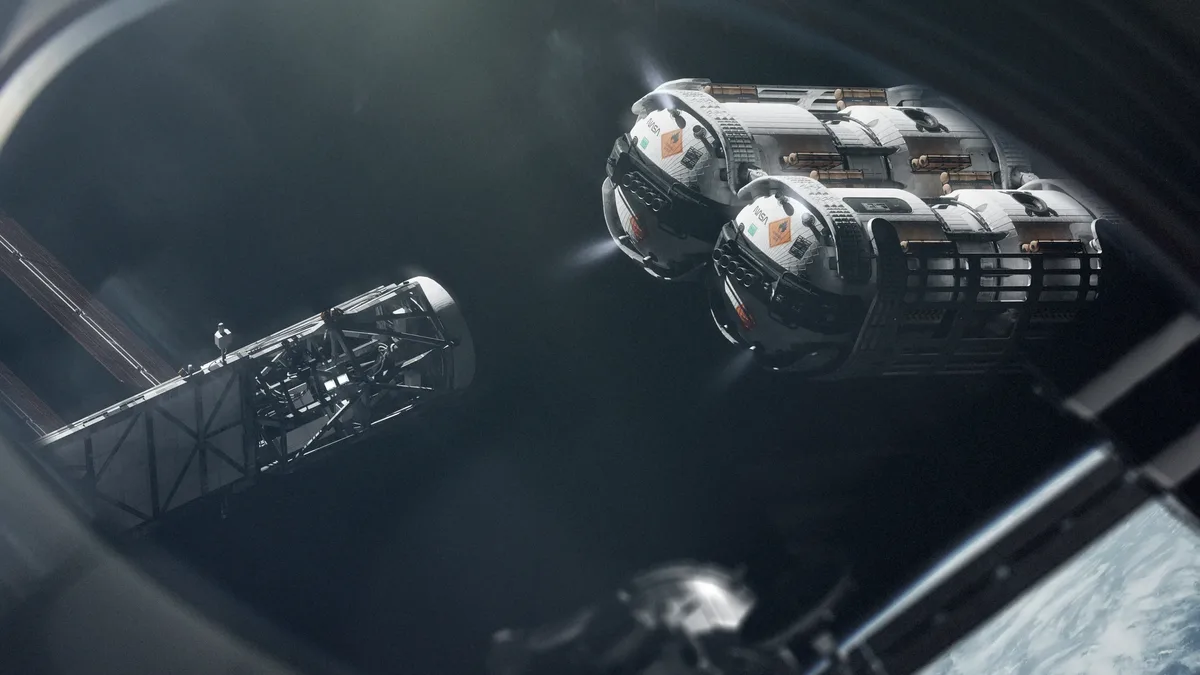
Rendezvous Robotics has closed a $20 million oversubscribed seed round. The funding, led by MaC Venture Capital and Toyota Ventures, marks the Colorado-based company's first priced funding round and will finance next-generation spacecraft development, flight demonstrations, and hiring. Additional investors include the University of Michigan Endowment, Astera Ventures, Industrious Ventures, Aurelia Foundry, ATX Venture Partners, and Mana Ventures.
Self-assembly technology and flight heritage
The company's technology centers on modular, hexagonal tiles roughly one metre across. Each tile contains sensors and onboard processing, using electromagnetic fields to move and connect with others autonomously in microgravity. This approach builds on nearly a decade of research through the TESSERAE program, originally developed by Dr. Ariel Ekblaw at MIT, who later founded the Aurelia Institute.
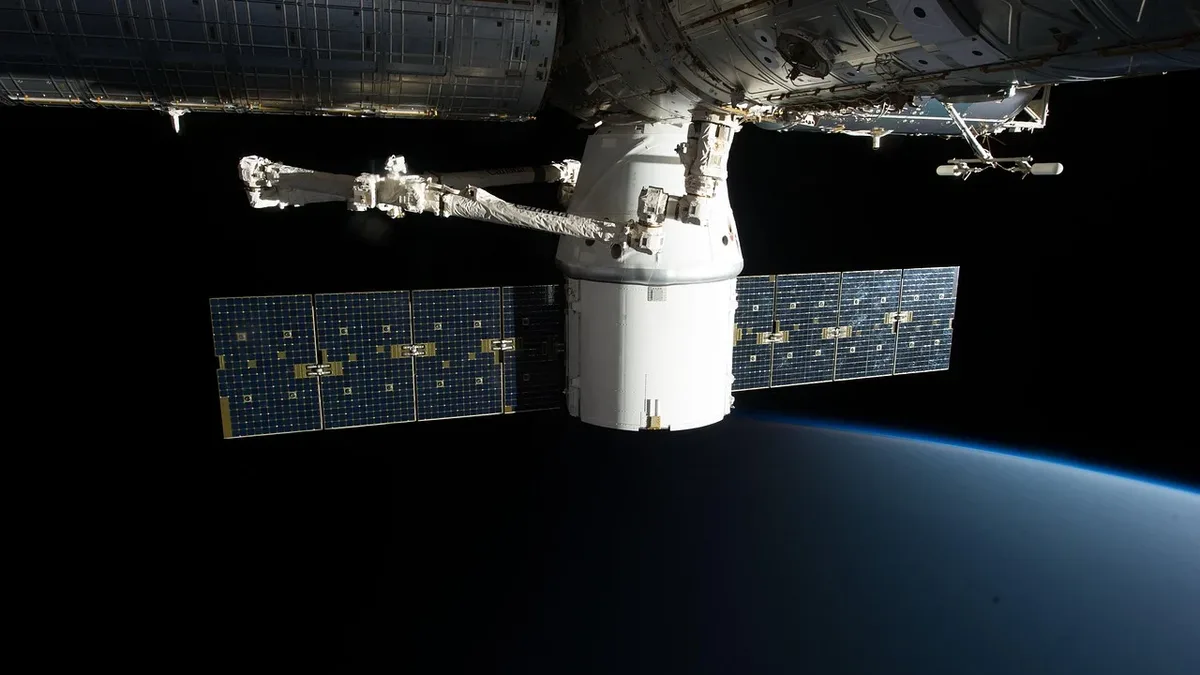
The tiles have substantial flight heritage. Earlier generations have flown on parabolic zero-gravity aircraft, a suborbital mission aboard Blue Origin's New Shepard, and two separate missions to the International Space Station. Further demonstrations are scheduled, including a parabolic flight campaign in November 2026 and a mission deploying 32 tiles to the ISS no earlier than December 2026. These tiles can host various satellite subsystems, including computing, solar power, propulsion, communications, and thermal regulation components.
Upcoming demonstration missions
The path to operational use includes two critical orbital tests. The first, set for the ISS in December 2026, will involve 32 tiles assembling into a three-dimensional structure. A more ambitious, dedicated low-Earth-orbit demonstration is scheduled for launch no earlier than April 2028.
| Mission | Launch Window | Number of Tiles | Primary Goal |
|---|---|---|---|
| ISS Demonstration | NET December 2026 | 32 | Assemble into a 3D structure in microgravity |
| Dedicated LEO Demo | NET April 2028 | 7 | Validate full autonomous assembly, separation, and reassembly |
The 2028 mission will send seven tiles to space to validate complete autonomous self-assembly and reconfiguration. The tiles will connect to form a single spacecraft, then separate and reassemble independently.
Strategic vision and technical advantages
Company leadership argues that conventional satellite design is constrained by rocket fairing sizes. CEO Joe Landon stated that modern satellites require more power, better heat dissipation, and larger antennas than fixed structures can easily provide. The self-assembling tile architecture aims to bypass these limits, allowing spacecraft to be built and reconfigured in orbit. The long-term vision includes an orbital depot for on-demand replacement parts, enabling in-space servicing and mission changes without constructing entirely new satellites.
Investors back this strategic shift. Michael Palank of MaC Venture Capital supported the company's effort to fundamentally rethink spacecraft construction. Chris Abshire of Toyota Ventures highlighted that autonomy is fundamental to the design, with the firm believing that robotics, modular design, and autonomous control represent a winning combination for future space infrastructure. The 2028 demonstration mission will seek to prove that this autonomous assembly and reconfiguration can occur without any external robotic assistance.