Euclid's First Data Release Maps 900 Million Galaxies
ESA's Euclid space telescope has released its first major data set, mapping over 900 million galaxies and 15,000 strong lensing candidates to advance dark energy research.
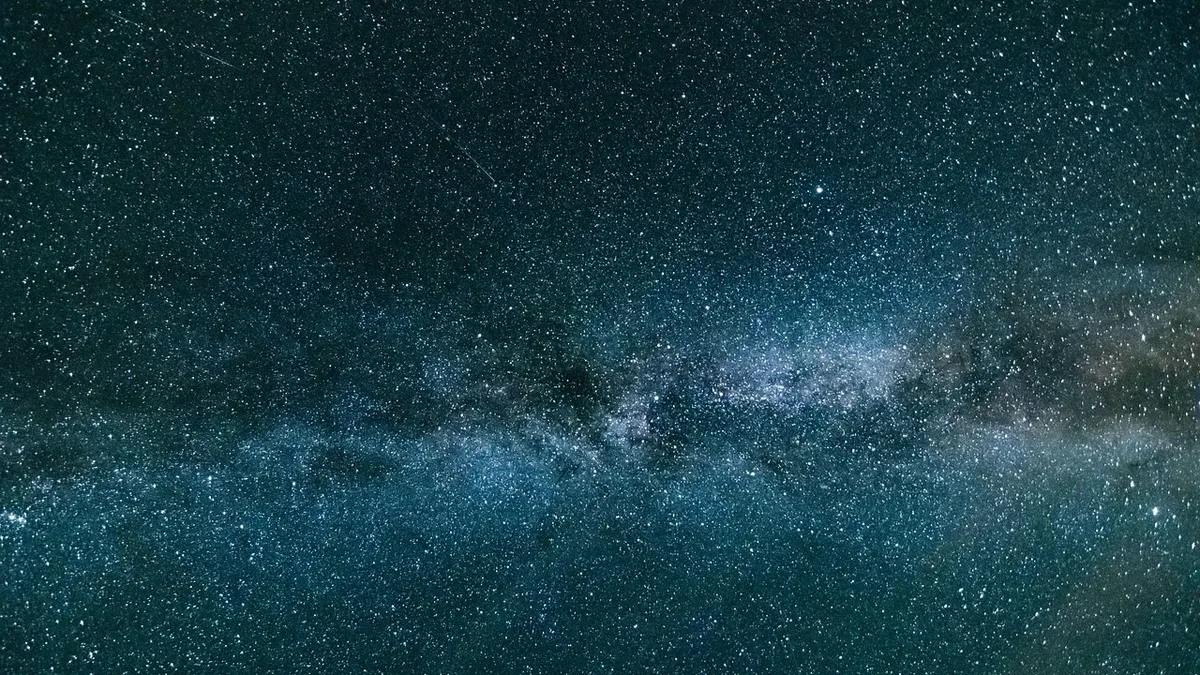
The European Space Agency released the first major data batch from its Euclid space telescope on November 12, 2026. This initial release, named DR1-Foundation, contains 1.7 million gigabytes of data from 13 months of observations, covering a sky area equivalent to 9,500 full moons.
The dataset includes observations of more than 900 million galaxies and over 60 million quasar candidates. It represents about 14% of the total sky area Euclid will survey during its planned six-year mission, which aims to create the largest-ever 3D map of the universe.
Revolution in Strong Lensing Discovery
Euclid's first data release includes around 15,000 strong gravitational lensing candidates. This marks the largest strong lens catalog ever created, representing a tenfold increase from the approximately 1,000 such events previously known to experts. By the end of its mission, Euclid is estimated to discover 170,000 strong gravitational lensing events.
Mission Scope and Scale
The mission's ultimate goal is to map one-third of the sky, spanning over 10 billion years of cosmic history. About 85% of the Euclid Wide Survey remains to be completed. The survey will spend about 10% of its observing time on the Euclid Deep Survey, which will repeatedly observe three small sky spots.
Euclid measures galaxy distances using spectroscopy, splitting light into a spectrum to determine distance. The data will be used to understand the distribution of galaxies and galaxy clusters within the universe's larger structure. The mission's main objective is to investigate dark energy, which accounts for about 70 percent of the universe, and dark matter, which accounts for 25 percent.
ESA's Director of Science, Prof. Carole Mundell, stated this release marks a scientific milestone and the largest space-based survey of its kind. Euclid project scientist Valeria Pettorino said the data will map the large-scale structure of the Universe in unprecedented detail.
Natalie Lines, a Euclid Consortium member at the University of Portsmouth, said the long-forecasted revolution in strong lens discovery has arrived, providing new insight into dark matter and the expansion of the Universe. Barbara Sartoris of the JL Lagrange laboratory noted the data gives an unprecedented view of large samples of ancient galaxy clusters.
The full Data Release 1 is expected to be made public in mid-2027. Another data release is expected next summer, which will include details on galaxy distribution and weak gravitational lensing.