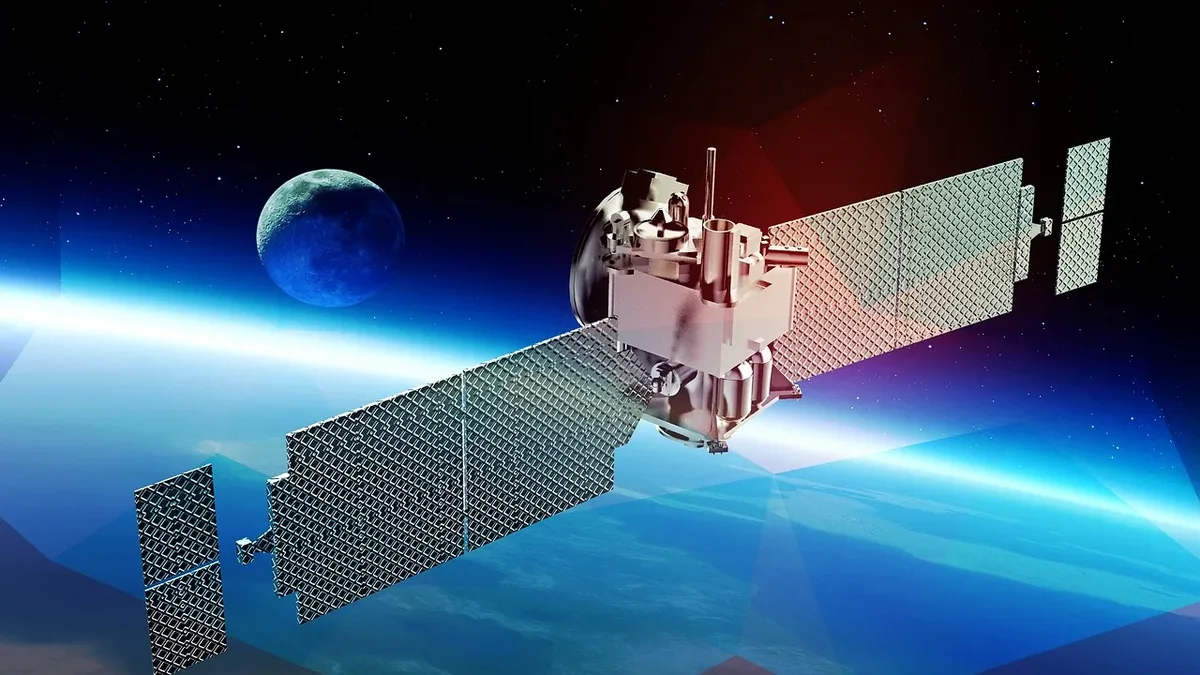
SRON creates CO2M satellite data test tools
SRON has created a new framework to test the performance of CO2M mission greenhouse gas data. The tool uses end-to-end simulations to ensure the satellite's CO2 measurements are precise enough for tracking human-made emissions.

The Space Research Organisation Netherlands (SRON) has developed a performance testing framework for the upcoming Copernicus CO2 Monitoring Mission (CO2M). This tool is designed to assess the quality of the satellite's Level-2 carbon dioxide data products through realistic simulations.
CO2M will provide global observations of atmospheric CO2 at an unprecedented spatial resolution. Its data is intended to enable the monitoring of greenhouse gas emissions from human sources. To be useful, the mission's XCO2 product must meet strict precision and accuracy requirements for downstream scientific applications.
Framework objectives and method
The new SRON framework builds on heritage from the TANGO mission. It uses the RemoTAP retrieval system also developed at SRON. The main goal is to create an end-to-end simulation chain for generating realistic CO2M observations over known emission point sources.
The quality of the resulting Level-2 products is then assessed. This is done by comparing derived emission estimates against the known ground truth using flux inversion as a diagnostic tool. The framework aims to evaluate how sensitive these estimates are to instrument characteristics, retrieval settings, and atmospheric conditions.
Simulation chain components
The simulation process is comprehensive. It begins with MicroHH Large Eddy Simulation for realistic plume modelling. Real geophysical inputs are incorporated, including Sentinel-2 albedo, MODIS BRDF, ECHAM-HAM aerosol, and CAMS trace gases.
The CO2M Scene Generation Module then produces synthetic Level-1 radiances. The framework will also interface with EUMETSAT's Bi-directional Instrument Model. This allows for case studies on how instrument errors impact flux inversion performance.
Retrieval is performed with SRON's RemoTAP system. Final emission estimates are derived using the Integrated Mass Enhancement method, with Cross-Sectional Flux used for cross-validation.
First results from testing
Initial tests have been run for the Matimba power plant in South Africa. The simulated CO2M Level-2 XCO2 product clearly shows the CO2 plume signal above the background level.
The flux inversion based on the Integrated Mass Enhancement method demonstrates a promising result. It shows the emission signal is well preserved through the full retrieval chain. This successful first test validates the performance of the new testing framework.