HPE's Spaceborne Computer-4 to Run AI on the Moon
HPE's fourth-generation Spaceborne Computer-4 will launch in 2026 aboard Astrolab's FLIP rover to test AI processing and autonomous operations on the lunar surface for NASA's CLPS initiative.
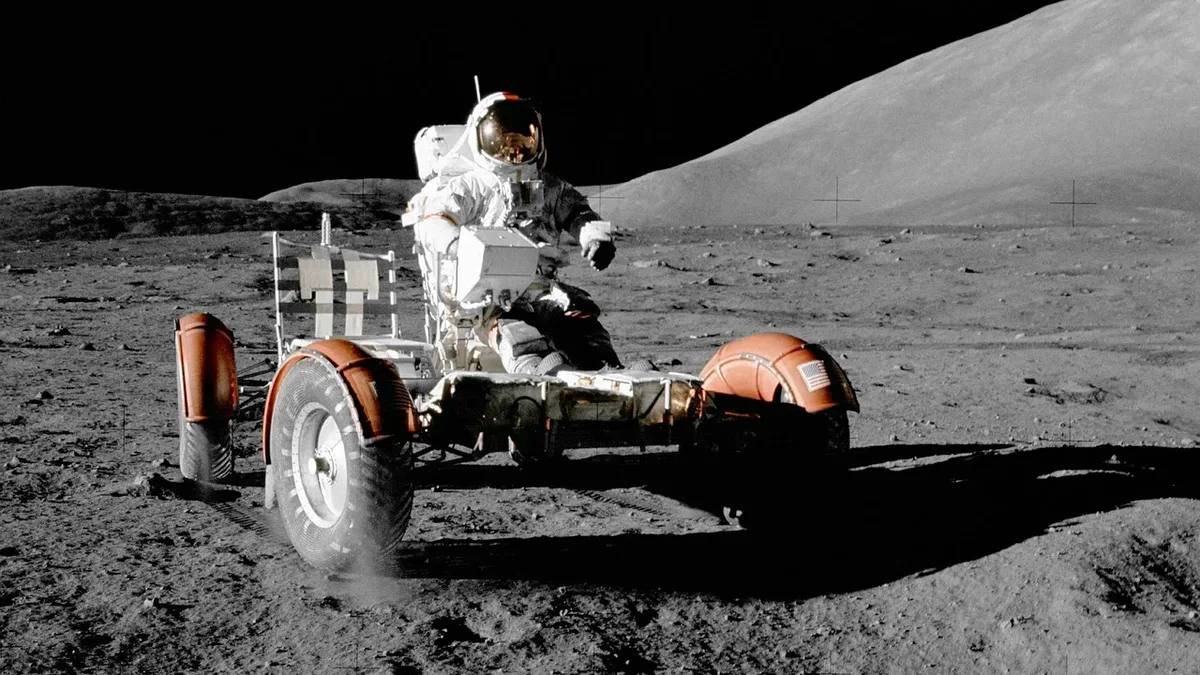
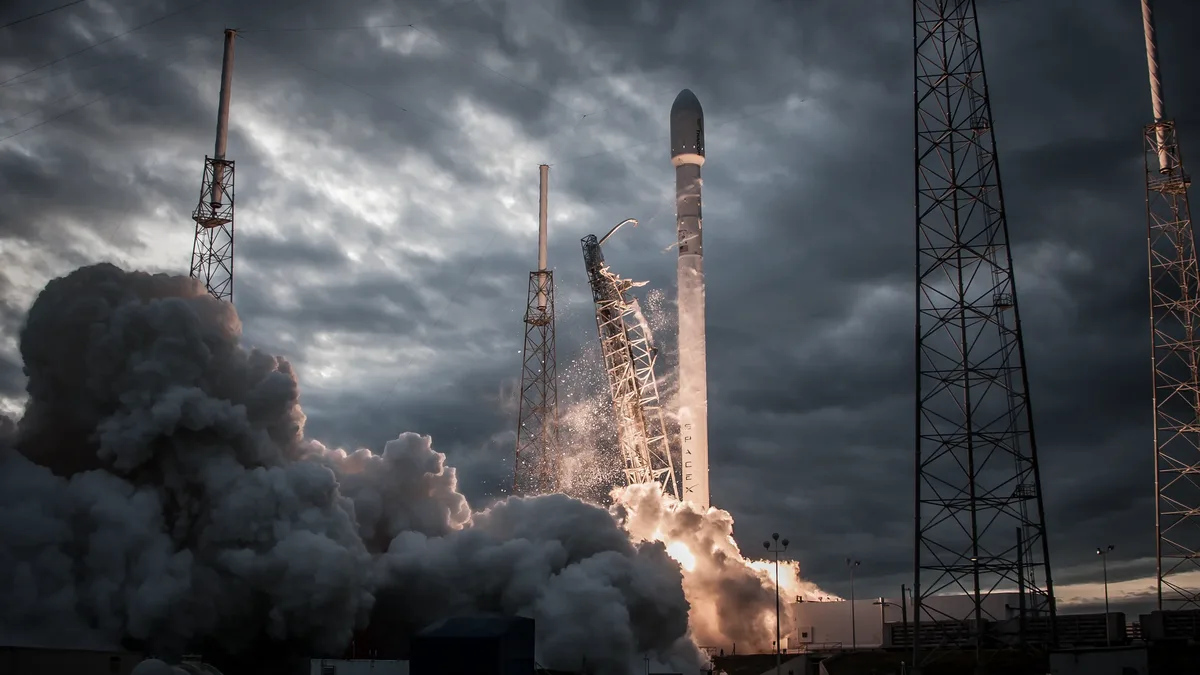
Hewlett Packard Enterprise will send its Spaceborne Computer-4 to the Moon in late 2026. The AI-compute module will fly on Astrolab's FLIP rover, delivered to the lunar South Pole by Voyager Technologies' Griffin-1 lander launched on a SpaceX Falcon Heavy. This mission, part of NASA’s Commercial Lunar Payload Services (CLPS) initiative, marks the first deployment of a fanless, radiation-hardened computer designed to operate in the vacuum of space.
The primary goal is to evaluate local data processing for faster terrain analysis and decision-making, crucial given the 2.5-second communication delay and limited bandwidth between the Moon and Earth. The system will test large language models using Retrieval-Augmented Generation (RAG) for document search, process visual and LiDAR data for mapping, and run autonomous monitoring software. NASA will also coordinate multiple AI models through its FLUID experiment.
Mission Architecture and Partners
NASA's CLPS framework coordinates the commercial mission. Astrolab's FLIP rover, the largest U.S. rover since Apollo at about 2.13 meters long and 500 kilograms, will host the computer. Deloitte will deploy its Silent Shield cybersecurity system to detect intrusions and spot anomalies. HPE will provide computing support to Astrolab's mission control in Hawthorne, California, using its Private Cloud and CloudOps software to optimize insight delivery and manage automated workloads.
Technical Specifications and Capabilities
The Spaceborne Computer-4 is built from commercial off-the-shelf parts. It is a fanless system protected against lunar dust, using a space radiator for cooling. It contains a low-power CPU and GPU, paired with two KIOXIA BG6 M.2 solid-state drives offering 1TB of mirrored storage. The system measures approximately 5 by 10 inches and is about an inch thick.
| Component | Specification |
|---|---|
| Storage | Two KIOXIA BG6 M.2 SSDs, 1TB total (mirrored) |
| Dimensions | ~5 x 10 inches, ~1 inch thick |
| Rover Size | ~2.13 meters long, ~500 kg mass |
| Operational Duration | ~1 year post-landing |
It uses software-based 'hardware hardening,' continuously comparing hardware status against a state table and throttling compute power during radiation episodes. The system will run High-Performance Linpack and High-Performance Conjugate Gradient benchmarks, potentially marking the first Top500-related performance submission from another celestial body. The approximately 14 days of high-load computation during the lunar night may also help maintain rover equipment temperature.
Mark Fernandez, HPE's senior principal scientist and space technology lead, explained the system operates at the 'edge of the edge.' He said, "What’s exciting is giving the rover the ability to make sense of what it collects, rather than simply sending everything home for analysis."
The mission will conduct AI and high-performance computing experiments on the rover for approximately one year after a successful lunar landing.