Space Leaders See AI Evolving from Tool to Autonomous
Industry executives at World Space Business Week stated AI is shifting from a specialized analytical tool to an embedded system enabling autonomous

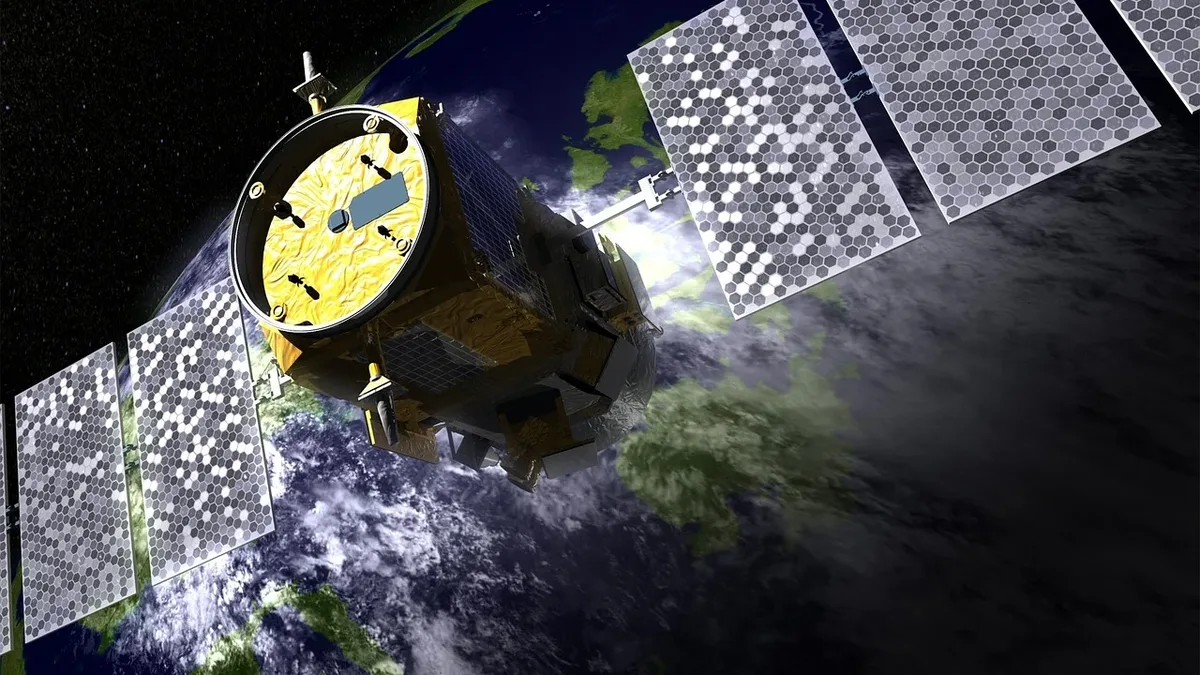
Artificial intelligence is transitioning from a specialized tool to an autonomous decision-maker for satellite operations, according to industry leaders speaking at World Space Business Week in Paris. Eutelsat's Chief Data and Information Officer, Mariam Kaynia, said AI has moved over the past year from being in the hands of a few to an embedded tool for many, enabling more end-to-end work.
"It has really moved over to autonomy where the human is more of a supervisor," Kaynia said. "AI can define the actions on a satellite."
The Shift to On-Orbit Autonomy
Executives detailed a move toward placing AI directly on spacecraft. Isobel Porteous, head of Business Development for EarthTraq, said her company is putting AI co-processors on spacecraft to perform denser computing in orbit. This allows for better use of onboard sensors and builds a more efficient data pipeline. Waleid Al Mesmari of The Edge Group agreed, noting that on-board AI processing is where technologies are being hosted to turn vast data into actionable intelligence.
Beau Legeer, director of Imagery and Remote Sensing for Esri, stated that AI will penetrate space operations first, but downstream data applications are key for competitive advantage. He emphasized the need for alignment between AI intent and human intent.
Downstream Applications and Speed
The focus for many is now on the downstream side-analyzing data after it is collected. Hasan Al Hosani, CEO of Smart Solutions at Space42, said AI allows the company to infuse data very quickly, speeding up the process from acquisition to report. He gave the example of natural disaster response, where AI can link data for predictive analysis and faster post-event assessment, such as for earthquakes.
We want something that adds value, going beyond the common ML processes in understanding the data, Hosani said.
Porteous highlighted that data is the most important currency, with insights now accessible to a larger community outside the traditional space industry.
Sovereignty and Evolving Definitions
A panel discussion addressed how AI impacts sovereignty in space. Legeer argued that owning and controlling assets is now a national strategy, not only a point of pride. Kaynia believes the definition of sovereignty is evolving from owning satellites and infrastructure to being about trust and embedding different countries' requirements into services.
Hosani linked sovereignty to business continuity and consistent dataflow, which improves competence and assets. He mentioned Space42's launch of its first SAR constellation as part of building downstream capabilities to move from information to knowledge.
Porteous noted that AI tools will enable many new actors to work in the domain. So many people can learn how to build spacecraft, she said.
The Human Role in an Autonomous Era
Despite the move toward autonomy, executives stressed the continued need for human oversight. Kaynia said humans are becoming supervisors, but are still needed for context engineering, model training, and validation. She stated that AI is starting to take decisions and actions, but someone must validate them.
The industry is lowering barriers to entry and expanding its market reach. The consensus is that AI is becoming a fundamental part of space operations, shifting the human role while opening the field to broader participation.