Deloitte Forecasts $566B Lunar Economy by 2050
A new Deloitte report values the cumulative lunar economy at up to $566 billion by 2050, driven by infrastructure buildout and new markets.
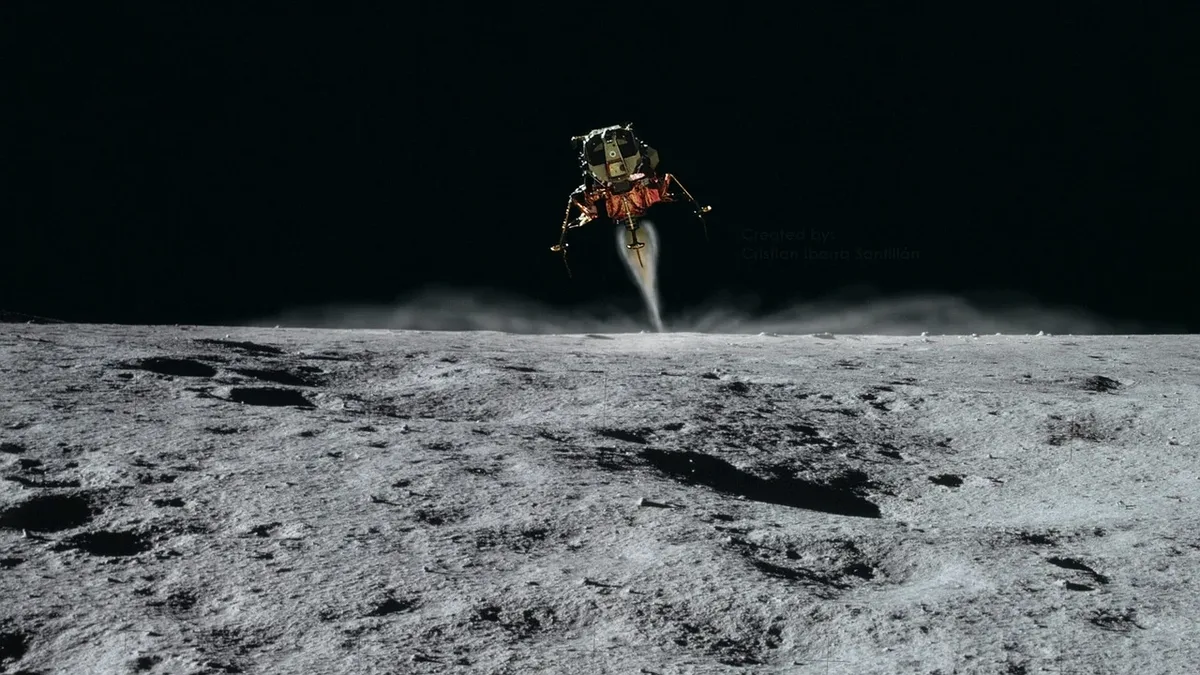
A new report from Deloitte Consulting LLP projects the cumulative economic value of lunar activity could reach $566 billion by 2050. The analysis, titled "Building the Lunar Economy," outlines a conservative scenario valuing the market at $343 billion and an accelerated scenario at $566 billion.
Raquel Buscaino, Head of Novel & Exponential Technologies at Deloitte Consulting LLP and a coauthor of the report, said it began as a search for unanswered questions. "What we found is that this is primarily a story about infrastructure," Buscaino stated.
The Infrastructure Foundation
The report's first stage covers six core infrastructure markets required for a sustained lunar presence. Under the accelerated-growth scenario, these foundational sectors could generate $282 billion through 2050. Transportation is forecast to be the dominant segment.
Early development is expected to focus on the lunar South Pole. This region offers water ice deposits and ridges with prolonged sunlight, which are seen as critical for long-term operations. Government agencies like NASA are increasingly acting as anchor customers to seed these commercial markets.
Unlocking Future Markets
Once the foundational infrastructure is established, the report identifies several downstream markets that could emerge. These include lunar data services, national security applications, resource extraction, and manufacturing to support space-based computing.
Some markets, like lunar data and national security services, could develop before a fully mature lunar ecosystem exists. Others, such as extracting resources like helium-3 or producing lunar-derived propellant, depend on capabilities and demand that are still forming. Together, these secondary markets could generate up to $284 billion in cumulative value by 2050 under the accelerated scenario.
The potential impact extends beyond direct market activity. Deloitte separately considered broader societal benefits like innovation, scientific discovery, and human inspiration, estimating they could represent an additional $541 billion in value.
Challenges and Uncertainties
Despite the optimistic projections, the report issues a strong reality check. It describes a thriving lunar economy as far from inevitable, pointing to major engineering hurdles, long development cycles, regulatory uncertainty, and unproven commercial demand.
Near-term revenue still depends heavily on government funding. The wide range between the $343 billion and $566 billion estimates is intended to capture the uncertainty surrounding the pace of infrastructure buildout, commercial adoption, and policy clarity. Some of the most valuable applications may come from innovations the industry cannot yet predict.
A Broad Industrial Opportunity
The companies positioned to benefit from lunar development may not traditionally be seen as space firms. Building and operating on the Moon draws on expertise from energy, telecommunications, robotics, logistics, advanced manufacturing, and data infrastructure. Technologies developed for the harsh lunar environment could also find applications in remote or resource-constrained areas on Earth.
Buscaino emphasized the wide-ranging opportunity. Whether we realize it or not, we all have a role to play in the growing space industry, she said. The funding decisions, infrastructure investments, and technical standards being set today will shape who participates in and captures value from the lunar economy, with implications that could reach Earth-bound industries sooner than expected.