States Vie to Host New US Space Academy
Multiple US states are campaigning to host the new US Space Academy, following an executive order from President Donald Trump.
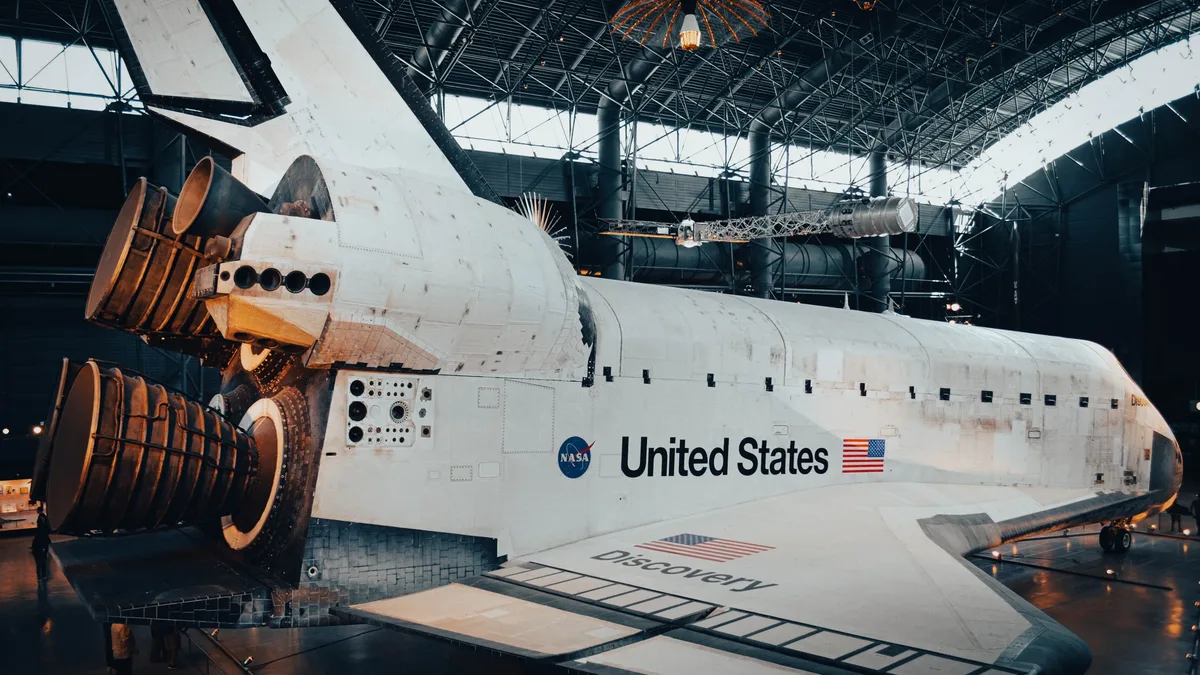
A new civilian space academy has sparked a political competition among US states. President Donald Trump signed an executive order on Aug. 28 to establish the US Space Academy, a NASA-led institution modeled on military service academies.
A commission was created to determine details like curriculum and service requirements. On Sept. 10, NASA issued a request for information, with formal proposals to potentially follow later.
The plan calls for breaking ground by 2027. An interim cohort of 300 students would be seated at partner institutions in 2028. A permanent campus is targeted to open by 2031.
Site Requirements
NASA has set specific criteria for the academy's permanent home. The agency wants a site of at least 300 acres. Proximity to NASA or university facilities is considered a plus.
The campus must have capacity for 1,200 undergraduate students. It should also be scalable to accommodate up to 4,000 students in the future.
All states were invited to submit a single proposal through their governor's office by October 26. Proposals must include location details, timeline plans, cost estimates, and possible partnerships.
Early Campaigns
Several states have already begun public campaigns to host the facility. Texas Governor Greg Abbott is the only governor to announce a formal team. He tapped state Representative Greg Bonnen to build a bid around Johnson Space Center with the Texas Space Commission.
Senator Ted Cruz and Representative Brian Babin are also lobbying for Texas. Their efforts were notable enough that President Trump called out Senator Cruz during the executive order signing.
In Florida, Senator Ashley Moody filed the STARS Act on Tuesday to legally designate Florida as the academy's home. She is working with Space Florida on the state's response to NASA's request. Senator Moody and Senator Rick Scott also led a bipartisan delegation letter to the White House on Sept. 3 promoting Kennedy Space Center and Cape Canaveral.
Alabama's bid, led by Representative Dale Strong, pitches North Alabama. The proposal leans on the Marshall Space Flight Center, Redstone Arsenal, the Missile Defense Agency, and the Army's Space and Missile Defense Command. It also notes that the area is the future home of US Space Command.
In Nevada, spaceport developer Rob Lauer is promoting a 500-acre parcel of desert west of Las Vegas. His own land runs 240 acres, which is short of NASA's 300-acre minimum. However, it borders 100,000 acres of Bureau of Land Management holdings.
Political Divisions
Not all potential locations are united in support. Colorado appears strong on paper due to the Air Force Academy, multiple Space Force bases, and the current Space Command headquarters. However, Senator John Hickenlooper called the Space Academy plan "duplicative, costly, and unserious."
Chief of Space Operations General Douglas Schiess said this week the Space Force will continue commissioning roughly 100 Guardians annually from the Air Force Academy regardless of the new academy's establishment.
Other Contenders
With weeks remaining before the proposal deadline, several other states are expected to join the competition. Ohio contains NASA Glenn, Wright-Patterson Air Force Base, and the National Space Intelligence Center. It previously bid for Space Command headquarters but was not a finalist.
New Mexico is home to Spaceport America, White Sands Missile Range, and Kirtland Air Force Base. It was one of six finalists for the Space Command headquarters.
Mississippi, Virginia, Maryland, California, and Louisiana are also considered potential contenders. Each is home to existing NASA facilities and has deep aerospace industry connections.
NASA will review the state responses and make recommendations to the presidential commission. The commission will then report to the White House for a final decision. However, establishing a new service academy requires an act of Congress, and no lawmakers currently sit on the commission.