Satlyt secures $8M seed funding for AI orbital data center network
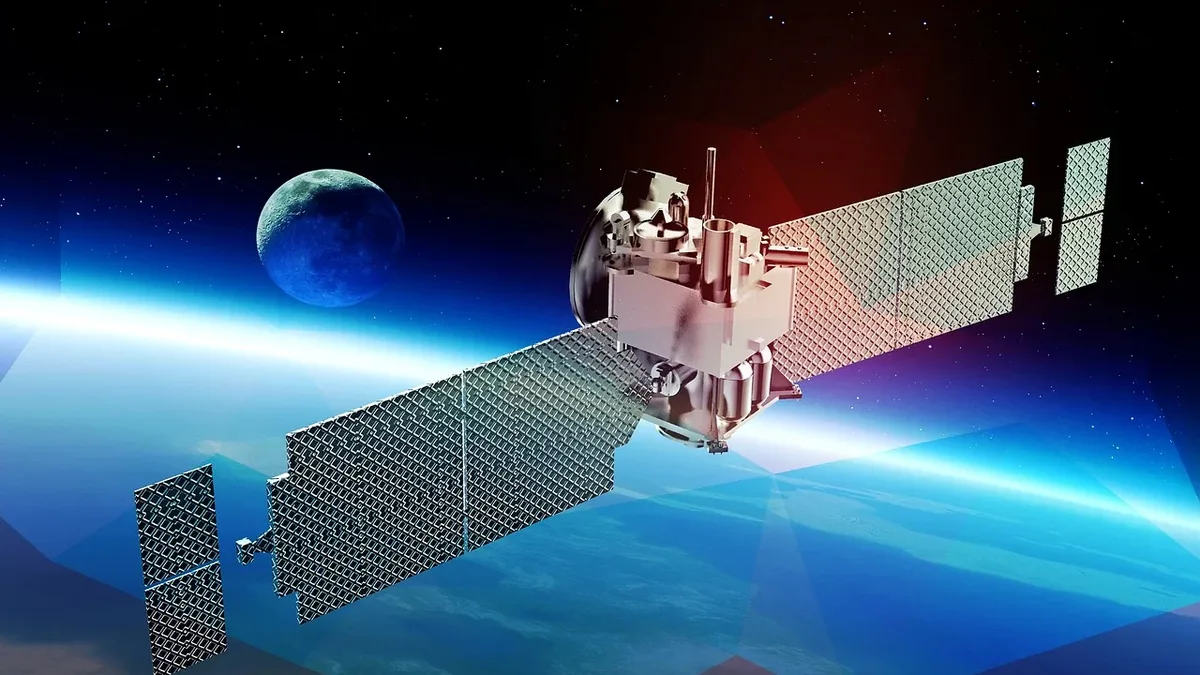
Satlyt raised $8 million in seed funding to expand its virtual orbital data center network, using AI software on third-party satellites to process data in orbit.

Satlyt raised $8 million in seed funding to scale its AI inference technology on third-party satellites. The round was led by Non Sibi Ventures and included participation from a wide range of Africa- and US-based investors.
The company, with joint headquarters in Nairobi, Kenya, and Sunnyvale, California, will use the capital for product development, recruitment, and wider software deployment. It plans to hire new engineers and invest in research and development.
Proven AI performance in space
In May, Satlyt announced its biggest in-space success. It demonstrated AI inference in orbit using Google's Gemma model. The demonstration processed imagery, generated encrypted downlink-ready output, and diagnosed injected software faults.
This built on an earlier deployment where a Google Gemma AI model ran aboard a satellite to analyze system logs, software errors, and stack traces. The claim was shared by founder Rama Afullo in a LinkedIn post.
Strategic partnerships and NASA backing
Satlyt's momentum is bolstered by significant institutional support. In November, the company won a NASA STTR contract valued at $4 million. The contract is to design delay-tolerant edge protocols in space.
Last week, Satlyt signed a memorandum of understanding with xOrbita and Symphony Space. The MoU will explore a joint software-defined in-space architecture.
Vision for broad satellite integration
The long-term vision is to proliferate across non-SpaceX Starlink satellites. Satlyt aims to onboard 30% of all non-Starlink satellites by the end of the decade. It sees its system as complementary to hardware-focused orbital data centers.
Rama Afullo stated that Satlyt runs "orthogonal to essentially every edge-compute box, every orbital data center" and is additive to the network. The company does not claim to replace onboard compute but to show how to route data efficiently. Its longer-term objective is to create a common software layer to coordinate computing resources across satellites operated by different organizations.
Next steps: dual-use deployment and Nairobi hub
Founded in 2024 by SpaceX and Google alum Rama Afullo, Satlyt maintains a significant engineering presence in Nairobi. Its next planned deployment pairs research with commercial applications on a third-party spacecraft.
One application is research software linked to its NASA Glenn Small Business Technology Transfer work with the University of Houston. The other is a commercial imagery-processing application.