Zero Industries raises $3M for orbital laser power system
Japanese startup Zero Industries has secured $3 million in pre-seed funding to develop Helios, a laser-based system for transmitting solar power between satellites in orbit.
Zero Industries, a Japan-linked space technology startup based in San Francisco, has raised $3 million in pre-seed funding. The round was led by Maezawa Fund, with participation from UntroD Capital Japan, NOW, Midtown, and individual investors.
The company, established about six months before closing the round, described the financing as the largest publicly announced pre-seed round by a Japanese startup. This claim is based on its own review and has not been independently verified. Zero Industries did not disclose its valuation or the size of individual investments. The capital will be used to hire engineers, advance core technology, build prototypes, and develop industrial partnerships. The company is led by Chief Executive Kai Sugihara, Chief Technology Officer Yusei Fujii, and Chief Operating Officer Koya Tani.
Technology overview
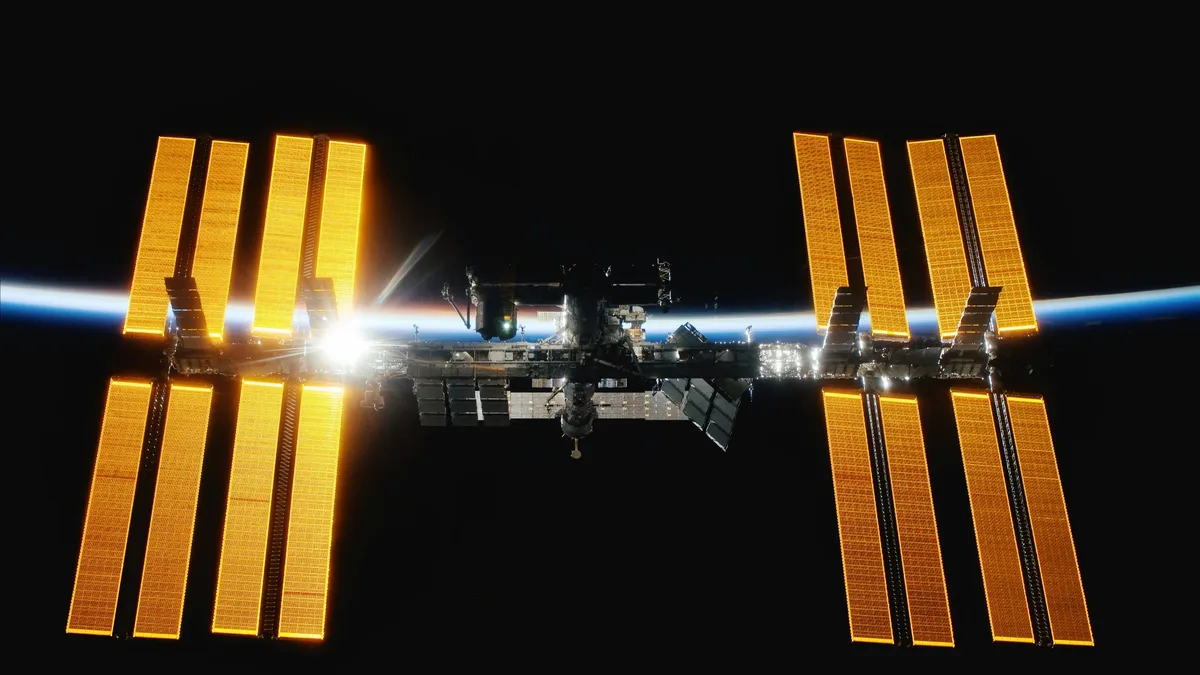
Zero Industries is developing a laser-based orbital power system called Helios. The system is designed to transmit solar-generated electricity between spacecraft using lasers. It has three main components: a transmitting satellite, a receiver module installed on a customer's spacecraft, and software that schedules and measures power delivery.
The company argues that an external power source could let satellite operators reduce the weight assigned to solar arrays and batteries. This would free up capacity for additional sensors, computers, or propulsion systems. Initial target users include Earth-observation satellites, orbital transfer vehicles, and spacecraft that inspect or service other satellites.
Design requirements include sending power across hundreds of kilometers and serving more than one spacecraft from a single transmitter. Zero Industries has not yet demonstrated that capability in orbit. The company is working with the Graduate School for the Creation of New Photonics Industries in Hamamatsu on receiver components, atmospheric laser propagation, safety procedures, and measurement methods. The research team has reviewed Zero Industries' experimental setup and safety plan, but the company has not disclosed independent test results for the proposed orbital system.
Space deployment adds further challenges. These include precise tracking, heat management, radiation tolerance, and long-duration operation. Commercial viability will be assessed using the electricity customers can actually use after accounting for transmission and reception losses, equipment mass, and operating costs.
Previous industry tests highlight the technical hurdles. In 2025, NTT and Mitsubishi Heavy Industries reported receiving 152 watts of electricity from a one-kilowatt laser sent over one kilometer in an outdoor demonstration. That test showed the concept can work over meaningful distances but also highlighted significant losses between transmitted optical power and usable electricity.
Development roadmap
Zero Industries has outlined a series of testing milestones leading to an orbital demonstration. The near-term plan includes evaluating receiver components and conducting a kilometer-scale outdoor power transmission test. The company also plans to test tracking of a moving target with combined laser beams. These activities are scheduled for late 2026 through spring 2027.
Design work for an orbital demonstrator and selection of a satellite bus is planned for the second half of 2027. The company is targeting its first satellite-to-satellite power transmission demonstration in 2030. This would be followed by deployment of commercial transmission satellites and service to initial customers. These 2030 dates are company targets and may change based on test results, economics, and manufacturing capacity.
Chief Executive Kai Sugihara outlined those priorities in an interview with Automation World. The company's Japanese entity is Zero Industries Japan, and its parent is registered as a public benefit corporation in California.
Zero Industries plans to evaluate receiver components and conduct kilometer-scale outdoor power transmission tests in late 2026 through spring 2027.