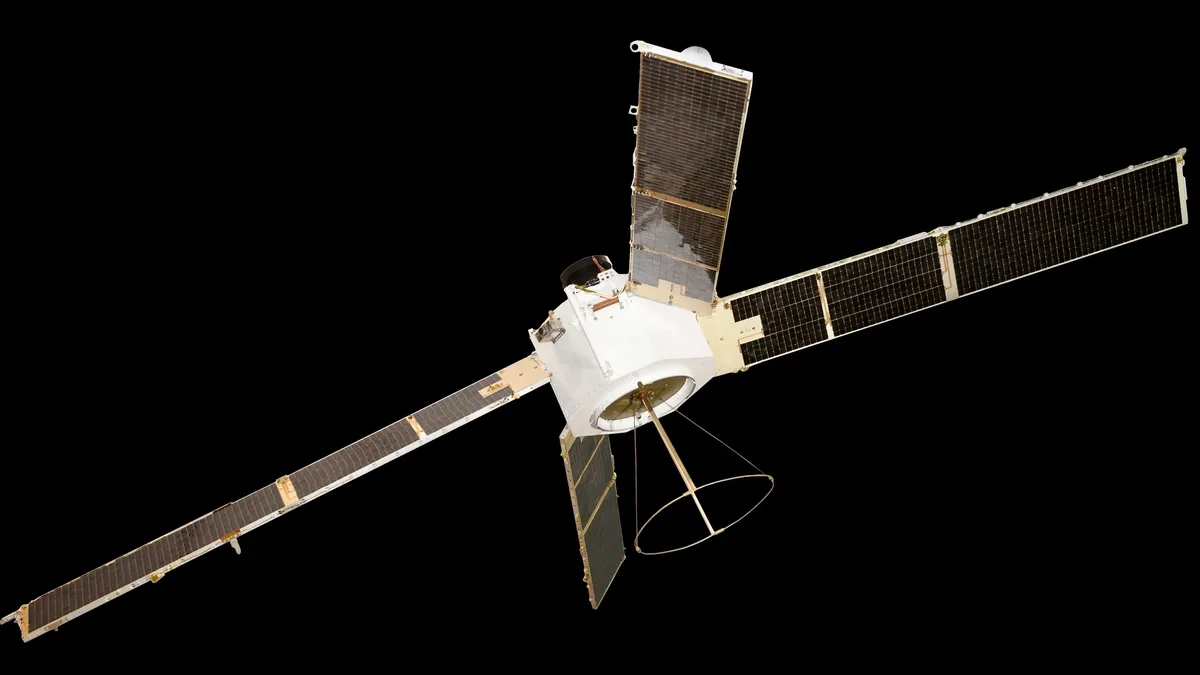
Liechtenstein Drives European Space Federation With Early Ka-Band Filings
The Vaduz Space Dialogue 2026 positioned Liechtenstein's early Ka-band satellite spectrum filings as a strategic foundation for a federated European secure communications system.
The Vaduz Space Dialogue 2026 has positioned Liechtenstein’s early satellite spectrum filings as a strategic foundation for federating European space capabilities while preserving national control. The event, convened by the Principality of Liechtenstein and hosted by its Ministry for Home Affairs, Economy and Sports with support from Open Cosmos and the European Space Policy Institute (ESPI), brought senior representatives from European governments, institutions, and industry to the capital, Vaduz.
Participants focused on how to strengthen European sovereignty and resilience by connecting existing and future satellite systems. They recognized secure space-based connectivity as vital for security and crisis response. The core idea was federation: enabling independently owned systems to interoperate while respecting national and commercial priorities. Hubert Büchel, Liechtenstein’s Minister of Home Affairs, Economy and Sport, stated that Europe’s secure connectivity will be stronger if sovereign capabilities are brought together while allowing countries to retain control over their assets, priorities, and security requirements. Liechtenstein aims to contribute regulatory capability, strategic frequency resources, and its growing national space ecosystem to this effort.
Practical requirements for federation identified at the Dialogue include common technical interfaces, security accreditation, capacity-sharing arrangements, and coordination of frequency assignments. Spectrum was recognized as a scarce strategic resource at the heart of future connectivity. Torsten Kriening noted that Vaduz placed spectrum and satellite filings on the strategic agenda alongside launchers and satellites. The Dialogue is intended to turn complementary strengths across Europe into practical cooperation.
Liechtenstein’s national strategy aligns with European goals
Liechtenstein’s emerging space strategy uses its International Telecommunication Union (ITU) filings not for profit but to build a specialised ecosystem. Dr. Bianca Lins, Head of Space for the Principality, is leading the development of the country's first national space strategy. She stressed that federation should not mean transferring control from Vaduz to Brussels, but agreeing beforehand how nationally controlled assets can serve a common European purpose. Addressing crisis access for government traffic, Dr. Lins said, "such matters cannot be settled mid-crisis. Access, priority and escalation rules must be agreed in advance."
The ambition for 2035 is to connect Liechtenstein companies to international value chains and develop space data applications, building on regulatory expertise. The strategy looks beyond connectivity to support specialised industry and partnerships. Liechtenstein has re-affirmed Open Cosmos as its strategic industrial partner. Two satellites built by Open Cosmos were launched in January 2026, with more ready to launch. Rafel Jordá Siquier, founder and CEO of Open Cosmos, stated that Europe’s challenge is turning ambition into capability at speed, and that federation offers a practical way to connect assets while nations retain control.
Open Cosmos enables scalable, interoperable contribution
Open Cosmos provides the technical backbone for Liechtenstein’s initiative. Rafel Jordá Siquier explained that the company’s satellite filings were made very early, carry high priority in Ka-band, and help minimise future interference. The Ka-band allows substantial data transmission from small terminals. The planned polar constellation holds synergies with Open Cosmos’s polar Earth observation constellation, enabling real-time data delivery from sensing satellites to users. The company has invested in high-volume manufacturing across Europe, with the capacity to produce up to one satellite per day.
Liechtenstein and Open Cosmos expressed readiness to develop capability on an open, interoperable basis and explore with European partners how it could complement existing systems. Torsten Kriening assessed that Vaduz did not solve European secure connectivity but started a process. He suggested federation’s success depends on three elements to watch through 2027: a clear governance model, interoperability and secure technical arrangements, and additional public or commercial partners willing to contribute.
Governmental drivers and risks shape the urgency
Shifting defence needs and market realities are accelerating the push for a federated model. Hermann Ludwig Moeller, Director of ESPI, noted that governmental requirements have shifted to far more military ones since programmes like IRIS² and GovSatCom were initiated. He argued for a dual objective: ensuring governmental and military services are available by a hard 2029 deadline, while stimulating commercial markets for sustainability. Europe’s financial markets have matured, supporting this aim.
The war in Ukraine demonstrated the risk of depending on another country’s satellite constellation. Starlink now dominates the market. Moeller argued Europe should not copy it because "a single system, dependent on a single entrepreneur and a single governance structure, is a single point of failure." He stated Europe's resilience lies in its accustomed model of federation, balancing European and national priorities. National systems are also emerging, with Germany, Spain, and Poland developing their own satellite systems.
Torsten Kriening will monitor governance, interoperability, and partner engagement through 2027 to determine if the Vaduz model becomes a lasting European space architecture.