BepiColombo enters Mercury orbit after thruster anomaly
The BepiColombo mission successfully entered orbit around Mercury on November 21, 2026, after a software glitch caused its critical thruster burn to achieve only 77% of its planned velocity change, resulting in a longer orbital period.
The European Space Agency confirmed on 21 November that BepiColombo entered orbit around Mercury despite a software glitch that caused a thruster burn to last only 77% of its planned duration. The spacecraft completed its eight-year journey to the innermost planet, becoming only the second mission ever to orbit Mercury. The anomaly altered the orbital timeline, placing the craft into a 75-hour orbit instead of the intended 58-hour path.
A software issue during the 37-minute orbital insertion burn triggered a premature termination. The thruster trouble made the burn shorter than planned. It achieved just 77% of the intended velocity change. This forced the spacecraft into safe mode. Teams at the European Space Operations Centre in Darmstadt worked through the night to assess the situation. Communications were re-established at 03:02 CET on 22 November. Orbital capture had been confirmed internally around 01:00 CET.
Ignacio Tanco described the team's reaction. "Upon finding Bepi in safe mode, it was like flipping a switch," he said. "Everybody was focused in understanding what had happened."
Software anomaly impacts orbital insertion
The planned make-or-break engine burn began at 18:24 UTC on Saturday, 21 November. It was supposed to last 37 minutes. A software glitch involving attitude guidance and thruster control caused it to end early. The agency stated the thruster burn was shorter than planned due to this issue but confirmed the spacecraft is safe. The mission used a technique called 'weak stability capture' to enter orbit, a method previously reserved for Earth-Moon missions. The longer 75-hour orbit is a direct result of the reduced velocity change.
Mission timeline and recovery efforts
The mission's arrival was already delayed. A power problem in 2024 reduced electric engine thrust. This required a replanned trajectory and pushed the arrival from December 2025 to November 2026. Following the recent anomaly, the spacecraft entered safe mode after the unexpected thruster burn interruption. The agency provided updates on 23 November detailing the anomaly and recovery efforts. An update on the precise cause of the software issue was promised for Monday, 23 November. The mission had experienced a scheduled loss of contact followed by re-establishment of signal after the thruster burn.
Mission milestones and scientific objectives
BepiColombo is a joint European-Japanese mission run by ESA and JAXA. It launched on an Ariane 5 rocket from French Guiana in October 2018. The journey involved nine planetary flybys to slow down using gravity assists.
| Milestone | Date | Details |
|---|---|---|
| Launch | October 2018 | Ariane 5 from French Guiana |
| Transfer Module Jettison | 3 September 2026 | Prepared for final approach |
| Mercury Orbit Insertion | 21 November 2026 | 75-hour orbit achieved |
| Orbiter Separation | 9 December 2026 | MPO and Mio to separate |
| Science Operations Begin | 6 April 2027 | Start of routine observations |
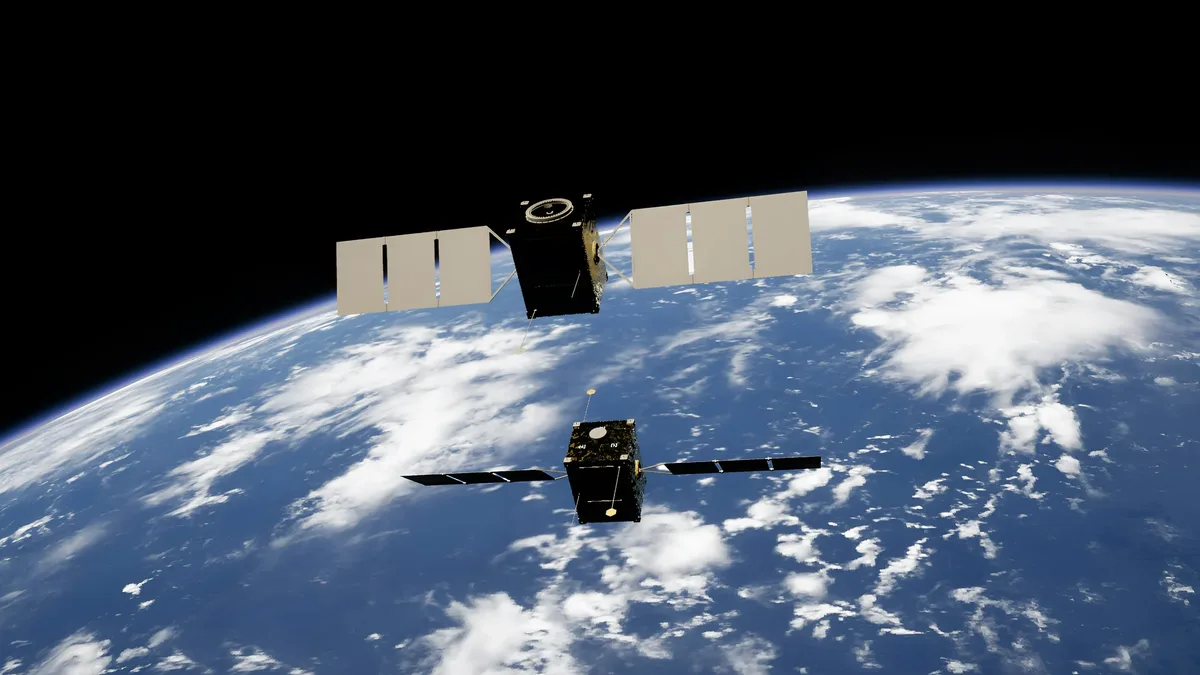
The two orbiters, ESA’s Mercury Planetary Orbiter (MPO) and JAXA’s Mercury Magnetospheric Orbiter (Mio), are scheduled to separate on 9 December. BepiColombo will then become the first mission to operate two spacecraft simultaneously in orbit around Mercury. The MPO will reach its final science orbit by March 2027.
The mission will study Mercury's surface, interior, large iron core, and magnetic field. It will also examine the planet's thin atmosphere and solar wind interactions. Scientists aim to test and extend findings from NASA's MESSENGER orbiter, which operated from 2011 to 2015. This includes investigating evidence of water ice in polar craters and unusual 'hollows' on the surface. Understanding Mercury's formation helps interpret exoplanets that orbit close to their stars.
The two orbiters will separate on December 9 to begin complementary scientific observations of Mercury.