Ariane 6 launches 36 Amazon Leo satellites after Vulcan failure
Arianespace successfully delivered 36 Amazon Leo satellites to orbit on November 23, a critical recovery mission following the loss of 40 satellites in a United Launch Alliance Vulcan failure eight days prior.
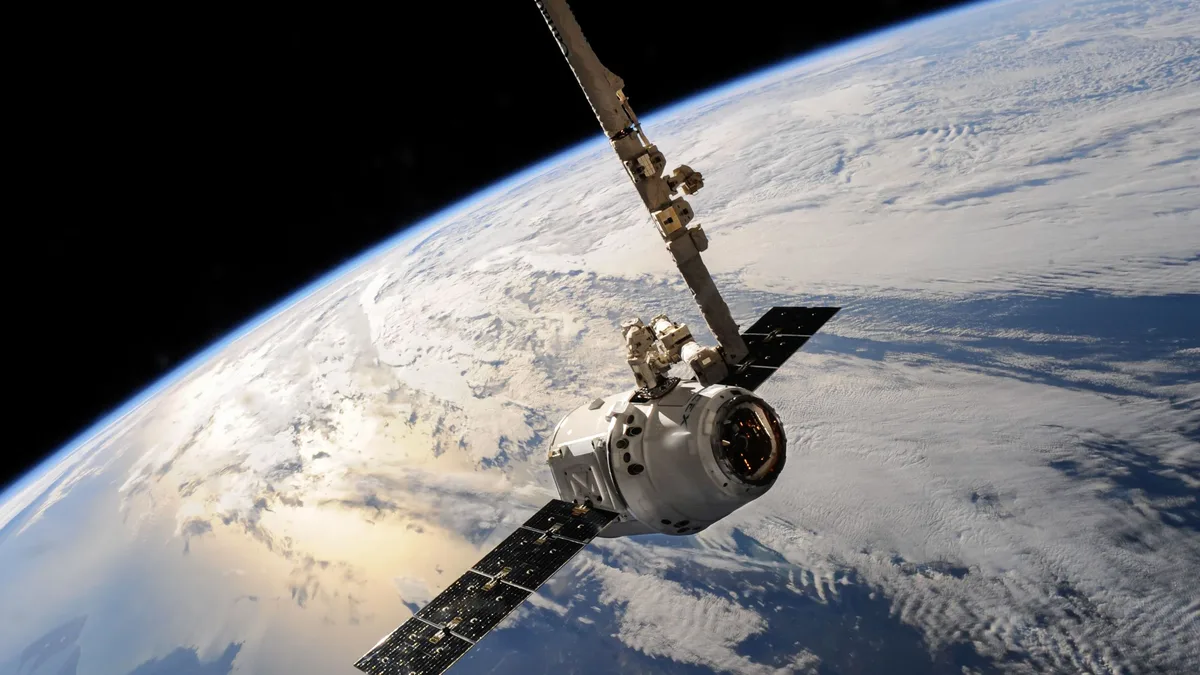
Arianespace successfully launched 36 Amazon Leo satellites on November 23, marking a vital operational mission just over a week after a United Launch Alliance Vulcan rocket failed. The Ariane 64 vehicle lifted off from Europe's Spaceport in French Guiana in a 29-minute window opening at 11:09 UTC, deploying its payload on the 10th flight for the new European rocket. Designated VA271 by Arianespace and LE-04 by Amazon, the mission was the next Leo launch on Amazon's schedule and is unaffected by the earlier Vulcan loss.
The launch brings Arianespace's total delivered Leo satellites for Amazon to 136. The satellites will be raised to an operating altitude of 630 kilometers after initial checks, a higher insertion point than earlier Ariane 64 missions, which released satellites at about 465 kilometers. The Ariane 64 configuration uses four P160C solid boosters, providing a lift capacity of about 22 metric tons to low Earth orbit.
ULA Vulcan failure exposes constellation risks
The success contrasts sharply with the failure of a Vulcan rocket on November 15. That mission, designated Leo Vulcan 1, lifted off from Cape Canaveral at 12:40 p.m. ET and failed approximately 10 minutes into flight due to an anomaly in the Centaur V upper stage. The first stage had underperformed just after liftoff, leaving the rocket too low and too slow. It was ULA's first total mission failure since the company's formation in 2006. The rocket was carrying 40 broadband satellites, the largest single payload Amazon had ever attempted to send to orbit, representing about 10% of the constellation it had launched to that point.
Amazon had launched 396 satellites across 14 missions since April 2025 before the failure. The company has a 38-launch commercial partnership with ULA for its first-generation constellation. ULA CEO Mark Peller said an oxygen valve fix for the BE-4 engines had been implemented before the flight, which also featured an improved nozzle design for its solid boosters. The Space Force had previously paused Vulcan national security launches after a booster anomaly in February 2026. ULA is now investigating the LV-01 failure, with 37 remaining Vulcan launches for Amazon on contract.
Ariane 6 reliability confirmed despite ESA issues
The Ariane 6 launch proceeds as the European Space Agency addresses a separate technical concern. ESA acknowledged a liquid-hydrogen turbopump anomaly in September. While ESA Director Géraldine Naja said "the problem is not something ESA is worried about" on October 22, no confirmed fix has been announced. ArianeGroup reported resolving the issue on October 13, but neither ESA nor Arianespace has publicly confirmed the cause or repair. Arianespace stated "the schedule is on track."
The core stage of the Ariane 6 uses a Vulcain 2.1 engine with two turbopumps, while the reignitable Vinci engine powers the upper stage. Avio builds the liquid-oxygen turbopumps for both engines. A mission originally scheduled for 2026 has been delayed to 2027 due to this turbopump issue.
Amazon's multi-provider strategy mitigates risks
Amazon's deployment strategy across multiple launch providers is designed to absorb such disruptions. The company has booked launches on Arianespace's Ariane 6, SpaceX's Falcon 9, and has 24 launches reserved on Blue Origin's New Glenn, which has been grounded since May. Amazon must deploy and operate 3,232 first-generation satellites by July 30, 2029, to meet its FCC license requirements. The FCC granted a conditional waiver in June 2026, requiring Amazon to have 1,616 satellites operational by July 30, 2026, or lose spectrum priority.
Amazon reached a milestone of 1,000 flight-ready satellites in September 2026 and plans an initial rollout of commercial internet service this year. The company's next scheduled Leo launch is another Ariane 6 mission, targeting November 23.