ULA Vulcan fails first Amazon mission, loses 40 satellites
United Launch Alliance's Vulcan rocket suffered a total mission failure on its first commercial flight for Amazon, destroying 40 broadband satellites and grounding critical national security launch capacity pending an FAA investigation.
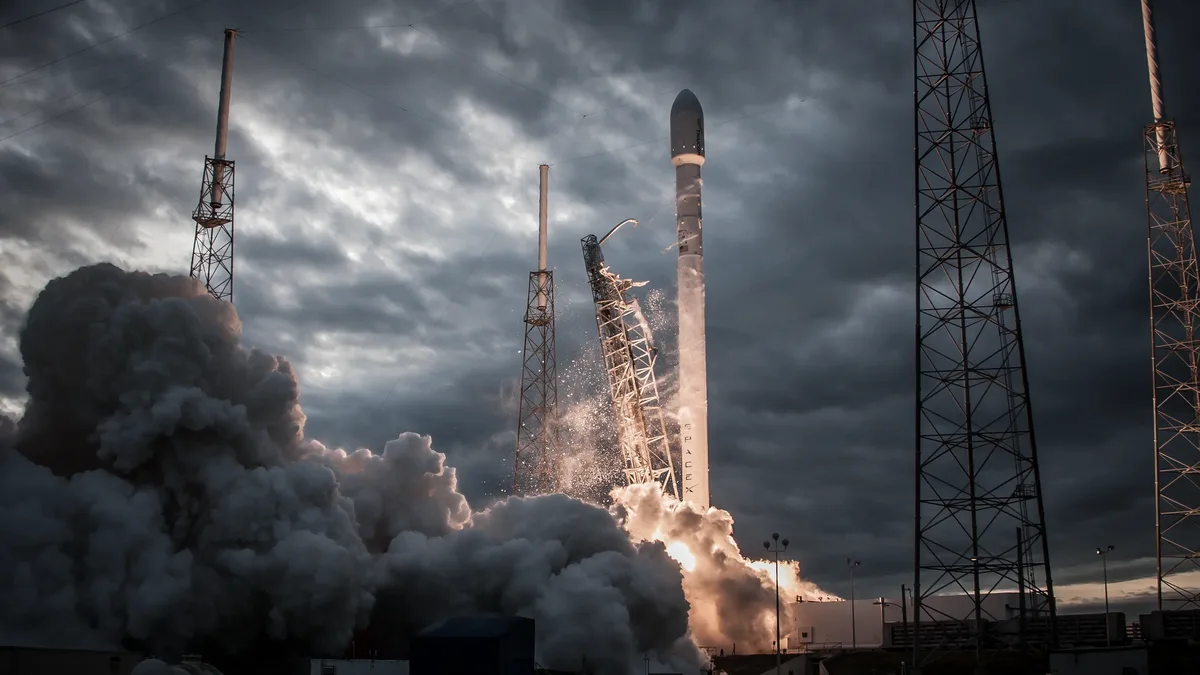
United Launch Alliance's Vulcan rocket failed its first mission for Amazon Leo on November 15, 2026. The vehicle lifted off from Cape Canaveral Space Force Station at 12:40 p.m. EST but suffered an unexplained anomaly ten minutes into the flight, resulting in the loss of all 40 satellites. This marks the first total mission failure for ULA since its 2006 founding and its fifth Vulcan flight since the rocket's 2024 debut.
The mission was intended to demonstrate Vulcan's readiness to resume commercial and U.S. military launches after months of corrective work. ULA stated early data pointed to low performance from the core first stage, not the solid boosters or Centaur upper stage. The FAA has launched a mishap investigation. ULA must submit its final report to the agency for approval before Vulcan can fly again.
Launch Context and History
Sunday's flight marked Vulcan's return after a nine-month grounding. A prior anomaly in February, involving issues with a solid-rocket booster, had triggered that stand-down. The February mission successfully delivered its Space Force payloads to orbit. The nine-month interval was intended to give engineers time to understand the problems and implement corrective measures.
This was the first mission using Vulcan's six-booster configuration, designated VC6L. The rocket carried six Northrop Grumman GEM 63XL solid rocket boosters, the maximum number it can accommodate. Its first stage was powered by two BE-4 engines built by Blue Origin. The Centaur V upper stage was fitted with two RL10 engines. The 40 Amazon spacecraft weighed more than 22,700 kilograms, making this the heaviest payload ULA had ever attempted to launch.
National Security Implications
The failure has immediate implications for the U.S. Space Force. Vulcan is one of only three rockets currently cleared for the Pentagon's most complex National Security Space Launch missions, alongside SpaceX's Falcon 9 and Falcon Heavy. The Space Force had been awaiting the outcome of this return-to-flight mission before proceeding with further Vulcan launches for national security payloads.
Vulcan is sidelined again. This demonstrates limited redundancy in the nation's ability to launch sensitive satellites. The Delta IV rocket flew for the final time in April 2024. The Atlas V remains operational but is no longer in production. In October, during the previous Vulcan grounding, the Space Force reassigned six national-security launches to SpaceX.
Industry and Market Impact
The anomaly intensifies pressure on ULA to resolve persistent technical issues. It also highlights the current dominance of SpaceX in the national security launch arena. One investor predicted the failure could pressure the Department of Defense to continue flying SpaceX's Falcon 9 for more national security payloads. SpaceX CEO Elon Musk has stated the company intends to eventually retire the Falcon family to focus on its Starship vehicle.
Amazon's constellation deployment faces a direct setback. The company had booked 38 Vulcan flights, more than any other rocket in its program. This failed mission was the first of those contracted launches. Amazon plans an initial constellation of more than 3,000 satellites. It had already completed production of its 1,000th satellite and had hundreds awaiting launch. Amazon has launched 398 satellites across 14 flights to date, representing about 12 percent of its 3,236-satellite goal for global coverage. The company missed a federal requirement to orbit 1,616 satellites by July.
A second Amazon Vulcan mission, designated LV-02, was already undergoing preparations and had been expected to follow within weeks if Sunday's flight had succeeded. That launch is now delayed. ULA holds 19 of 54 top-tier National Security Space Launch Phase 3 Lane 2 missions. Blue Origin's New Glenn is also an eligible provider for these missions. ULA president and chief executive Mark Peller acknowledged the risks associated with bringing a new launch vehicle into regular service. The company stated it holds itself to the standard of mission success and did not meet that standard on this flight. ULA has not identified the cause of the failure or established whether it was connected to the booster problems that prompted the earlier grounding.
All flights remain on hold until ULA completes its investigation and the FAA grants approval for Vulcan to resume operations.